ChatGPT, Gemini, Perplexity : quelles sources citent-ils le plus ? xfunnel a analysé 40 000 réponses et 250 000 citations pour comprendre quels contenus sont privilégiés par ces moteurs de recherche IA. Découvrez leurs résultats !
Ce qu’il faut retenir :
- xfunnel a analysé et catégorisé 40 000 réponses générées par ChatGPT, Perplexity et Gemini pour connaitre les sources citées par les assistants IA.
- Les earned medias et sites à forte autorité et sont les plus cités.
- Les Assistants IA adaptent leurs sources au parcours d’achat de l’utilisateur
Méthodologie d’analyse des citations IA
Pour cette étude, xfunnel a passé au crible 40 000 réponses générées par ChatGPT, Perplexity et Gemini (le chatbot de Google), totalisant 250 000 liens sortants uniques. Chaque citation a été catégorisée selon plusieurs critères :
- Type de source (propriétaire, concurrente, gagnée, UGC),
- Autorité de domaine (tranches de 20 points),
- Étape du parcours d’achat (exploration du problème, éducation sur les solutions, comparaison, recherche finale, évaluation).
En moyenne, Perplexity génère 6,61 citations par réponse, Gemini 6,1 et ChatGPT seulement 2,62. Mais au-delà du volume, quels insights peut-on tirer sur la nature des sources citées ?
L’autorité du domaine, un critère déterminant
Premier constat : si les sites à très faible autorité (DA 0-19) sont rarement mentionnés, ceux avec un DA supérieur à 20 apparaissent bien plus régulièrement. Les domaines les plus solides (DA 80-100) trustent 31,53% des citations, suivis par les DA 40-59 (26,32%) :
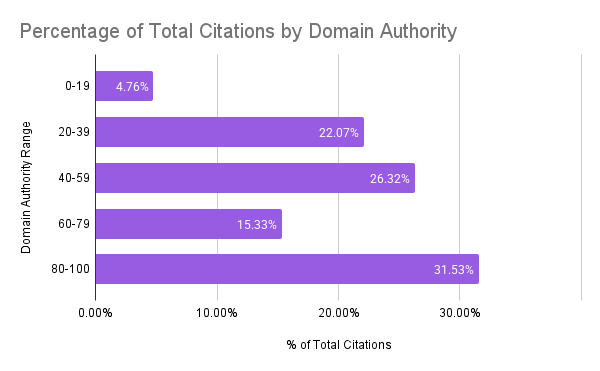
Moralité, dès qu’un site dépasse un certain seuil d’autorité, il a de bonnes chances d’être repris par les IA. Cela inclut de nombreux sites affiliés et blogs, qui semblent peser lourd dans l’élaboration des réponses. Vous avez dit “Google killer” ?
Médias et Contenus Utilisateurs en pole position
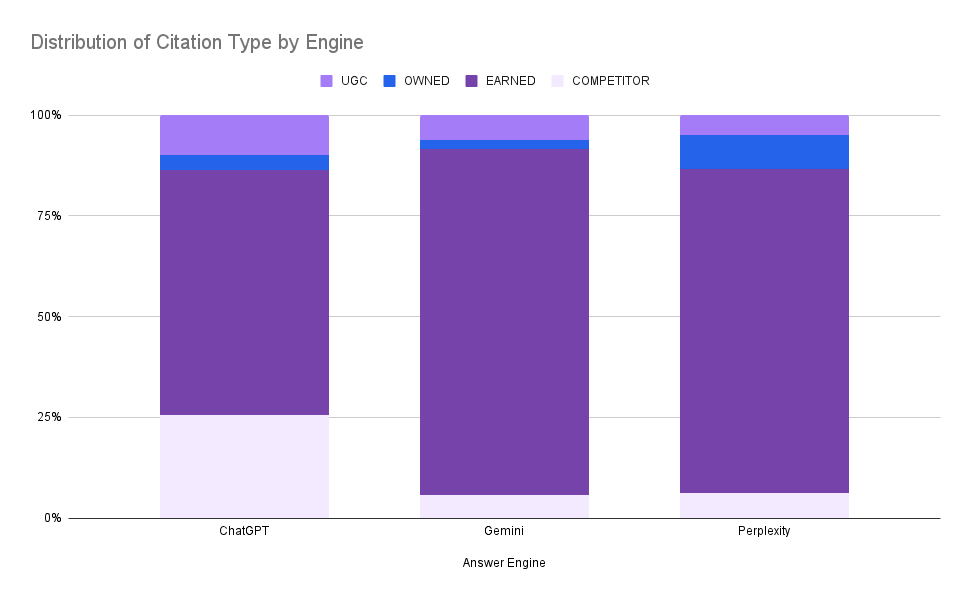
Autre enseignement clé : les citations issues de “earned medias”, à savoir presse, sites tiers et affiliés, dominent largement les résultats de ChatGPT, Gemini et Perplexity. Juste derrière, le contenu généré par les utilisateurs (avis, forums…) s’invite aussi régulièrement dans les réponses.
Là encore, les sources “propriétaires” des marques restent minoritaires. Les IA privilégient clairement une pluralité de points de vue externes, quitte à mettre en avant des sites comparateurs ou des retours clients.
Des sources adaptées au parcours d’achat
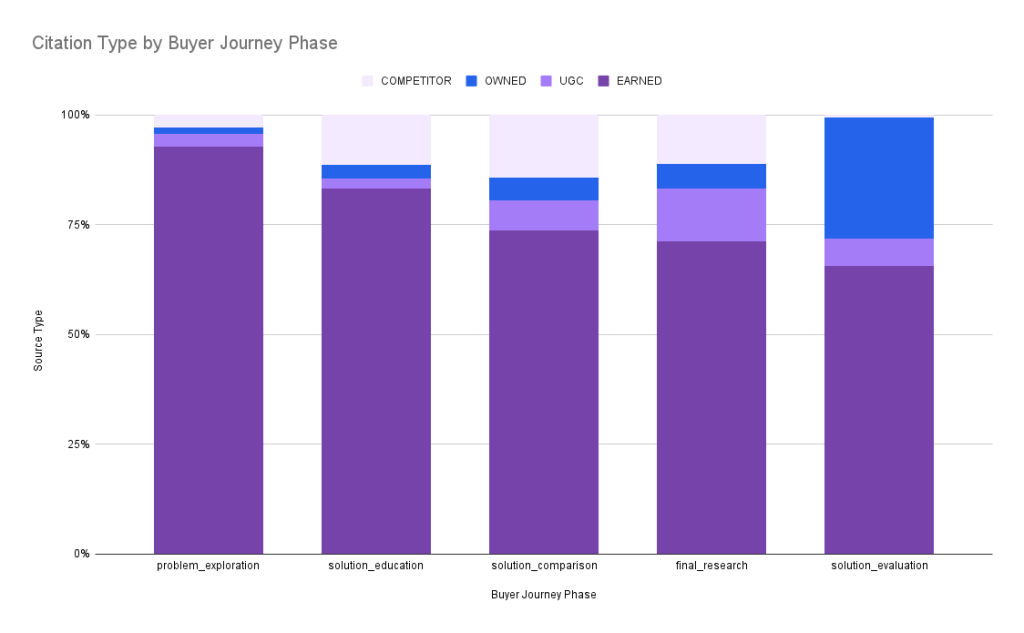
xfunnel a aussi analysé la répartition des citations selon les étapes clés du parcours client. Et le moins qu’on puisse dire, c’est que les IA adaptent leurs sources en fonction du besoin utilisateur :
- En phase d’exploration, elles s’appuient massivement sur des “earned médias” pour apporter un éclairage tiers.
- Au moment de comparer les solutions, la part d’UGC augmente pour inclure témoignages et avis.
- Enfin, lors de la recherche finale et l’évaluation, les sites propriétaires des marques et concurrents sont davantage mis en avant.
Bref, du haut en bas du funnel, les moteurs conversationnels dosent subtilement les types de sources pour coller au mieux aux attentes de l’utilisateur. Bluffant, non ?
Spécificités des géants de la tech
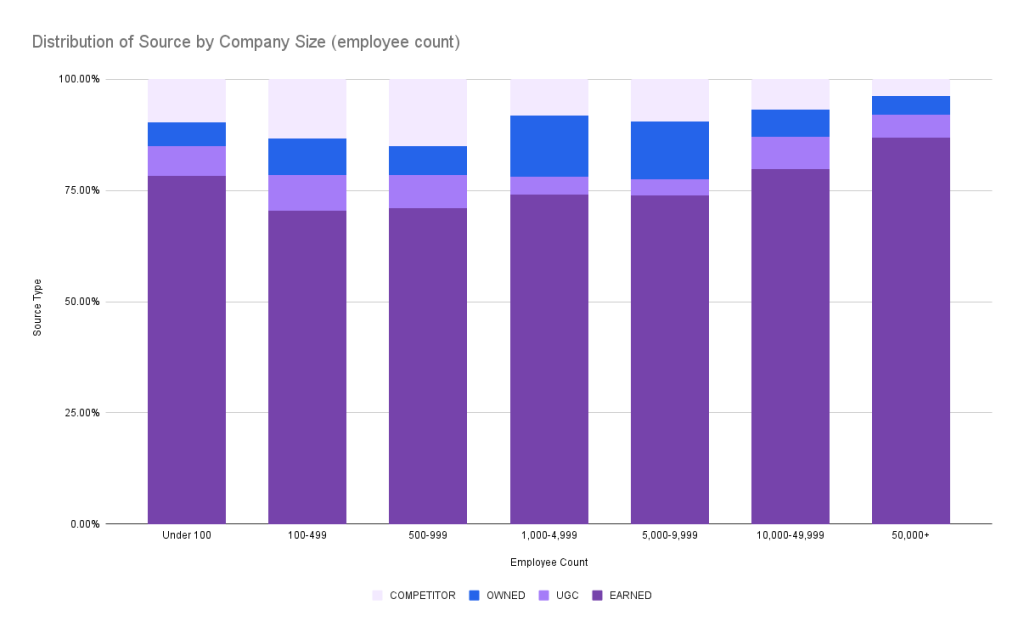
Dernier focus sur les entreprises de plus de 50 000 salariés. Si les citations des médias restent majoritaires tous segments confondus, on note que plus la société est grande, plus les IA ont tendance à citer son site propriétaire.
Logique : les mastodontes du web disposent en général de domaines à forte autorité, que les algorithmes considèrent comme des références sur leur secteur. Un avantage certain pour ces acteurs, qui trustent déjà le haut des SERP Google…
Reddit et YouTube, rois de l’UGC
Enfin, xfunnel a voulu savoir d’où venait le contenu UGC, quand il était mentionné par les IA. Sans grande surprise, Reddit et YouTube trustent le haut du panier, aux côtés de GitHub et Medium.
Mais chaque moteur a ses petites préférences : Perplexity survole largement YouTube et PeerSpot, quand Gemini met l’accent sur Medium et Reddit. De son côté, ChatGPT cite fréquemment LinkedIn, G2 et Gartner Peer Reviews.
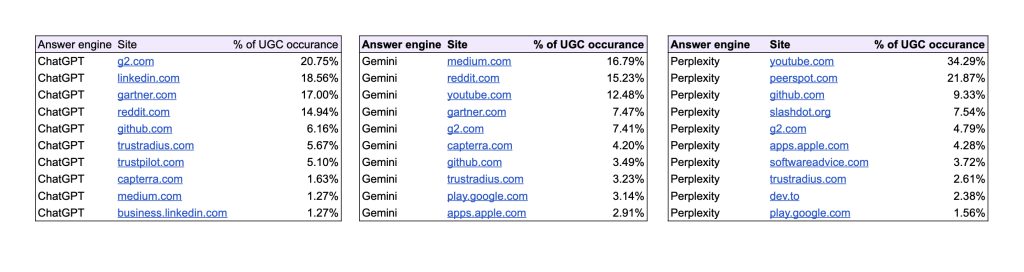
Morale de l’histoire ? les IA ont leurs habitudes bien à elles. Et gare aux généralisations hâtives sur “l’IA” : derrière ce terme fourre-tout se cachent des modèles et des stratégies d’indexation bien distinctes. Reste à savoir comment ces concurrents de Google vont évoluer dans les mois à venir… Affaire à suivre !
Merci à David Eichholtzer d’avoir repéré l’info.
L’article “Où les IA vont-elles chercher leurs réponses ? (40 000 recherches analysées)” a été publié sur le site Abondance.