Article en collaboration avec Getfluence
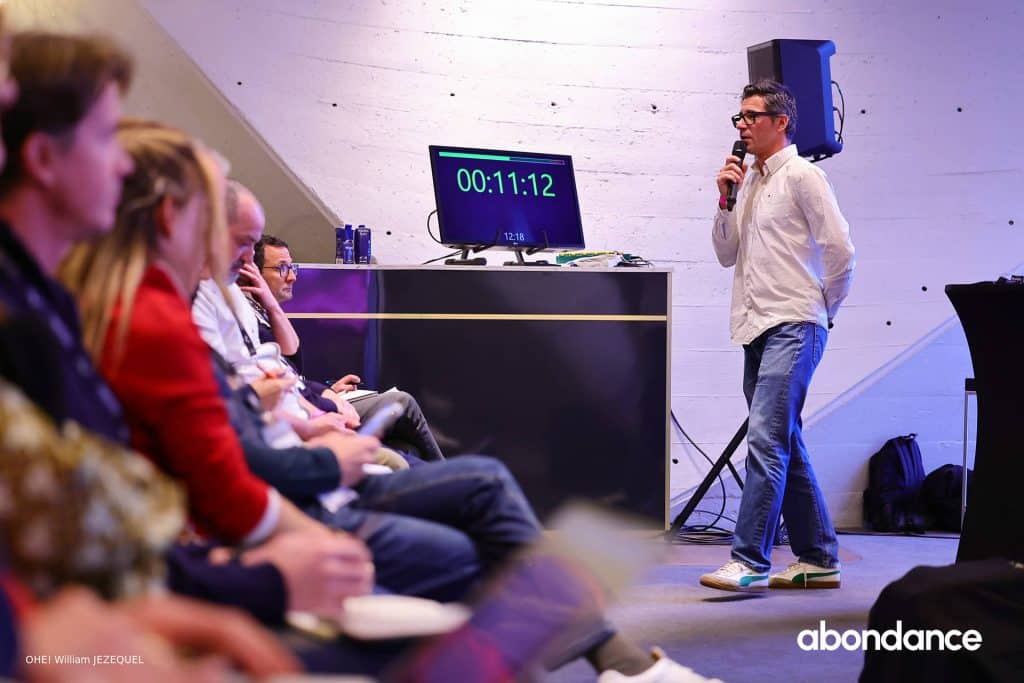
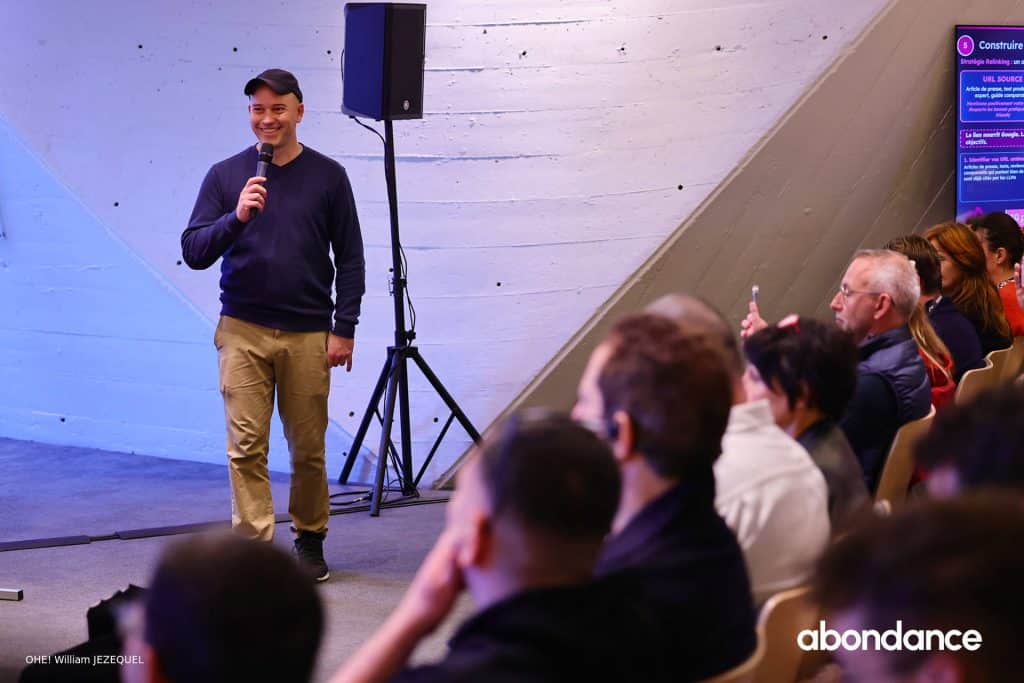
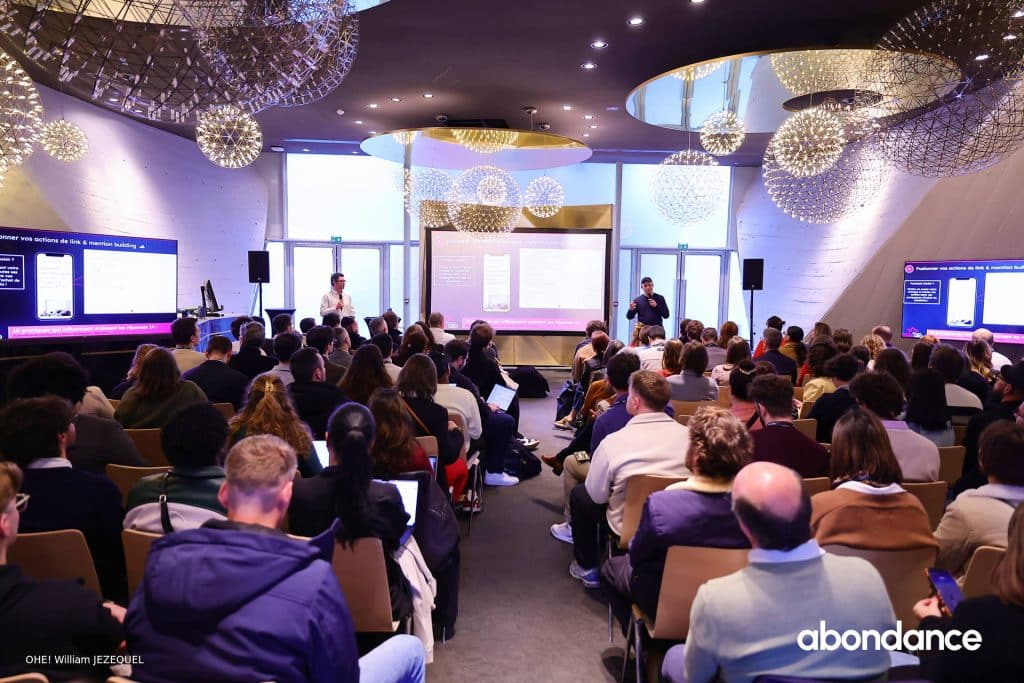
Le 20 mars 2026, Julien Bismuth, consultant SEO/GEO chez Getfluence, et Olivier de Segonzac, associé fondateur de Resoneo, ont co-animé une session de 30 minutes au SEO Summit. Leur sujet : dépasser la simple mesure de la visibilité dans les moteurs IA pour passer à l’action, avec des pratiques concrètes et des résultats observables. Voici le compte-rendu détaillé de leur intervention !
Le constat de départ : être visible ne suffit plus
2026. Les rapports de visibilité IA se multiplient. Mais entre constater que sa marque apparaît dans ChatGPT ou Gemini et comprendre pourquoi celle-ci est sélectionnée, et comment influencer réellement la réponse, le lien est souvent difficile à établir.
56 % des sources de réponses IA proviennent de contenus tiers (presse, publications éditoriales, avis, forums, réseaux sociaux). Cette donnée issue de l’étude Yext AI Citation Analysis, réalisée au Q4 2025 sur 17,2 millions de citations générées par ChatGPT, Gemini, Perplexity et Claude, est particulièrement révélatrice : seulement 44 % des sources citées proviennent de sites ou blogs de marques. Le reste, soit plus de la moitié, émane de contenus tiers perçus comme neutres et fiables.
Autrement dit : le SEO reste indispensable, mais il ne suffit plus. Pour être choisi par les modèles IA, il faut travailler son empreinte de marque au bon endroit, là où les LLMs recherchent et sélectionnent leurs sources.
Comment fonctionnent les LLMs – Un rappel important
Avant d’entrer dans la pratique, Julien et Olivier ont posé un cadre technique. Les LLMs ne raisonnent pas : ils calculent des probabilités. Face à une requête, le modèle décide d’abord d’activer ou non sa capacité de recherche web :
- Sans activation web : la réponse s’appuie uniquement sur la connaissance du modèle jusqu’à sa date de cut-off.
- Avec activation web : le modèle effectue un retrieval, c’est-à-dire qu’il constitue un pool d’URLs candidates (la phase de grounding), puis sélectionne et synthétise.
Le modèle choisit et sélectionne pour l’utilisateur selon des calculs de probabilités. C’est une mécanique, et non pas de l’intelligence. Mais il est possible de l’influencer si l’on s’adapte à son fonctionnement.
Les 10 pratiques pour influencer les réponses IA
1. Identifier les questions à fort potentiel pour la marque
Les volumes de recherche traditionnels ne sont plus un indicateur fiable pour les requêtes posées aux IA. La méthode présentée s’articule en trois étapes.
Il s’agit d’abod de partir des mots-clés et positions actuelles pour construire des Personas Search : profil, intentions, parcours, freins et opportunités de chaque segment d’audience.
Ensuite, il faut alimenter ces personas avec ChatGPT pour générer les questions décisionnelles, comparatives et commerciales qu’ils se posent réellement : recherche de valeurs, besoins, expérience d’achat, aide à la décision.
Enfin, la dernière étape consiste à filtrer les questions à fort potentiel selon trois critères cumulatifs :
- Absence de mention de la marque dans les réponses actuelles des IA
- Présence de mentions de concurrents
- Taux de persistance supérieur à 25 %
2. Obtenir la meilleure position sur les Query Fan-Out
Lorsque ChatGPT ou Gemini activent leur moteur de recherche, ils génèrent automatiquement des requêtes dérivées (les Query Fan-Outs). Un point crucial à retenir : plus de 50 % de ces fan-outs sont formulés en anglais, même pour un utilisateur francophone. Gemini, quant à lui, s’appuie directement sur l’index Google.
Trois leviers concrets ont été présentés :
Marqueurs de fan-out
Intégrer dans vos contenus on-site et off-site les termes typiques des fan-outs : best, top, meilleurs, comparatifs, avis, 2026…
Version anglaise du site
Prévoir a minima une version anglaise des contenus corporate, des best-sellers et des réponses aux critiques fréquentes (ex : corp.domain.com).
Méta descriptions et slugs d’URL
Ce sont les éléments que le modèle lit en priorité lors de la phase de retrieval.
3. Repérer les sites et articles sources les plus fréquents sur un sujet
L’indicateur de Domain Rating ou d’autorité seul ne suffit plus ; ni en SEO en 2026, ni en GEO. Ce qui compte, c’est d’identifier les domaines et articles sources que les modèles IA perçoivent comme dignes de confiance sur un sujet donné.
Bonne nouvelle : les modèles donnent eux-mêmes la liste des sources utilisées pour construire leurs réponses. Le problème, c’est la volatilité : pour avoir une vue représentative, chaque question doit être posée des dizaines de fois au modèle cible.
C’est là qu’interviennent les méthodes GEO outillées comme celle de Getfluence (fonctionnalité Spot Finder & Mentions) qui permettent d’influencer les réponses IA dans plus de 60% des cas.
Portez attention à l’identification des sources via API qui peut différer des sources réellement affichées dans l’interface utilisateur de la plateforme.
4. Reconnaître les bons et les excellents spots LLM-friendly
Une fois les sources identifiées, il faut les qualifier. La méthode consiste à analyser deux dimensions complémentaires :
- La fréquence de citation : combien de fois ce domaine ou cet article apparaît dans les réponses sur les prompts de test.
- Le sentiment des sources : les mentions de votre marque (et de vos concurrents) dans ces contenus sont-elles positives, neutres ou négatives ?
Les outils présentés permettent de filtrer précisément les sources qui mentionnent les concurrents sans mentionner votre marque. Ce sont les cibles prioritaires pour une action de placement ou de relinking.
5. Construire des URL Ambassador et URL Review
Il s’agit de l’une des stratégies les plus puissantes présentées lors de la session : la stratégie de relinking, qui produit un triple impact simultané.
- Url source :Identifiez d’abord les articles de presse, tests produit, avis expert ou guides comparatifs qui mentionnent positivement votre marque.
- Relinking : Publiez de nouveaux contenus qui citent l’article source et créez des backlinks vers cette URL (guest posts, articles partenaires, communiqués).
Le résultat obtenu : un triple impact
- SEO : meilleur ranking de l’URL source
- E-reputation : multiplication des mentions positives
- GEO : probabilité de citation LLM accrue
Comme le résume les deux experts : le lien nourrit Google. La mention nourrit les LLMs. Avec un seul contenu de relinking, vous atteignez les deux objectifs simultanément.
6. Renforcer la confiance et la fraîcheur depuis l’intérieur (signaux E-E-A-T)
Google a 27 ans d’expérience dans l’évaluation de la qualité des contenus. ChatGPT en a 3, et il a rapidement compris l’intérêt d’apprendre de son aîné. Les signaux E-E-A-T (Experience, Expertise, Authoritativeness, Trust) sont désormais intégrés dans la façon dont les modèles évaluent les sources. La page 27 des Google Search Quality Rater Guidelines (mise à jour septembre 2025) est sans ambiguïté : Trust est le membre le plus important de la famille E-E-A-T.
7. Accepter la neutralité pour être mis en avant
Ce point a sans doute constitué l’une des révélations les plus contre-intuitives de la session. En mars 2026, la neutralité perçue est devenue un critère de sélection de plus en plus déterminant pour les modèles, un critère qui aurait été jugé moins central six mois auparavant.
La logique est simple : le LLM doit pouvoir comparer plusieurs options pour construire une réponse crédible. Un contenu qui ne cite qu’une seule marque ou solution est perçu comme promotionnel, et les modèles l’évitent comme source principale.
 Contenu mono-marqueDétecté comme promotionnel par les modèles. Les IAs préfèrent guides, documentations et articles pédagogiques. Elles évitent publicités et comparatifs biaisés. Contenu mono-marqueDétecté comme promotionnel par les modèles. Les IAs préfèrent guides, documentations et articles pédagogiques. Elles évitent publicités et comparatifs biaisés. |  Contenu multimarque (format AI-First Contenu multimarque (format AI-First )Les LLMs adorent les pages avec listes, comparatifs et classements d’outils. Un article qui mentionne plusieurs solutions augmente significativement son score de probabilité de citation. )Les LLMs adorent les pages avec listes, comparatifs et classements d’outils. Un article qui mentionne plusieurs solutions augmente significativement son score de probabilité de citation. |
Un test réel a été présenté : un article AI-First publié en février 2026 par Getfluence sur monimmeuble.com, comparant six logiciels de signature électronique pour l’immobilier. Résultat avant campagne : aucune mention ni citation de la marque cliente (Oodrive) dans les réponses IA. Résultat après campagne : la marque apparaît en première position parmi les solutions recommandées, avec l’article cité comme source.
8. Fusionner vos actions de link building et mention building
Pourquoi dissocier les campagnes de netlinking SEO et les actions de brand mention GEO, alors qu’un seul contenu peut remplir les deux objectifs ?
La recommandation est simple : dans toutes vos campagnes d’achat de backlinks, systématiquement inclure des mentions de votre marque et de toutes ses entités (produits, dirigeants, certifications, cas d’usage…). Un article qui parle de décoration intérieure pour un site e-commerce, tout en mentionnant la marque, peut simultanément générer un signal SEO et apparaître comme source dans une réponse IA sur le sujet.
L’exemple présenté illustrait une réponse ChatGPT sur la décoration d’un salon avec canapé en velours, citant directement un article de Frenchyfancy, un contenu qui avait intégré la marque d’un client tout en traitant le sujet de façon éditoriale.
9. Produire un format à jour et s’assurer que la porte est ouverte
Une pratique souvent négligée, mais déterminante : les robots d’exploration des IA doivent pouvoir accéder à vos contenus. Si votre fichier robots.txt bloque les crawlers des LLMs, aucun contenu, aussi optimisé soit-il, ne pourra être utilisé pour construire une réponse.
Les principaux bots à ne pas bloquer ont été listés :
- ChatGPT / OpenAI : OAI-SearchBot (bot de recherche temps réel), GPTBot (bot d’entraînement)
- Google / Gemini : Googlebot, Google-Extended
- Claude / Anthropic : Claude-SearchBot, Claude-User (attention : Claude-Web n’existe plus)
- Perplexity : Perplexitybot, Perplexity-User
La plateforme Getfluence intègre un module d’accessibilité IA qui analyse automatiquement le fichier robots.txt de chaque domaine et signale les blocages partiels ou totaux par LLM ; un gain de temps considérable pour auditer son parc de sites partenaires.
10. Apporter de l’information nouvelle – L’Information Gain
Le dernier point est peut-être le plus stratégique sur le long terme. Julien et Olivier ont présenté le brevet Google US12013887B2 (accordé en juin 2024), qui attribue à chaque contenu un score d’Information Gain entre 0 et 1, mesurant la quantité d’information véritablement nouvelle qu’il apporte.
| Score → 0 : contenu génériqueRéécriture de ce qui existe déjà (top 10 de 2026, comparatifs génériques…), même produit par IA. Le modèle a déjà vu cette information des dizaines de fois. | Score → 1 : information inéditeÉtudes propriétaires, données de tests internes, citations d’experts terrain, résultats d’essais vérifiés, témoignages clients de première main. |
Retenez que si un LLM a déjà vu l’information 50 fois, il ne vous citera pas une 51e fois. Autrement dit : Apportez ce que personne d’autre ne peut dire.
Sur les fiches produits, ce principe se traduit par un décalage à combler : les marques listent des spécifications techniques, mais les utilisateurs décrivent des situations et des contraintes. C’est dans cet écart que le LLM choisit ses sources. Deux actions concrètes ont été proposées :
- Sur les pages liste (PLP) : créez des facettes situationnelles basées sur les vrais usages (« Passe les portiques du métro », « Résiste aux griffures », « Compatible lunettes »).
- Sur les fiches produits (PDP) : ajouteé des paragraphes situationnels et des FAQ issues des avis clients, du SAV et des forums ; la couche contextuelle qui permet au LLM de recommander un produit spécifique.
Ce qu’il faut retenir
Durant cette présentation, Julien Bismuth et Olivier de Segonzac ont réussi à poser un cadre méthodologique clair pour passer de la mesure à l’action en GEO. La logique centrale : les modèles IA sont des machines à probabilités. On peut influencer ces probabilités en travaillant simultanément la qualité et la confiance perçue des contenus, la présence dans les sources tiers LLM-friendly, et la neutralité requise par les modèles IA.
Le fil conducteur de toute la session est que SEO et GEO ne s’opposent pas ; ils se renforcent mutuellement lorsqu’on adopte les bons formats et les bonnes stratégies de distribution. Le format AI-First développé par Getfluence incarne cette convergence : structuré pour répondre aux critères de sélection des moteurs IA, tout en respectant les standards éditoriaux qui rendent un contenu crédible et linkable.
En 2026, être visible ne suffit plus. Il faut être choisi.
L’article “Les 10 pratiques qui influencent vraiment les réponses IA” a été publié sur le site Abondance.