En SEO (Search Engine Optimization), les données structurées se révèlent être de précieuses alliées pour la visibilité de votre site Web. Elles permettent aux moteurs de recherche de décrypter avec précision le contenu de vos pages, mais aussi d’affiner leur présentation dans les résultats de recherche.
Heureusement, pour veiller à la précision et maximiser l’efficacité de ces données, les développeurs et les as du marketing digital disposent de deux outils incontournables : l’outil de test des résultats enrichis de Google et l’outil de validation du balisage Schema.org.
Découvrons ensemble comment les utiliser pour assurer la bonne installation des données structurées et booster votre référencement naturel !
Vérifier les données structurées avec l’outil de test des résultats enrichis de Google
Disponible via Google Developers, l’outil de test des résultats enrichis s’assure que le moteur de recherche lit et présente impeccablement les données structurées de votre site.
Il suffit de saisir l’URL de votre page ou directement votre code HTML. L’outil passe au crible vos balises, repérant erreurs et avertissements. Vous obtenez une liste des données structurées détectées, ainsi que la visibilité sur le code HTML et une capture d’écran.
Vous saurez immédiatement comment Google interprète votre page.
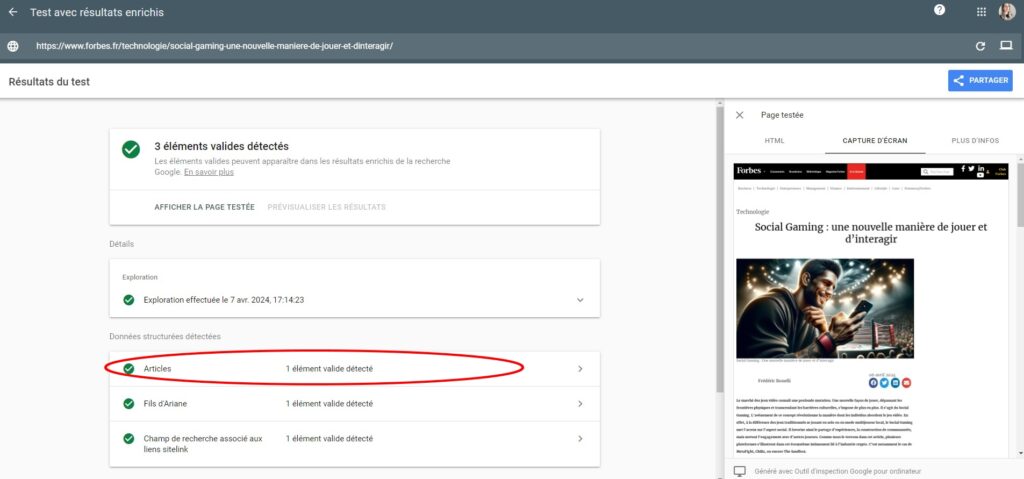
Dans l’exemple ci-dessous, issu du site Forbes France, le moteur de recherche montre qu’il interprète bien la page comme étant un « Article » :
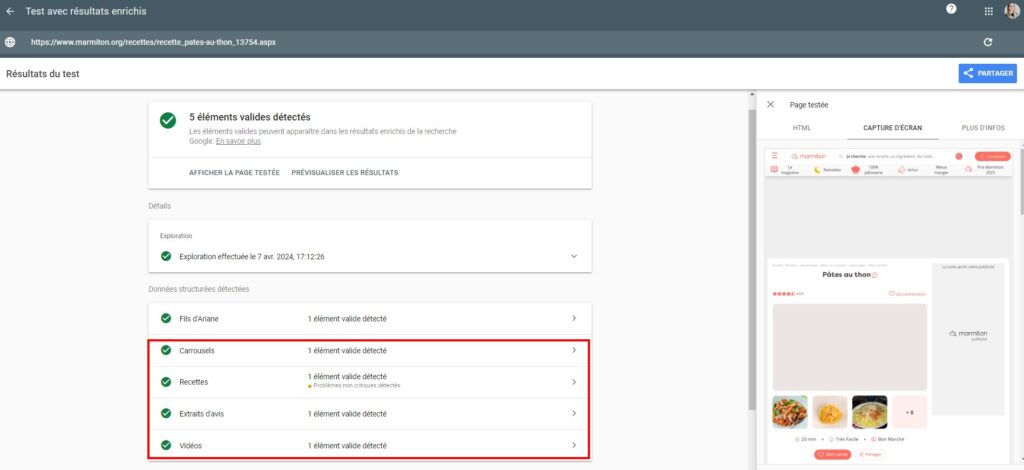
Dans cet autre exemple, tiré d’une page de recette de Marmiton, nous voyons que Google lit différentes données structurées : la catégorie « Recette », les avis des internautes, la vidéo qui accompagne la fiche, ainsi que le carrousel de photos.
Comment bien utiliser l’outil de test des résultats enrichis de Google ?
- Utilisez-le pour des retours instantanés : N’attendez pas la finalisation de votre site pour tester. Intégrez cet outil dans votre routine de développement pour corriger les problèmes au fur et à mesure.
- Comprenez les erreurs : Prenez le temps de comprendre les erreurs et avertissements signalés par l’outil. Google fournit des explications pour chaque type d’anomalie, utilisez ces informations pour effectuer des corrections précises.
- Testez après les corrections : Après avoir apporté des modifications à vos données structurées, testez à nouveau la page. Cela vous assure que vos corrections ont résolu les problèmes sans en introduire de nouveaux.
Vérifier les données structurées avec l’outil de validation du balisage Schema.org
Développé par Google, Microsoft, Yandex et d’autres moteurs de recherche, Validator.schema.org est un outil universel pour valider le balisage des données structurées, indépendamment de la spécification technique (microdonnées, JSON-LD, ou RDFa).
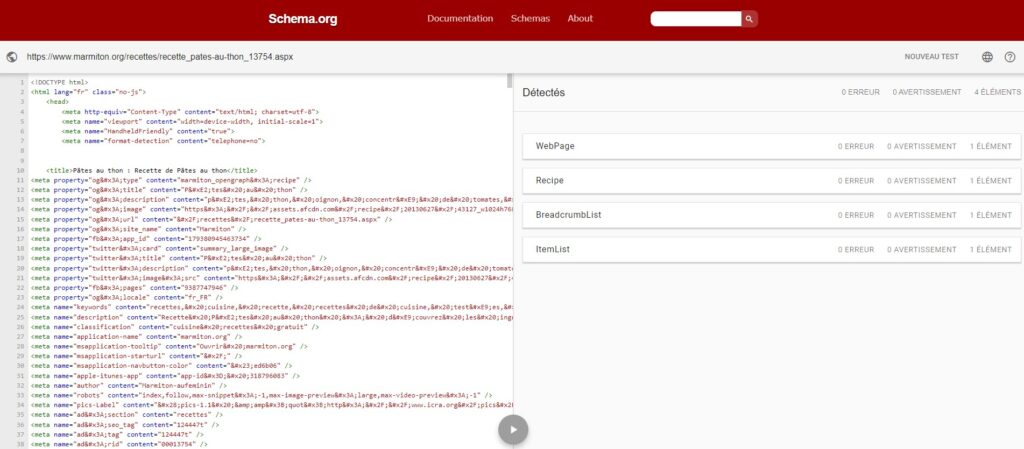
Reprenons l’exemple de la recette de Marmiton. L’outil nous donne cet aperçu :
Vous pouvez ensuite vérifier la syntaxe et la structure précises de vos données avec, éventuellement, la liste des erreurs.
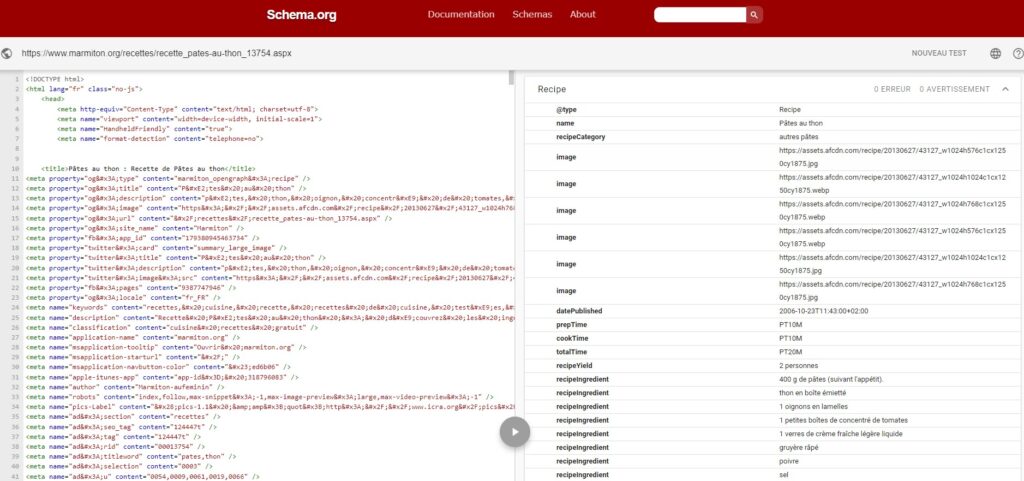
L’outil de validation du balisage est particulièrement utile pour les développeurs souhaitant s’assurer que leur balisage respecte les standards de Schema.org, pour une interprétation optimale de tous les moteurs de recherche, pas seulement Google.
Comment bien utiliser l’outil de validation du balisage Schema.org ?
- Vérifiez régulièrement : Même si votre site n’a pas changé, les standards Schema.org et les meilleures pratiques évoluent. Passez vos pages à travers Validator.schema.org régulièrement pour vous assurer qu’elles restent conformes.
- Testez avant le déploiement : Avant de mettre en ligne des modifications majeures de votre site, utilisez cet outil pour tester les nouvelles données structurées. Cela vous permettra de corriger les éventuelles erreurs avant qu’elles n’affectent votre SEO.
- Soyez précis : Veillez à ce que le balisage reflète précisément le contenu de la page. Les données structurées doivent être exactes et à jour pour éviter les pénalités pour informations trompeuses.
Vérifier les données structurées avec la Google Search Console
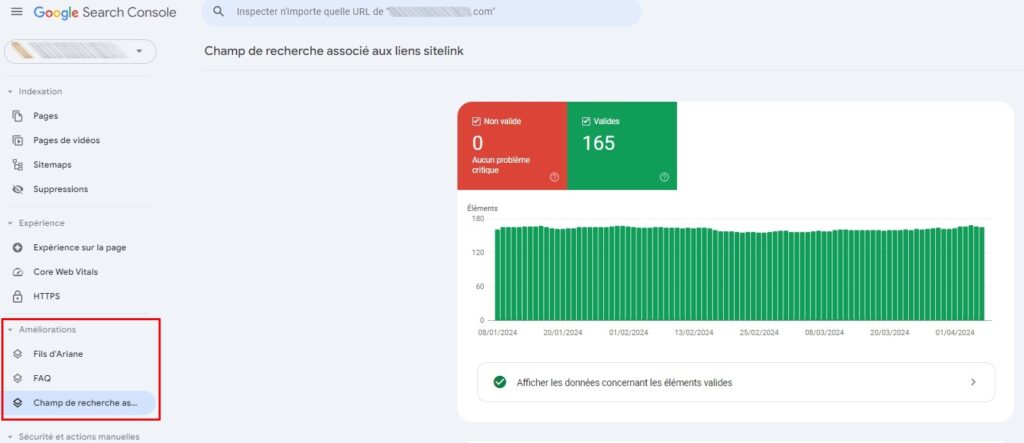
Il est important de noter que la Google Search Console joue un rôle complémentaire à ces deux outils, en offrant des alertes automatiques pour les problèmes liés aux données structurées.
La plateforme surveille et rapporte les erreurs de balisage, permettant aux webmasters d’agir rapidement pour corriger tout problème qui pourrait affecter la visibilité ou la présentation des pages Web dans les résultats de recherche.
Cette intégration est précieuse pour maintenir la qualité et l’efficacité de vos données structurées sur le long terme.
Vous trouverez les informations concernant les balises intégrées sur votre site Web dans la section « Améliorations » :
Notre dernier conseil pour vérifier les données structurées de vos pages
L’utilisation combinée de ces outils offre une approche complète pour optimiser vos données structurées. Commencez par utiliser le Validator.schema.org pour vous assurer que votre balisage respecte les standards de Schema.org et qu’il est exempt d’erreurs de syntaxe.
Passez ensuite à l’outil de test des résultats enrichis pour vérifier l’éligibilité de votre page aux données structurées et obtenir des retours basés sur les directives de Google. Enfin, surveillez régulièrement les alertes de la Google Search Console pour détecter d’éventuelles anomalies.
Dans cette quête SEO, la qualité du contenu de votre site web joue un rôle tout aussi vital ! Un texte riche en informations et agréable à lire, est le socle sur lequel reposent vos données structurées. Et c’est là qu’intervient notre plateforme Redacteur.com : elle vous aide à trouver un rédacteur professionnel pour rédiger vos articles, pages, fiches produits, recettes… Postez dès maintenant votre annonce gratuitement !
L’article Comment vérifier les données structurées de vos pages web ? est apparu en premier sur Redacteur.com.