L’intelligence artificielle (IA) redéfinit les frontières du possible pour les entreprises ! Ce n’est plus une question de “si” vous devez créer une IA pour optimiser votre business, mais de “comment”.
Dans cet article, dévoilons les étapes clés pour construire un système intelligent, ainsi que les outils de développement et les plateformes no code pour créer une intelligence artificielle soi-même !
Préambule : les étapes à connaître pour créer une intelligence artificielle soi-même
Pour créer une intelligence artificielle (IA) de manière efficace, peu importe la méthode choisie, il faut d’abord suivre ces étapes clés…
1. Définir les objectifs du projet
En premier lieu, identifiez les problèmes spécifiques à résoudre par l’IA. Êtes-vous sûr qu’une solution automatisée est nécessaire ou les problèmes peuvent être gérés par des interventions humaines ? Cette phase assure que créer une intelligence soi-même est bien aligné sur vos besoins réels.
2. Choisir le bon modèle d’IA
Sélectionnez un modèle adapté à la nature de votre projet : reconnaissance d’images, traduction de langues, prédiction de comportements, générateur de texte…
À ce stade, l’exploration des systèmes préétablis disponibles sur des plateformes de programmation d’IA sans code peut être particulièrement utile.
3. Concevoir le jeu de données
Pensez à rassembler un volume conséquent de données pour l’entraînement et les tests, tout en anticipant les combinaisons possibles que l’IA devra traiter. Un jeu de données bien conçu est fondamental pour la réussite de l’apprentissage.
4. Apprendre à l’IA
Vous devez être en mesure de diriger l’apprentissage de l’IA en fonction de son objectif final, en utilisant le jeu de données préparé. Cette étape comprend l’enseignement sur où chercher les informations et comment les traiter.
5. Laisser le programme s’entraîner
La cinquième étape est de laisser le programme s’entraîner de manière autonome pour affiner ses calculs. Pensez à externaliser ce processus dans le cloud si nécessaire, pour optimiser la puissance de calcul.
6. Réaliser des tests
L’IA est évaluée dans un environnement réel avec le jeu de données réservé aux tests. Cela permet d’ajuster ou de répéter l’apprentissage si les résultats ne sont pas satisfaisants.
Suivre cette liste d’étapes structurées permet d’aborder la création d’une IA de manière méthodique, en assurant que le projet reste aligné sur ses objectifs initiaux. Connaître ce process vous permettra de choisir la méthode appropriée pour créer votre intelligence artificielle et exploiter pleinement ses capacités.
Pourquoi créer une intelligence artificielle soi-même ?
L’application pratique de l’IA est aussi diverse que le spectre des couleurs ! Vous pourriez avoir besoin d’un assistant intelligent pour améliorer la productivité de vos équipes, analyser des données complexes, augmenter la satisfaction client, automatiser vos flux de travail, etc.
Voici quelques exemples concrets d’application de l’intelligence artificielle :
- Dans le secteur financier : Wealthfront utilise des algorithmes dopés à l’intelligence artificielle pour offrir des conseils financiers personnalisés et gérer automatiquement les portefeuilles d’investissement de ses clients. Une stratégie qui permet d’optimiser les rendements ajustés au risque selon les objectifs financiers et les profils des utilisateurs.
- Dans le secteur bancaire : Mastercard utilise l’IA dans son système Decision Intelligence pour évaluer la légitimité des transactions en temps réel. L’entreprise détecte mieux les fraudes, ce qui améliore l’expérience client.
- En santé : Un système d’intelligence artificielle conçu par Google DeepMind pour identifier le cancer du sein a montré une diminution significative des erreurs de faux positifs et faux négatifs, comparé aux diagnostics de médecins, en évaluant 25 000 mammographies anonymes provenant du Royaume-Uni.
- Pour les boutiques en ligne : Amazon utilise largement l’IA pour personnaliser l’expérience d’achat de ses clients. Leur système de recommandation, alimenté par un algorithme intelligent, analyse le comportement d’achat, les recherches, et les avis des clients pour suggérer des produits pertinents.
- Dans la production : Siemens utilise l’intelligence artificielle pour optimiser les opérations de production dans ses usines en réduisant les temps d’arrêt. Leur système d’IA, utilisé pour la maintenance prédictive, analyse les données des capteurs des machines pour prédire les pannes avant qu’elles ne se produisent.
Ces entreprises démontrent l’impact puissant de l’IA dans leur domaine respectif, offrant des solutions innovantes aux défis traditionnels et ouvrant la voie à de nouvelles opportunités d’optimisation et de croissance.
Créer une IA avec des connaissances en développement

Pour les professionnels du développement, ou les entreprises, maîtriser l’art de créer une IA représente une compétence inestimable pour maximiser sa productivité et sa compétitivité.
Comprendre les fondamentaux dans le développement d’une intelligence artificielle
Avant de vous lancer, une solide base en programmation est nécessaire. Python et R dominent le paysage de l’IA : en premier lieu pour leur syntaxe claire, et dans un second temps, pour leur vaste écosystème de bibliothèques, comme NumPy pour le calcul scientifique ou Pandas pour la manipulation de données. Maîtriser ces langages est votre premier pas pour créer une intelligence artificielle soi-même.
Au-delà de la programmation, une compréhension approfondie des mathématiques, notamment les statistiques et l’algèbre linéaire, est essentielle. Ces compétences vous permettront d’aborder les algorithmes sous-jacents et d’affiner les performances de votre modèle d’IA.
Notre conseil : n’hésitez pas à vous appuyer sur des cours en ligne ou des workshops pour renforcer ces connaissances fondamentales.
Sélectionner les bons outils et API
L’univers des outils d’IA est vaste, mais certains se démarquent par leur accessibilité et leur puissance. TensorFlow, Azure AI et IBM Watson proposent des APIs riches qui simplifient l’intégration de capacités d’intelligence et d’apprentissage automatique.
Choisir le bon outil dépend des fonctionnalités dont vous avez besoin.
Notre conseil : commencez petit. Expérimentez avec des projets simples pour vous familiariser avec ces technologies avant de vous attaquer à des défis plus complexes. Les communautés en ligne peuvent également être une ressource précieuse pour obtenir des bonnes pratiques en développement IA et partager des expériences.
Créer une IA sans compétences en codage
Grâce à l’émergence des plateformes no-code, l’IA devient accessible à un public bien plus large, ouvrant des portes à des innovations inédites dans divers domaines.
Ces outils révolutionnaires permettent aux non-développeurs de déployer des solutions d’IA avec une facilité surprenante.
Le concept de no-code
Le concept de no-code repose sur une interface graphique intuitive où les utilisateurs peuvent assembler des blocs logiques pour créer des applications, y compris des systèmes d’IA, sans écrire une seule ligne de code.
Cette approche abaisse considérablement la barrière d’entrée dans le monde de l’intelligence artificielle, permettant aux professionnels de tous horizons de développer des solutions intelligentes adaptées à leurs besoins spécifiques.
Utilisation des bots IA
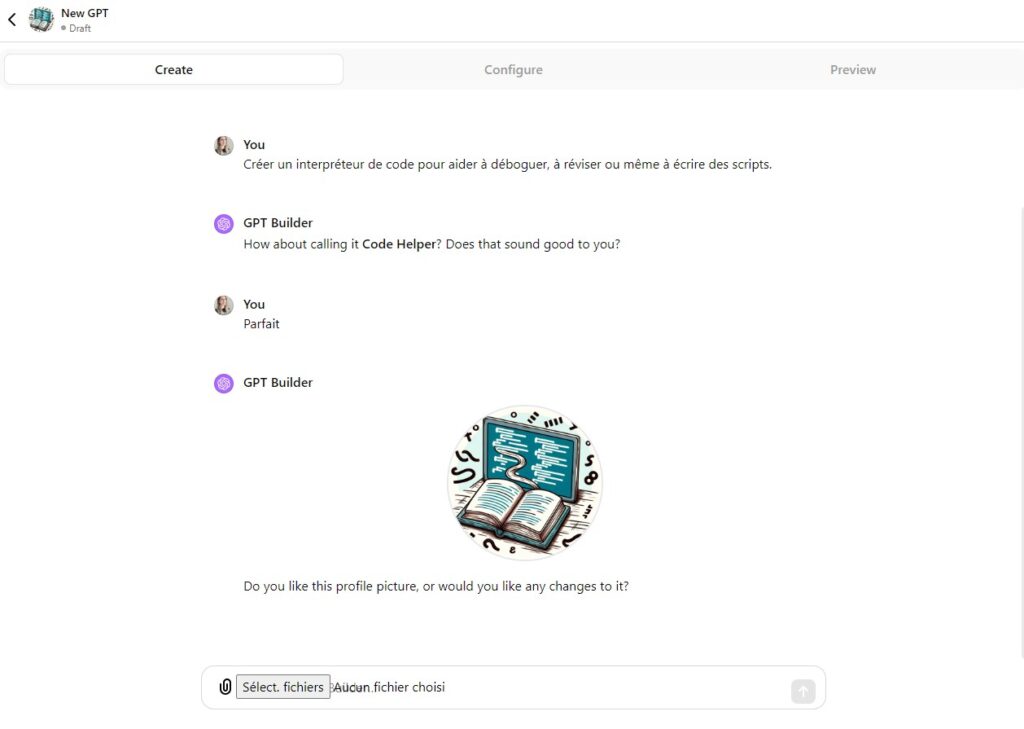
Les bots IA, tels que les GPTs (Generative Pre-trained Transformers), illustrent parfaitement la puissance de l’IA no-code.
Ces systèmes peuvent comprendre le langage naturel, générer du texte, répondre à des questions et même créer du contenu, le tout sans programmation complexe.
Des plateformes comme ChatGPT et Replika offrent des interfaces utilisateur conviviales pour créer une intelligence artificielle soi-même, pour vos workflows.
Les avantages et limites de créer en IA en no code
Adopter des solutions IA no-code présente de nombreux avantages pour les entreprises, tels qu’une innovation rapide, une personnalisation poussée des services et une optimisation des processus internes.
Toutefois, il est important de reconnaître les limites de cette approche. La personnalisation profonde et les fonctionnalités très spécifiques peuvent être restreintes.
De plus, même en utilisant des plateformes no code, une compréhension basique des principes de l’IA reste essentielle pour utiliser efficacement ces outils et éviter de propager des biais involontaires ou des erreurs.
Notre conseil : Expérimentez avec les plateformes no-code pour découvrir leur potentiel, mais gardez à l’esprit l’importance d’une stratégie réfléchie et d’une connaissance fondamentale des capacités et limites de l’intelligence artificielle. Pour des besoins plus poussés, faites appel à un développeur IA !
Notre dernier conseil pour créer une intelligence soi-même
La création d’une intelligence artificielle est désormais accessible à tous, que l’on possède des compétences en développement ou non. Que vous choisissiez une approche no code ou la programmation directe, il est important de rester informé sur les dernières évolutions de l’IA. Cela permet de maximiser le potentiel de cette technologie révolutionnaire, tout en innovant de manière responsable et efficace dans votre entreprise.
Toutefois, pour une intelligence artificielle parfaitement adaptée à vos attentes, faire appel à un développeur freelance reste la meilleure solution. Postez gratuitement votre annonce sur Codeur.com !