Set up an audit Google Ads this allows you to perform a complete check of your account and your advertising campaigns. It is a way to know where advertising spend is going and potentially help you find new campaign ideas.
Is your Google Ads account as effective as it could be?
Unless you have audited it, you can’t be sure. Although there are many tools and services that provide algorithm-based results, they often don’t take into account your marketing objectives, your target audience, and the desired outcomes of your efforts. Whether you’re taking over a client’s account or starting a new role within your company, it’s essential to know the current state of things before moving forward.
It is also useful to carry out periodic audits of your campaigns in order to step back and examine elements that might escape you in day-to-day management.
What is meant by a “Google Ads account audit”?
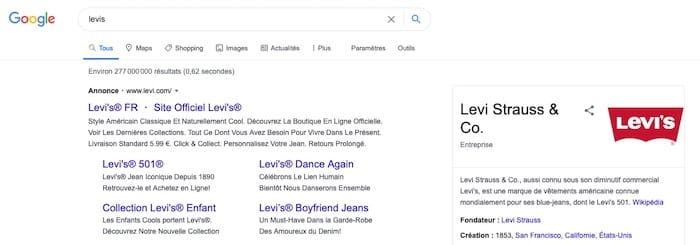
Google Ads is an element of SEA (paid search). From the moment you pay to gain positions online and to promote your business, it is important to optimize your online strategy. The idea is to limit spending while optimizing as many results as possible. We will talk here about conversion of your leads into customers, for example. An Ads account audit helps improve your advertising campaigns and therefore, by extension, the traffic to your website.
Rules for creating an ad
Creating an ad with Google Ads requires following rules to make it optimal from a digital marketing standpoint.
- It is important to clearly define the evaluation criteria for conversion and the performance of the advertising campaign. This is all the more important when competition is strong.
- You need to regularly test and manage your campaign to gather as much information as possible and understand the return on investment. This reinforces the idea that your campaign must be efficient by optimizing costs.
This observation leads us to consider the value of an Ads account audit that will optimize your campaigns to obtain the expected results.
The benefits of a Google Ads audit
- Identify areas of wasted spending.
- Identify new expansion opportunities.
- Improve ongoing management processes.
- Gain audience insights that can be applied to the account as well as to other marketing channels.
- Validate hypotheses.
So here is how to carry out the audit of your account Google Ads.
The steps of a good AdWords audit
An Ads account audit therefore aims to optimize your advertising campaigns and increase your visibility compared with organic search. You can spend money in vain… Or your site may be hindered by underlying issues that limit search performance. That is why it is important to do this audit.
Here are 7 important points for carrying it out.
Review the objectives
The first step of the audit is to review the company's (and the account's) objectives to make sure you clearly understand where you need to go.
Understanding what those objectives are and the results you seek to achieve will set the tone for your audit throughout the process. It will make auditing the account easier and bring objectivity to it.
Some questions to ask about the objectives:
- What are your conversion objectives for the business?
- What are the conversion objectives in Google Ads ?
- Have your objectives changed?
- Can you track performance beyond ads (for leads, sales, or traffic)?
- Your target audience (or your personas) have they changed?
Account and campaign settings

Name of your campaign
It is recommended to choose a name related to your campaign's theme. It's easier to identify them when you have several — Campaign type: adapt the type to your objectives.
Networks
Here, you have the option to decide where you want to display your ad according to the objectives of your campaign.
Devices
Your advertising campaigns will be accessible and adaptable from all devices (computers, tablets…). You can customize your ads for different device types.
Choice of languages and geographic areas
You can decide to target specific geographic areas depending on your campaign. You also have the choice of language.
Budget and Bids
It it is possible to configure the type ofbids or let Google Ads do it. Other types of bids may be offered to you depending on your campaign.
Ad extensions
Ad extensions allow you to add additional information to your ads (address, links…)
Additional settings
Optional additional features will be offered to you that can help improve your campaign's performance.
Review account structure
There are many ways to structure the use of campaigns and ad groups, organized around:
- Logical business goals.
- Target personas.
- Product lines.
- Service lines.
- Given topic.
The aspects of account structure to evaluate are as follows:
- Do campaigns represent different segments of campaign-level settings (geo-targeting, bids, campaign-level budgets)?
- Do campaigns provide summary reports for the ad groups that belong to them?
- Are campaigns easy to compare with one another?
Analyze ad groups and keywords
The aspects of ad groups to consider in the audit are as follows:
- Do they contain keywords homogeneous (addressing the same topic)?
- Is the set maximum CPC in line with what I'm willing to pay?
- My ad groups do they compete with each other?
- Are my top-performing ad groups receiving enough budget?
Regarding keywords, ask yourself whether:
- Some negative keywords are they used?
- Does the research report show keywords that are off-topic for the subject and conversion goals?
- Are there terms with high impressions, clicks, and/or spend that do not convert?
- Are there keywords with poor quality scores?
- Are there terms that do not align with the intended or desired CPC, CTR, conversion, or conversion rate objectives?
Also read : Google Ads: guide to ad formats
Ads and landing pages
Your ads must now also be scrutinized. You can check:
- Are there at least two ad variations in each ad group?
- Are the keywords present in the ads?
- Do the ad headlines contain effective calls to action?
- Are there ads with average or low quality?
Landing pages are external to Google Ads, but have a direct impact on your campaign performance and influence the metrics you measure in Google Ads.
Your landing pages should therefore also be part of your audit. Consider the following:
- Does the page have a good title and a clear call to action?
- The forms Do they work?
- The conversion tracking code Is it properly in place?
- Quality scores of the ads pointing to each landing page
Tip: Consider using ad extensions. They allow you to add extra text to your PPC ads (PPC ads are online ads for which you pay a small amount each time someone clicks on them). This can be beneficial for your profitability.
Quality score and budget
The Quality The Quality Score is a Google metric that lets you know the relevance between your ad, the landing page, the message you want to convey, and the keywords. The reason why the QS (Quality Quality Score is heavily influenced by the CTR of your ads. CTR is the number of clicks your ad receives in Google advertising is measured based on impressions, and charged you are charged by Google Ads each time someone clicks on the ad. If someone sees 2 the ad multiple times, you will be charged twice. That's why it's essential to measure the impression share of those clicks.
Your ads are positioned between 1 and 10. By improving the Quality Score, you can lower the cost per click. This is therefore an important step. Several checks in the settings must be carried out to verify the QS.
- Make sure to maximize your number of clicks
- Pay attention to the writing of your ads (writing quality, relevance…)
- Relevance and value of the landing page
- Special attention to keywords
Different performance KPIs
If you want to know whether one of your campaigns is performing, you can rely on performance indicators called KPIs, key performance indicators in English. Indeed, without indicators, it is difficult to evaluate the relevance as well as the return on investment of an advertising or communication campaign. It is therefore necessary to ask a few questions: Have I defined KPIs?
Have I chosen, appropriate for my industry?
Knowing your industry well is essential for this step. It’s the best way to define a coherent action plan. From that plan you will be able to measure the conversions generated by your campaign.
Here are some KPIs for Google Ads:
- impressions : correspond to ads that prove to be visible and seen for a precise target (defined in advance).
- the click-through rate : this rate is also called CTR (Click–Through Click-Through Rate). It corresponds to the percentage of people who clicked on your ad after seeing it.
- the conversion rate : conversion is when a person clicked on your page and you offered them an action that they completed (for example, buying a product)
- cost per acquisition : it corresponds to the amount you spend to acquire a new customer.
- average position : position corresponds to the place you have on search engine results pages when someone searches the web.
Also read: 8 secrets for a successful AdWords campaign
Our tip for auditing your Google Ads campaigns
Be sure to install Google Analytics on your website, as it allows you to optimize it and create a strong, effective connection during your advertising campaigns. An effective landing page improves your site’s conversion rate and search ranking.
Your audit is complete: you have gathered the information needed to know the state of your account, its strengths, its weaknesses... And above all, you have identified ways to optimize your account and its performance.
If the result of this audit is not conclusive, consider entrusting the management of your Google Ads campaigns to an expert. They will be able to put you on the right track and to increase your SEA results.
Publish your project for free on Codeur.com to receive quotes from freelance SEA consultants.