94 % des clients admettent avoir écarté une entreprise de leur choix en raison d’avis négatifs. Impressionnant, n’est-ce pas ?
L’importance des retours clients n’est plus à prouver, constituant un pilier indéniable de l’e-réputation des marques et des conversions pour les entreprises. Avec l’avènement du Digital Markets Act (DMA) de l’Union européenne, une nouvelle ère se profile concernant l’affichage des avis sur les Google Business Profiles. Cette évolution pourrait devenir un véritable tremplin pour les entreprises bénéficiant de retours positifs, tout en représentant un défi pour celles accablées par des critiques négatives.
Explorons ensemble les impacts de ces évolutions, ainsi que quelques astuces pour tirer le meilleur parti de la nouvelle section avis des Google Business Profiles !
Google Business Profile : l’évolution de la section « avis »
Dans une démarche d’innovation et de conformité avec le Digital Markets Act de l’Union européenne, Google a récemment transformé l’affichage des avis dans ses Business Profiles. Ce changement, initié pour contrer les pratiques anticoncurrentielles et briser le monopole dans le référencement local, a été observé par Daniel Roch de l’agence Seomix.
Auparavant, les avis visibles sur une fiche Google Business Profile provenaient exclusivement de Google. Maintenant, en cliquant sur la nouvelle option “Afficher tous les avis”, les utilisateurs sont redirigés vers une recherche étendue.
Celle-ci combine le “nom de l’entreprise + avis”, offrant ainsi un panorama d’opinions collectées non seulement de Google, mais aussi de sources variées et reconnues comme Trustpilot, PagesJaunes, Facebook, Tripadvisor ou encore Uber Eats.
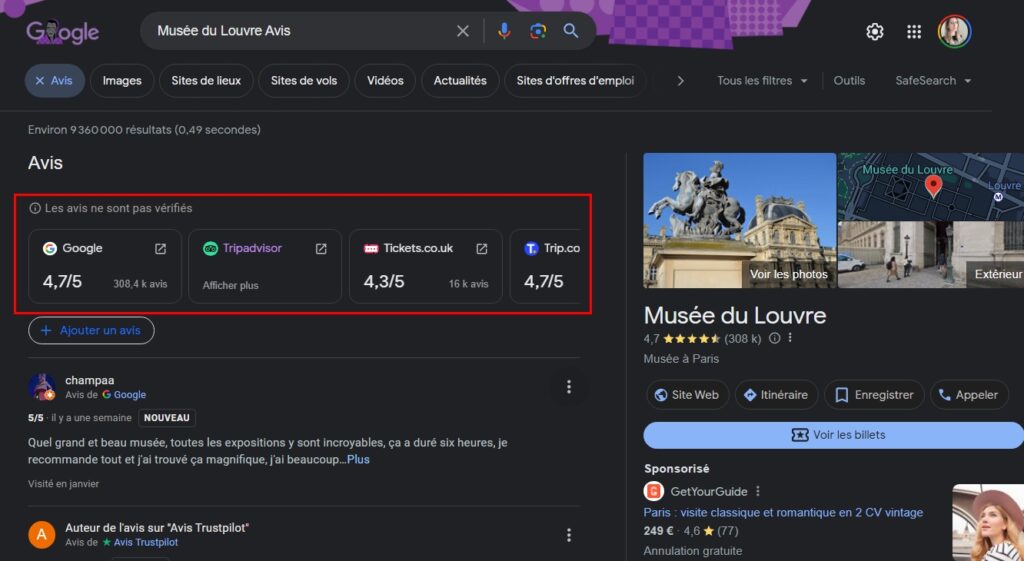
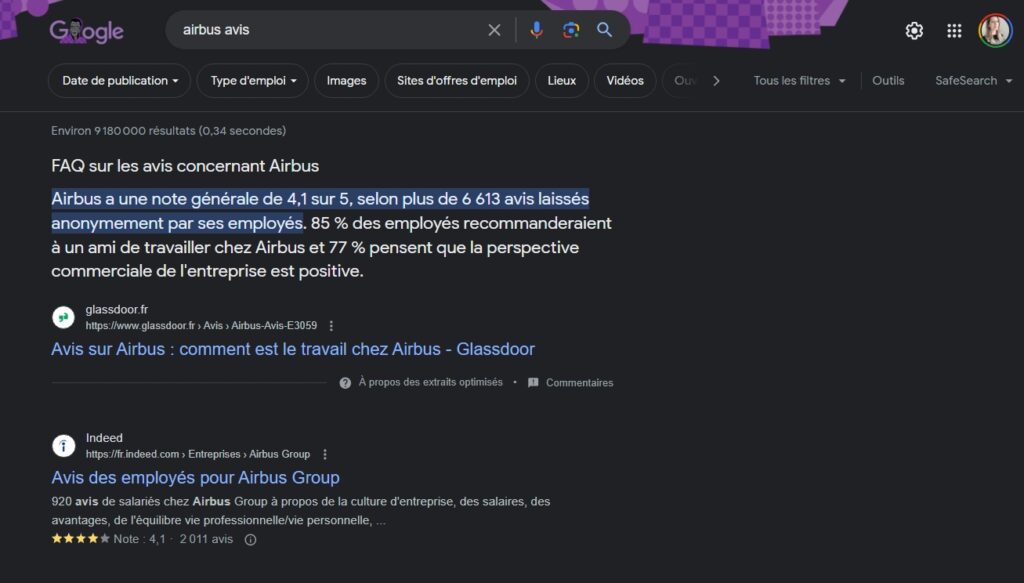
Même les commentaires des employés sur des plateformes telles qu’Indeed sont intégrés, ainsi que les avis présents sur les sites web des entreprises elles-mêmes.
L’impact de l’évolution des profils Google Business pour les entreprises
Les avis clients sont devenus un véritable baromètre de confiance et de crédibilité. Ils offrent une vision globale et nuancée aux consommateurs, ce qui est extrêmement bénéfique pour eux, tout en promouvant une concurrence loyale sur le marché numérique. D’ailleurs, 68 % des consommateurs hésitent à faire confiance à un site affichant une note parfaite de 5 étoiles, à moins qu’il ne soit soutenu par une multitude d’avis authentiques.
Alors, quels vont être les impacts de ce nouvel affichage pour les entreprises ?
La nécessité d’effectuer une veille plus élargie
Une veille étendue est désormais indispensable pour couvrir toutes les plateformes affichées par Google. Pour instaurer la confiance auprès des consommateurs, afficher des notes cohérentes et similaires sur différents sites devient indispensable.
Pour les entreprises, cela implique une surveillance régulière des avis sur Google, mais aussi sur divers réseaux sociaux et sites influents. Mais ce n’est pas tout : répondre de manière proactive et constructive aux avis, positifs ou négatifs, est tout aussi essentiel pour démontrer son engagement envers la satisfaction clientèle. Une bonne pratique qui renforce la confiance des utilisateurs. En effet, 55 % des consommateurs voient d’un bon œil les entreprises qui réagissent à leurs avis, et plus de la moitié (53 %) s’attendent à une réponse sous une semaine en cas d’avis négatif !
L’importance de collecter des avis sur différentes plateformes
En plus de surveiller activement les avis laissés sur différents sites, l’évolution des profils Google Business exige de diversifier les stratégies de collecte des retours clients.
Les professionnels doivent maintenant voir au-delà des seuls avis Google et encourager les feedbacks sur des canaux variés tels que Facebook, Trustpilot, Tripadvisor, et Avis Vérifiés.
Autre stratégie à mettre en œuvre : l’inscription sur des plateformes d’avis payantes. Ces sites, grâce à des processus de vérification rigoureux, tendent à offrir une vision plus authentique des retours clients, minimisant ainsi le risque d’avis frauduleux ou manipulés. Une démarche pertinente sachant que 75 % des consommateurs pensent que les faux avis sont un problème et que les entreprises doivent y remédier.Haut du formulaire
Les avis multiplateformes : un atout SEO majeur
Adopter une stratégie multi-plateforme pour la gestion des avis clients est un levier puissant, non seulement pour renforcer l’image de marque, mais aussi pour optimiser le référencement (SEO). En effet, les signaux liés aux avis constituent environ 15 % des critères de classement local de Google.
Les avis positifs jouent un rôle prépondérant dans le SEO local, étant le troisième facteur le plus important dans l’algorithme du pack local de Google. Ces feedbacks authentiques améliorent considérablement la visibilité des entreprises dans les résultats de recherche locaux.
En effet, les moteurs de recherche, notamment Google, considèrent ces commentaires comme un indicateur clé de la fiabilité et de la popularité d’une entreprise.
Un autre conseil essentiel : intégrez les retours clients sur votre site web. Cette pratique peut renforcer la confiance des visiteurs et améliorer votre SEO. L’utilisation de balises de données structurées permet aux moteurs de recherche d’interpréter facilement ces avis, favorisant ainsi un meilleur positionnement de votre Google Business Profile dans les résultats de recherche.
Pourquoi le Digital Markets Act (DMA) bouleverse les avis Google ?
À l’origine de ces changements : le Digital Markets Act (DMA) de l’Union européenne ! L’un des objectifs principaux du DMA est d’empêcher ces géants du marché numérique de favoriser indûment leurs propres services ou de restreindre la concurrence.
Dans le cadre du DMA, les entreprises comme Google sont tenues de suivre des règles plus strictes pour assurer une concurrence loyale. Cela comprend, par exemple, l’obligation d’utiliser des conditions de classement transparentes, équitables et non discriminatoires pour éviter de favoriser certains vendeurs sur leurs plateformes.
Pour Google, cela signifie qu’il doit apporter divers changements à la manière dont ses produits et services fonctionnent dont, notamment, le recensement et l’affichage des avis clients. L’intégration de feedbacks provenant de différents sites s’aligne donc sur l’objectif du DMA de promouvoir une concurrence équitable et une plus grande transparence.
Notre astuce pour améliorer les avis sur votre Google Business Profile
Ce regroupement d’avis représente une opportunité de gagner en visibilité et en crédibilité auprès de votre audience, surtout si votre entreprise bénéficie de nombreux retours clients positifs.
Un conseil supplémentaire : ne négligez pas l’importance de l’authenticité. Encouragez des avis véritables et engagez-vous sincèrement avec vos clients en ligne. Ce lien de confiance renforcera votre e-réputation et votre référencement sur Google.
Besoin d’aide pour optimiser votre stratégie SEO sur Google ? Postez dès maintenant une annonce sur notre plateforme de freelances, Codeur.com.