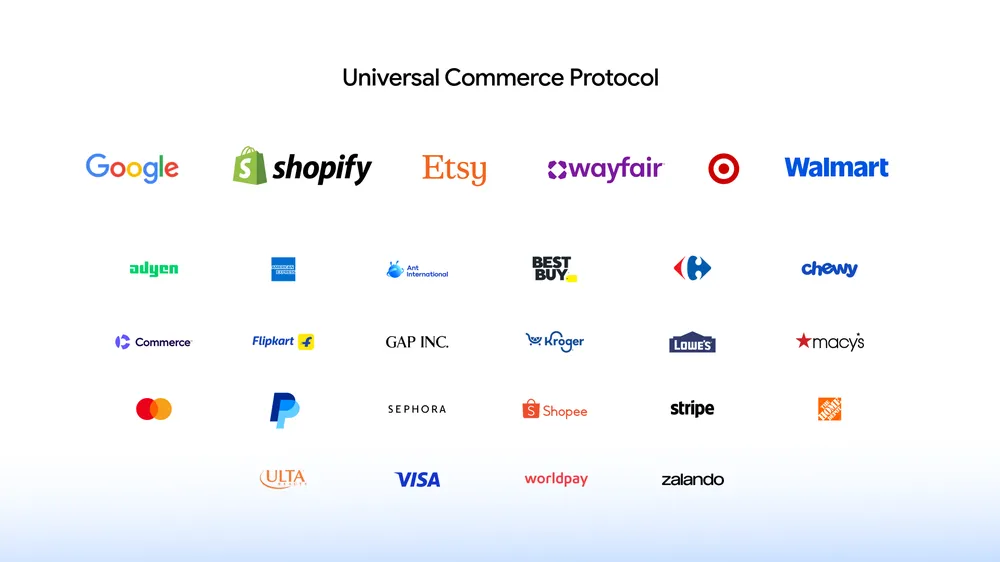
Google fait un grand pas en avant dans le secteur du commerce en ligne avec l’annonce du Universal Commerce Protocol (UCP), un nouveau standard ouvert destiné à faciliter les achats assistés par intelligence artificielle. Développé en partenariat avec des géants du retail comme Shopify, Etsy, Wayfair, Target et Walmart, ce protocole vise à créer un langage commun permettant aux agents IA d’interagir efficacement tout au long du parcours d’achat.
Ce qu’il faut retenir :
- Google introduit le Universal Commerce Protocol, un standard ouvert co-développé avec les leaders du retail pour unifier le commerce piloté par IA.
- Les utilisateurs pourront bientôt acheter directement depuis le mode IA de Google Search et Gemini sans quitter la plateforme.
- Business Agent permet aux marques d’intégrer un agent conversationnel personnalisé dans les résultats de recherche Google.
- Direct Offers lance un programme pilote d’offres exclusives directement dans les réponses IA.
Un protocole pour unifier le commerce par IA
Le Universal Commerce Protocol est infrastructure technique conçue pour faciliter les interactions entre agents IA, systèmes de paiement et plateformes de commerce. Contrairement aux approches actuelles qui nécessitent des connexions individuelles pour chaque agent, l’UCP établit un langage commun permettant à tous les agents de communiquer facilement.
Le protocole s’intègre avec les standards existants comme Agent2Agent (A2A), Agent Payments Protocol (AP2) et Model Context Protocol (MCP) que Google avait adopté fin 2025. Cette compatibilité offre la possibilité aux entreprises d’adopter progressivement le système en choisissant les extensions correspondant à leurs besoins spécifiques.
Plus de 20 entreprises de renom ont déjà endorsé l’initiative, dont Adyen, American Express, Best Buy, Carrefour, Mastercard, Stripe, The Home Depot et Visa. Cette adhésion massive témoigne de l’importance stratégique que représente ce protocole pour l’avenir du commerce en ligne.
Acheter sans quitter Google
La première application concrète de l’UCP se manifeste par une nouvelle fonctionnalité de checkout intégrée au mode IA (AI Mode) de Google Search et à l’application Gemini. Les utilisateurs américains pourront bientôt finaliser leurs achats directement sur les surfaces Google pendant leur phase de recherche, sans être redirigés vers les sites des commerçants.
Le système s’appuie sur Google Pay et utilise les informations de paiement et de livraison déjà enregistrées dans Google Wallet. Le support PayPal est également prévu prochainement. Les retailers conservent leur statut de vendeur officiel et peuvent personnaliser l’intégration selon leurs besoins tout en évitant les abandons de panier.
Google prévoit d’étendre progressivement les capacités de cette fonctionnalité avec la découverte de produits connexes, l’application de programmes de fidélité et la création d’expériences d’achat personnalisées. Un déploiement international est également planifié dans les prochains mois.
Business Agent : un assistant virtuel pour chaque marque
Business Agent constitue une nouvelle approche permettant aux marques d’intégrer un agent conversationnel personnalisé directement dans les résultats de recherche Google. Ce système fonctionne comme un conseiller de vente virtuel capable de répondre aux questions produits en respectant le ton et le style de la marque.
Le service est disponible depuis le 12 janvier pour les retailers américains éligibles, avec des partenaires de lancement incluant Lowe’s, Michael’s, Poshmark et Reebok. Les commerçants peuvent activer et personnaliser leur agent via Merchant Center.
Les prochaines évolutions permettront aux retailers d’entraîner l’agent sur leurs propres données, d’accéder à des insights clients avancés, de proposer des offres sur des produits connexes et d’autoriser les achats directs dans l’interface conversationnelle, incluant le checkout piloté par IA.
Direct Offers : des réductions exclusives dans le mode IA
Google lance également Direct Offers, un programme pilote publicitaire permettant aux annonceurs de proposer des offres exclusives aux utilisateurs recherchant des produits dans le mode IA. Le système identifie les moments opportuns pour afficher des réductions spéciales pendant que l’utilisateur compare des options.
Le fonctionnement repose sur des paramètres de campagne où les retailers définissent leurs offres, tandis que l’IA de Google détermine quand les afficher en fonction de la pertinence. Par exemple, lors d’une recherche détaillée pour un tapis adapté à une salle à manger à fort passage, les retailers pertinents peuvent proposer une réduction de 20%.
Les premiers partenaires incluent Petco, e.l.f. Cosmetics, Samsonite, Rugs USA et des marchands Shopify. Le pilote se concentre initialement sur les réductions mais s’élargira pour inclure d’autres attributs valorisant l’offre comme les bundles ou la livraison gratuite.
Optimiser sa présence dans l’ère conversationnelle
Google introduit des dizaines de nouveaux attributs de données dans Merchant Center, spécifiquement conçus pour faciliter la découverte dans l’ère du commerce conversationnel. Ces attributs vont au-delà des mots-clés traditionnels pour inclure des éléments comme les réponses aux questions fréquentes, les accessoires compatibles ou les produits de substitution.
Ces nouvelles données alimentent les surfaces comme le mode IA, Gemini et Business Agent. Le déploiement commence avec un groupe restreint de retailers avant une extension progressive dans les prochains mois. Cette évolution répond à un changement fondamental dans la façon dont les consommateurs découvrent et achètent des produits.
Les implications pour le retail
L’intégration du checkout dans le mode IA modifie profondément l’équation du trafic pour les sites e-commerce. Les utilisateurs peuvent désormais rechercher, comparer et acheter sans jamais visiter le site du retailer. La vente se réalise toujours, mais la visite peut disparaître.
Pour les commerçants participant à l’UCP, cette évolution offre un accès direct aux acheteurs à forte intention au moment précis de la décision d’achat. Ceux qui n’y participent pas risquent de voir leurs produits moins visibles quand les utilisateurs s’attendent à finaliser leurs transactions sans quitter Google.

A ce propos, Adobe a noté dans un rapport récent que le trafic généré par l’IA générative vers les sites marchands a augmenté de 693,4 % pendant la période des fêtes, bien que le rapport ne précise pas le taux de conversion de ce trafic en ventes réelles.
Une adoption multi-plateforme
L’initiative de Google s’inscrit dans une tendance plus large d’intégration de l’IA dans le commerce. Shopify a également annoncé une intégration similaire avec Microsoft Copilot le même jour, permettant aux clients de finaliser leurs achats dans le flux conversationnel.
Amazon, Walmart et OpenAI développent également leurs propres standards et produits pour intégrer l’IA dans chaque aspect du shopping. Cette convergence suggère que le commerce assisté par agents IA devient une véritable norme plutôt qu’une simple expérimentation.
L’approche de Google avec l’UCP se distingue par son caractère ouvert et collaboratif, visant à créer un écosystème où agents, entreprises et consommateurs peuvent interagir de manière fluide, indépendamment des plateformes utilisées.
L’article “UCP : Google lance un protocole universel pour transformer le shopping avec l’IA” a été publié sur le site Abondance.