Comme Simba, vous vous sentez prêt à conquérir le monde ? Vous avez de grands rêves d’aventure pour votre entreprise ? Vous vous voyez prospérer sur un marché international ? Vous êtes sur le bon article… et à la bonne époque !
En effet, grâce à la mondialisation, il est plus facile de franchir les frontières nationales, d’exporter son activité à l’étranger, d’élargir votre public et d’augmenter vos revenus.
Mais avant de poser vos pattes sur un nouveau continent, vous devez définir une stratégie d’internationalisation. Si possible, une stratégie qui correspond à vos besoins et vous aide à prospérer…
C’est parti ! On vous dit tout sur le développement de votre entreprise à l’international et les techniques pour atteindre vos objectifs.
Qu’est-ce qu’une stratégie d’internationalisation ?
Par définition, une stratégie d’internationalisation désigne des techniques et méthodes par laquelle l’entreprise vend ses biens ou services, en dehors de son marché local. Elle marque l’envie d’expansion d’une organisation.
Vous partez à la conquête de nouvelles cibles avec des habitudes de consommation souvent différentes de votre clientèle locale. Ce qui peut pousser une entreprise à adapter ses objectifs.
Cette stratégie est un processus continu et nécessite :
- Une analyse du marché international (ou des marchés, si vous souhaitez conquérir plusieurs pays différents).
- Une étude des ressources.
- La définition d’objectifs SMART (Spécifique, Mesurable, Atteignable, Réaliste, Temporel).
- Une bonne compréhension de la dynamique du marché cible pour développer des offres performantes.

Pourquoi mettre en place une stratégie d’internationalisation ?
Les marchés internationaux offrent de nombreuses possibilités de développement pour votre entreprise. L’un des principaux avantages reste l’augmentation des ventes et de vos revenus. Mais, ce n’est pas tout. S’ouvrir à l’extérieur vous permet de :
1. Profiter de nouveaux marchés
Le premier avantage d’une stratégie d’internationalisation demeure l’accès à de nouveaux marchés. Vous vous constituez une nouvelle clientèle et touchez un public encore inexploité.
C’est aussi une exposition aux investissements étrangers. Vous pouvez donc attirer d’autres capitaux et accélérer la croissance de votre entreprise.
2. Sécuriser votre activité
Vous connaissez l’expression « ne pas mettre tous ses œufs dans le même panier », n’est-ce pas ? Si votre entreprise ne vend ses services ou produits que dans une ou deux régions, elle s’expose à des risques suite à une catastrophe naturelle, un changement de la conjoncture socio-économique ou autre circonstance imprévue.
Avec une stratégie d’internationalisation, vous minimisez ces risques et vous stabilisez vos revenus.
3. Réaliser des économies d’échelle
Une internationalisation de vos activités inclut d’importants investissements, c’est vrai, mais ces derniers vous permettent de réaliser des économies d’échelle.
Par exemple, vous n’avez pas besoin de doubler vos effectifs pour travailler sur un nouveau marché. Vos collaborateurs actuels pourront vous aider à adapter les protocoles en cours à ces nouveaux territoires.
Si vous développez votre activité dans des régions similaires à votre emplacement actuel, vous pourrez dupliquer les campagnes marketing et donc obtenir un retour sur investissement plus élevé.
Un développement international permet également de produire en grandes quantités. Ce qui permet de diminuer le coût unitaire du produit et d’augmenter votre marge.
4. Garder une longueur d’avance sur la concurrence
L’internalisation de vos activités vous donne accès à de nouveaux clients. Si vos concurrents n’ont pas encore conquis ces nouveaux marchés, vous prenez de l’avance sur eux !
L’expansion de votre entreprise, en dehors de sa région, aura pour effet d’accroître la visibilité et donc la valeur de votre nom, de votre logo et de votre image de marque.
Vous disposez également d’une occasion d’étendre la portée de votre propriété intellectuelle, de vos marques et de vos droits d’auteur.

5. Améliorer vos offres
Pour se faire une place sur un nouveau marché, vous devez rencontrer et convaincre une autre cible. Cela inclut de connaître les besoins, habitudes de consommation et attentes des consommateurs en place.
Cet exercice vous aidera à identifier des opportunités d’amélioration de vos produits ou services. Vous pourrez développer de nouvelles fonctionnalités ou même découvrir un usage inhabituel de vos offres.
Ces améliorations peuvent trouver écho auprès de votre clientèle locale, offrant une autre occasion de croissance.
8 stratégies d’internationalisation à connaître
L’expansion mondiale en tant qu’entreprise n’a pas une approche unique. Selon votre activité et vos objectifs, vous aurez le choix entre 8 stratégies d’internationalisation.
1. L’exportation
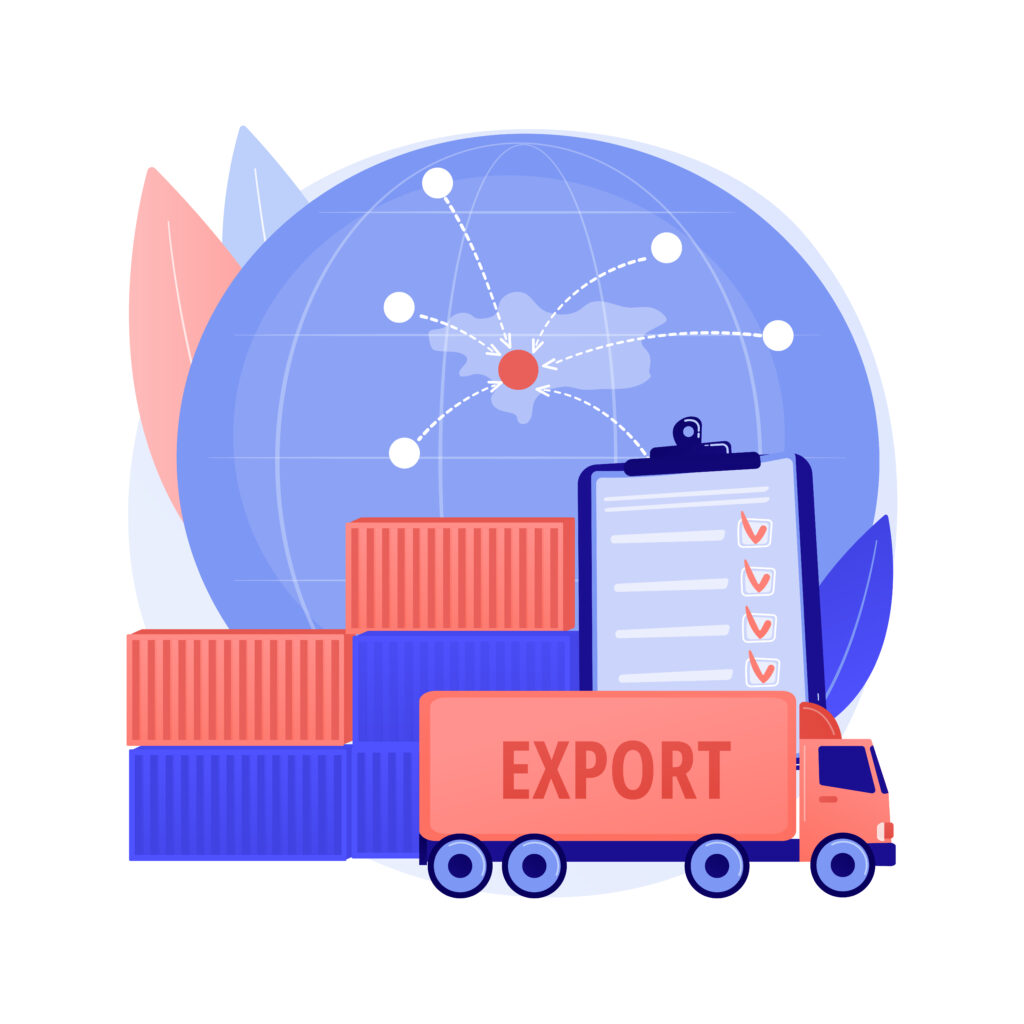
Identifiée comme la plus utilisée, cette stratégie se concentre sur l’exportation de produits et de services vers des marchés étrangers. Vous conservez les sièges de production dans le pays ou la région d’origine. Cela signifie que vous n’avez pas besoin d’investir dans du personnel et des installations à l’étranger.
Cependant, cette stratégie d’internationalisation nécessite de trouver des distributeurs locaux sérieux, cohérents avec votre image de marque. Vous devez aussi gérer la logistique mondiale et vous conformer aux réglementations du commerce extérieur de différents pays.
La stratégie d’exportation est souvent suivie par de petites entreprises locales qui cherchent à exporter des ressources vers des marchés étrangers. Le vin en est un bon exemple !
Cela peut être aussi une stratégie de départ, qui vous permet de tester l’accueil de vos biens ou services sur de nouveaux marchés. Et si le succès est au rendez-vous, vous pouvez évoluer vers une autre méthode, plus lucrative.
2. Les multinationales
La stratégie de multinationales vise à établir une présence sur un marché étranger et adapter les produits au marché local. Vous gardez le siège social dans le pays d’origine et créez des succursales dans les régions à conquérir, avec des directions dédiées.
Vous repositionnez votre stratégie marketing pour vous adresser à ce nouveau public. Le tout, en tenant compte des coutumes, des traditions et des traits culturels de ce marché.
Ces ajustements sont souvent coûteux et peuvent entraîner une prise de risque financier. Cependant, elle a aussi plus de chance de fonctionner.
Cette stratégie d’internationalisation est largement utilisée par les entreprises du secteur alimentaire et des boissons. Par exemple, Nestlé adopte une approche marketing et commerciale différente sur chacun de ses marchés et adapte ses produits aux goûts locaux (ainsi que le nom de ses marques).
3. Les filières à l’étranger
Avec une stratégie de filières, vous traitez le monde comme un seul marché. C’est la méthode optimale pour réaliser des économies d’échelle, accroître votre notoriété et générer plus de revenus.
Vous disposez d’un bureau central dans le pays d’origine, tout en établissant des centres d’opérations sur les marchés étrangers.
Même si les produits et services sont homogénéisés, de petits changements peuvent être nécessaires. Par exemple, McDonald’s ou Burger King peuvent modifier, ajouter ou supprimer certains burgers pour répondre aux besoins des marchés locaux.
La stratégie d’export et des filières peuvent paraître similaires, mais il existe une différence : avec la première, vous maintenez une politique nationale et l’adaptez aux marchés internationaux, tandis que la seconde implique de traiter chaque marché étranger différemment en adaptant (parfois légèrement) les produits ou services.
4. La stratégie transnationale
La stratégie transnationale est une combinaison des stratégies multinationales et de filières. Les entreprises transnationales fonctionnent avec un bureau central (dans le pays d’origine) qui coordonne les filiales locales sur les marchés internationaux.
Cette structure organisationnelle signifie qu’il existe une marque et un centre d’opérations uniques. Celui-ci détermine la prise de décision globale et la gestion de la chaîne d’approvisionnement, ce qui permet de réaliser des économies d’échelle.
Vous vendez le même produit ou service (sans modification aucune) dans plusieurs pays, avec une différence dans leur commercialisation selon la région. Un exemple de marque utilisant cette stratégie transnationale est la boisson gazeuse, Coca-Cola !
La marque est la même partout dans le monde. Le logo, l’approche marketing, le goût et la formule sont similaires. Seule la langue sur l’emballage change.
5. L’acquisition d’une entreprise à l’étranger
Une autre stratégie d’internationalisation est l’acquisition partielle ou totale d’une entreprise qui opère déjà à l’étranger. Malgré les coûts élevés, cette alternative peut vous aider à réduire les risques liés à l’entrée dans un nouveau pays.
Vous vous appuyez sur les compétences et le savoir-faire de l’entreprise existante. Par ailleurs, si son activité est positive, vous récoltez immédiatement les bénéfices de ce rachat. Ce qui vous laisse le temps d’appréhender ce nouveau marché pour y développer une stratégie de croissance.

6. La licence
La licence est un accord international entre deux ou plusieurs parties. Elles conviennent que le licencié, moyennant le paiement de redevances, peut utiliser la ressource du propriétaire pendant une période déterminée.
Dans cette stratégie, l’internationalisation se fait avec l’aide d’une entreprise étrangère. Vous profitez de leur image pour vous établir sur le nouveau marché.
Le principal inconvénient est que l’entreprise étrangère ne fait pas partie de la société mère. Il y a donc un risque qu’elle devienne concurrente si le contrat de licence arrive à échéance.
7. La franchise
Dans la franchise (ou affiliation commerciale), vous trouvez un affilié (franchisé), devant vous payer une redevance. Le franchisé est autorisé à vendre vos produits ou services et à utiliser votre système commercial.
Les entreprises qui choisissent la franchise comme stratégie d’internationalisation doivent s’assurer que l’affilié respecte ses normes de qualité, de prix et de publicité.
8. La joint-venture
Une joint-venture est une association entre deux ou plusieurs entreprises pour une période donnée, avec un objectif commun. Les partenaires partagent le capital, la gestion, les profits ou les pertes, ainsi que le savoir-faire.
Cette stratégie d’internationalisation s’avère pertinente si vous disposez du soutien d’un partenaire qui connaît déjà le marché étranger.
Notre astuce
Vous souhaitez conquérir l’étranger ? Aidez-vous de cette liste pour trouver une stratégie d’internalisation qui répond à vos besoins.
Et n’hésitez pas à poster une annonce sur Codeur.com pour trouver un freelance qui vous accompagnera dans cette nouvelle aventure !