Face à un environnement toujours plus exigeant, nombreuses sont les entreprises qui adoptent la gestion de projet. Le risque de dérive apparaît rapidement. La gestion multi-projets présente des enjeux cruciaux, avec de potentiels impacts sur le succès du plan stratégique :
- Gérer une charge mentale en constante augmentation.
- Respecter des délais qui s’entrecroisent.
- Maintenir la productivité des salariés.
Pour gagner en sérénité, plusieurs méthodes permettent de gérer un portefeuille de projets et de le suivre efficacement, sans générer de stress indésirable.
Vos équipes comme les dirigeants ont tout à gagner en les appliquant et en mettant en place un outil de pilotage. Codeur.com et monday.com vous présentent leurs conseils pour éviter le stress lors de la gestion de vos multiples projets.
1. Centraliser vos projets
La gestion de plusieurs projets démarre inévitablement par la centralisation au sein d’un même outil. Excel est aujourd’hui vite dépassé au vu du nombre et de la complexité des projets dans une entreprise.
Les équipes sont diverses et peuvent venir de différents services, il est donc indispensable de favoriser le travail collaboratif. Sans centralisation, vous risquez d’être dépassé et le risque d’échec est réel.
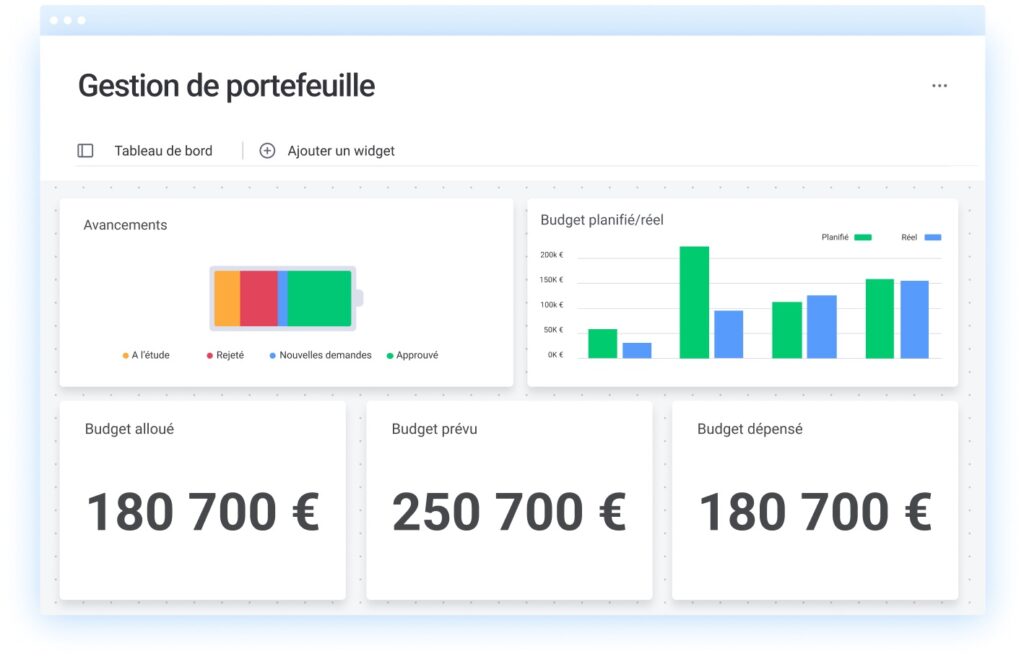
Regrouper votre portefeuille vous permettra :
- de jongler facilement entre vos différentes équipes, les délais et vos tableaux de bord ;
- de disposer d’un état des lieux précis de l’avancée des tâches, accessible à tous et à tout moment ;
- de piloter efficacement l’allocation des ressources.
Le tableau de bord global est utile pour optimiser votre gestion et maîtriser les risques de dérive.
2. Bien définir les objectifs
La première étape d’un projet passe par vos objectifs : il est indispensable de les déterminer au moment de la rédaction du cahier des charges. La réflexion doit aboutir à des objectifs raisonnables et atteignables, appréciés au niveau de chaque projet. Vous disposerez ainsi d’une cartographie exhaustive.
Certains objectifs sont incontournables :
- Délais.
- Nature des livrables.
- Respect du budget.
Cette feuille de route peut être intégrée à votre outil de gestion multi-projets.
Soyez vigilant : les objectifs doivent être compris et donc précis.
La méthode SMART sera utile, mais retenez surtout les points suivants :
- La temporalité doit être précise : une date définie est indispensable.
- Il faut chiffrer les objectifs : 10 % d’augmentation du CA, 15 nouveaux clients sont des exemples parlants.
- Ils doivent être réalistes, au risque de décourager d’emblée vos équipes.
3. Prioriser les tâches
Pour définir vos priorités, concentrez-vous sur les objectifs ayant le plus d’impact sur la gestion stratégique de l’entreprise et les risques qui en découlent. Par exemple, si l’objectif prioritaire est axé sur la croissance du CA, mettez l’accent sur le projet et les tâches qui permettent de l’atteindre rapidement.
La priorisation vous permet également de gérer l’allocation des ressources : si vous constatez une surcharge chez l’un de vos salariés, vous pourrez recentrer son activité sur les tâches identifiées comme prioritaires.
La matrice d’Eisenhower vous sera utile. Vous pouvez définir les tâches selon leur critère d’urgence et d’importance. Vous pourrez ensuite les piloter facilement, en utilisant par exemple la méthode Kanban.
4. Ajuster les calendriers
Des délais intenables constituent l’un des plus gros facteurs de stress pour vos salariés. Une pression accrue peut mener à des situations graves comme le burn-out et donc des arrêts de travail. Un rétroplanning adapté limite ce risque.
De plus, une mauvaise pratique fréquente lorsque l’on gère plusieurs projets concerne la mauvaise gestion des délais, avec plusieurs échéances aux mêmes dates ou trop rapprochées.
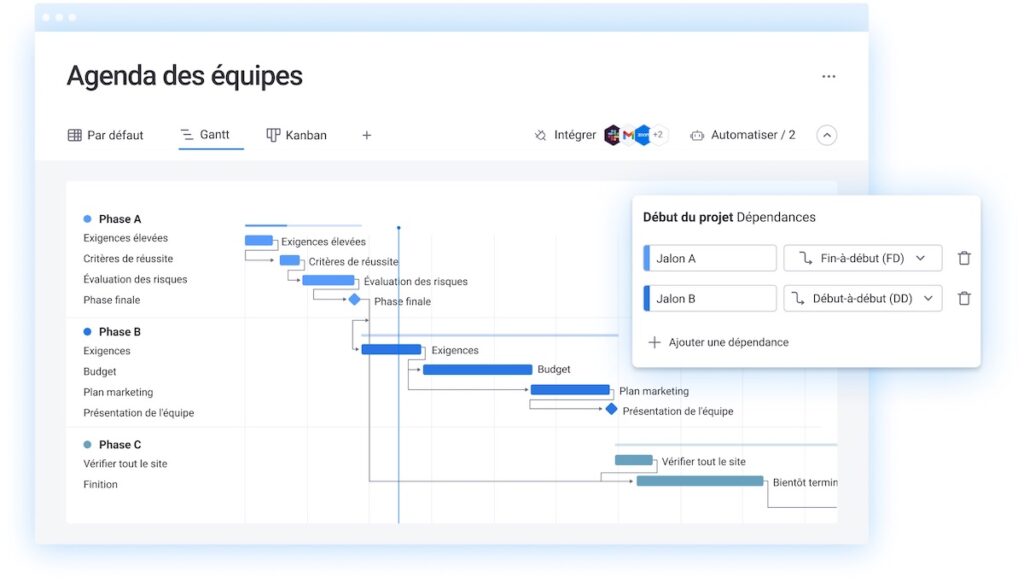
Un outil vous permet de détecter en un clin d’œil ces dérives. Vous pourrez par exemple utiliser un diagramme de Gantt et identifier ces sources de stress.
Ajuster les calendriers en échelonnant les délais permettra à vos salariés de mieux gérer leur charge, et vous gagnerez en sérénité.
5. Éviter le micro-management
Ce mode de management peut devenir délétère pour les équipes. Il se traduit par un contrôle intense et excessif du travail des salariés, qui est perçu comme un manque de confiance.
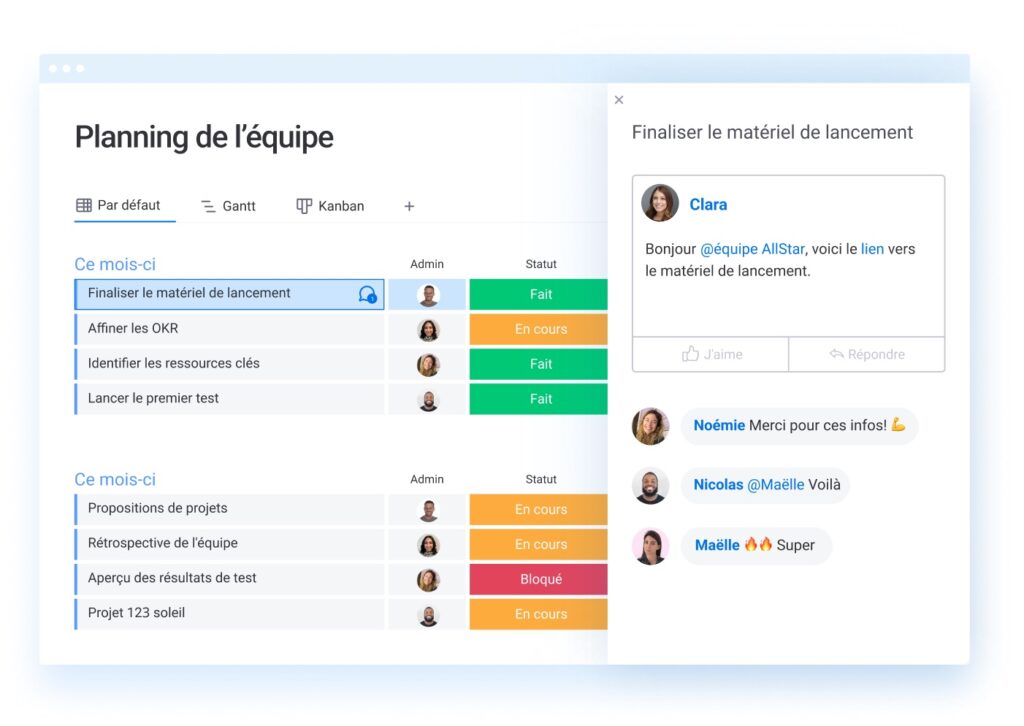
Pour sortir de ce système, la délégation et la confiance sont les clés. En laissant une marge de manœuvre aux collaborateurs, ils seront plus impliqués et plus sereins. Un outil efficace leur permet de prioriser eux-mêmes leurs taches.
Un rétroplanning couplé à un tableau de bord global vous permettra de détecter les dérives de charge ou des alertes sur les délais, sans oppresser les équipes. Si tout est sous contrôle, laissez-les faire et continuez à suivre votre tableau de bord, sans leur demander des reportings en permanence.
Vous devez vous concentrer sur un pilotage macro et gérer les risques, en procédant aux arbitrages nécessaires. La méthode OKR par exemple peut vous aider à trouver le bon équilibre.
6. Utiliser les bons outils
Pour appliquer ces astuces et méthodes, un outil de pilotage deviendra vite indispensable. monday.com a été créé pour accompagner les équipes dans la gestion de projets, en gagnant du temps pour être efficient et productif.
Vous pourrez créer un portefeuille projet centralisé. monday.com vous propose des modèles prêts à l’emploi pour faciliter la mise en place. Deux modèles seront particulièrement adaptés :
- Le template « Projets multiples »
- Le template « Gestion de projet avancée »
monday.com prévoit la mise en place d’alertes automatiques : des rappels par mails permettent d’anticiper les échéances et de suivre les jalons ou délais prioritaires. Les collaborateurs sont guidés dans l’exécution de leurs tâches.
Plusieurs intégrations facilitent également la collaboration : Slack, Zoom ou Teams font partie des applications qui se synchronisent avec monday.com.
Une prise en main rapide, des tâches automatisées et un partage facilité : notre outil de gestion de projet vous aidera à atteindre vos objectifs et à motiver les équipes.