Pendant deux décennies, Google a été le réflexe universel pour trouver n’importe quelle information en ligne. Depuis peu, de plus en plus d’internautes se détournent du moteur de Mountain View pour poser directement leurs questions à ChatGPT.
Deux études illustrent parfaitement cette transformation : Adobe, via une enquête auprès de 1 000 consommateurs et professionnels américains, et Resoneo, à partir de l’analyse de près de 90 000 conversations publiques avec ChatGPT. Les résultats pointent vers un même constat : nous n’effectuons plus de recherches, nous entamons des conversations.
Ce qu’il faut retenir :
- ChatGPT devient une alternative à Google : 77 % des utilisateurs l’emploient déjà comme moteur de recherche, et près d’1 sur 4 commence directement par l’IA.
- La recherche devient une conversation : les requêtes sont plus longues (8 mots en moyenne contre 3,5 sur Google) et 60 % des dialogues dépassent 5 échanges.
- Des usages élargis et polyvalents : au-delà du factuel (48%), ChatGPT est sollicité pour donner son avis (16 %), générer du contenu (15 %) ou coder (10 %).
- Un enjeu stratégique pour les marques : 76 % des marketeurs jugent essentiel d’apparaître dans les réponses de ChatGPT, faisant émerger la “visibilité IA” comme nouveau terrain concurrentiel.
ChatGPT, désormais utilisé comme un moteur de recherche
Selon Adobe, 77% des utilisateurs américains se servent de ChatGPT pour chercher de l’information et près d’un quart (24 %) commencent directement par l’IA plutôt que Google ; une proportion qui atteint 28 % chez la génération Z.
Au-delà de la simple recherche factuelle, le chatbot le plus populaire devient aussi une plateforme de découverte : 36 % affirment avoir trouvé une nouvelle marque ou un produit via ChatGPT, avec un pic à 47 % pour la Gen Z.
Des usages plus longs, plus riches et plus complexes (étude Resoneo)
Mais c’est l’étude de Resoneo qui met le mieux en lumière ce qui change fondamentalement : la structure des requêtes et des échanges !
- Des questions plus élaborées : la première requête envoyée à ChatGPT contient en moyenne 8 mots, soit plus du double de Google (3,5 mots). On ne cherche plus un mot-clé, mais on formule directement une problématique complète, comme lorsque l’on lance une conversation.
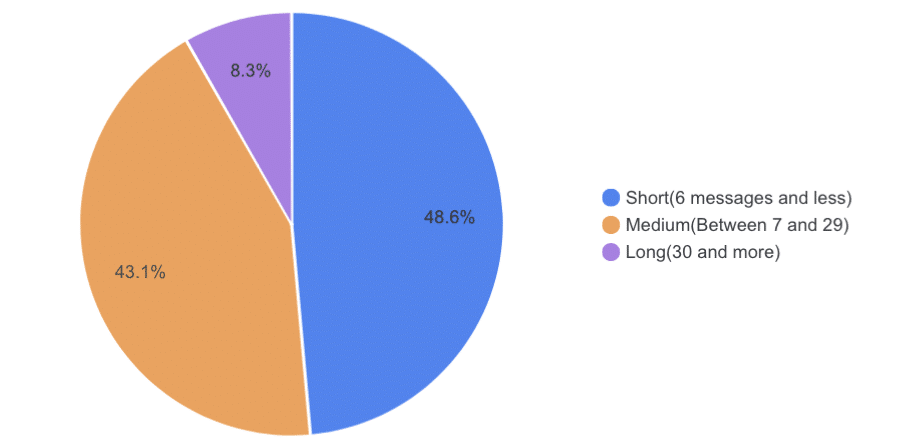
- Des conversations prolongées : 60 % des discussions comprennent au moins 5 échanges, et plus d’un tiers (35 %) dépassent les 8 messages. La recherche devient fluide et évolutive au fil des réponses.
- Des finalités plus variées :
- 48,3 % des requêtes portent sur des informations factuelles (le seul terrain réellement frontal avec Google),
- 16,2 % demandent des opinions ou suggestions,
- 14,7 % concernent la création de contenus (textes, idées),
- Et environ 10 % incluent du code informatique.
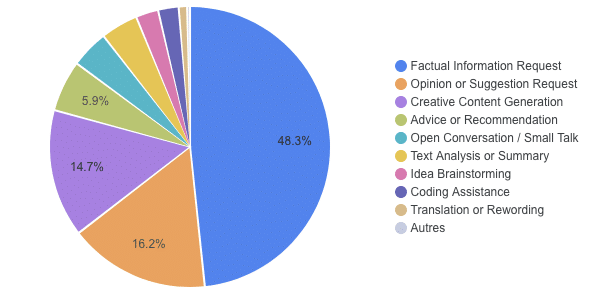
Ce basculement illustre le fait que ChatGPT n’est pas seulement un outil d’information : il est également un assistant polyvalent, utilisé autant pour réfléchir que pour informer, coder ou produire du contenu créatif. Certes, on le savait déjà, mais ici, les chiffres le montrent clairement.
Les marques et sites les plus cités sur ChatGPT
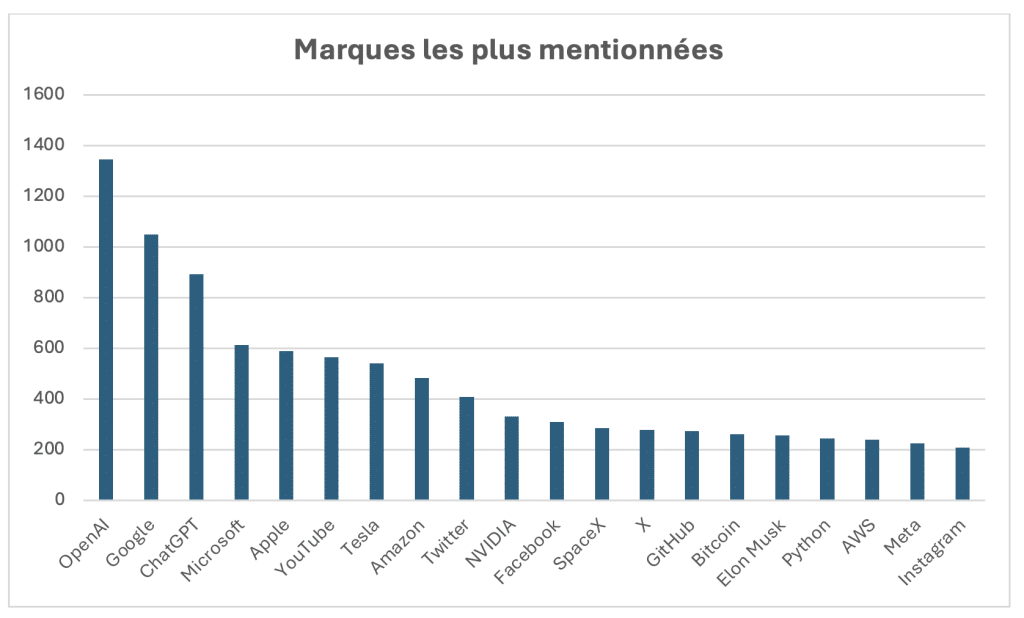
D’après l’étude de Resoneo, OpenAI, Google, ChatGPT, Microsoft et Apple sont les marques les plus cités dans les conversations. On retrouve aussi YouTube, Tesla, Amazon, NVIDIA ou encore Facebook. Détail intéressant, Twitter est davantage mentionné que « X ».
Ce que les utilisateurs recherchent avec l’IA
Les deux études confirment que l’attrait principal vient de la qualité et de la simplicité des réponses.
Côté Adobe, 54 % des utilisateurs citent la capacité de résumer des sujets complexes, et un tiers apprécie qu’il faille moins de clics que sur un moteur classique. 81 % jugent ChatGPT supérieur à Google pour les questions ouvertes et créatives, et 77% trouvent ses réponses plus personnalisées.
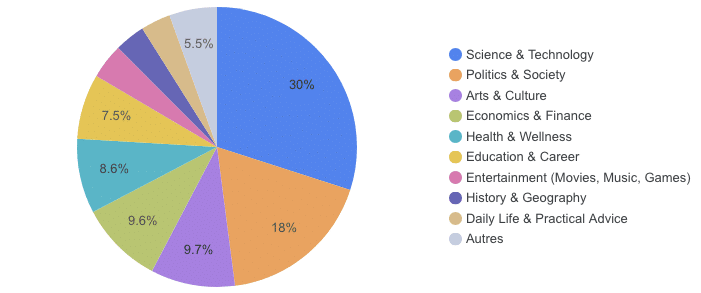
L’analyse Resoneo montre en parallèle que les thèmes dominants ne sont pas seulement la culture générale : 30 % relèvent de la science et de la technologie, et 18 % de la politique et société. L’usage va donc bien au-delà du simple divertissement.
L’impact pour les entreprises
Si les internautes modifient leur comportement, les entreprises doivent également adapter leur stratégie.
Selon Adobe :
- 47 % des marketeurs et entrepreneurs utilisent déjà ChatGPT pour générer du contenu (descriptions produits, articles, posts sociaux).
- Près de 2 sur 3 prévoient d’intensifier cette utilisation en 2025.
- Et 76 % jugent essentiel d’apparaître dans les réponses générées par ChatGPT cette année.
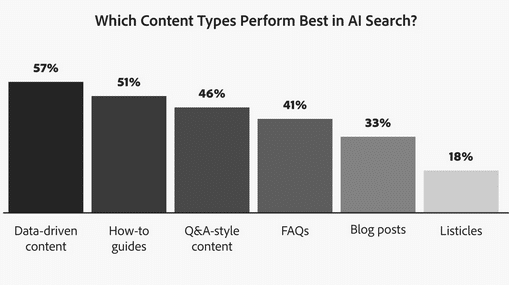
Les formats jugés les plus performants dans un environnement AI Search : contenus data-driven (57 %), guides pratiques (51 %), contenus Q&A (46 %), FAQ (41 %). Les entreprises ne se battent plus seulement pour une place en page 1 de Google, mais pour être intégrées dans des réponses conversationnelles.
Deux études, une même conclusion : un paradigme renversé
En miroir, Adobe traduit les intentions et perceptions des utilisateurs, tandis que Resoneo observe leurs comportements réels. Ensemble, elles convergent :
- La recherche classique (c’est-à-dire saisir des mots-clés) laisse place à une exploration dialoguée.
- La frontière entre “moteur de recherche” et “assistant personnel” s’efface.
- Google n’est plus le réflexe unique face à une question : il devient un outil parmi d’autres, challengé par l’IA générative.
Une nouvelle porte d’entrée vers internet
La recherche en ligne n’est plus uniquement un accès à une liste de liens, mais une conversation continue qui résume, conseille et produit. Pour les internautes, c’est un mélange de gain de temps et de personnalisation. Pour les marques, c’est un terrain inédit : celui de la “visibilité IA”, où exister signifie apparaître dans les réponses d’un chatbot plutôt que dans les résultats d’un moteur.
Cette mutation est profonde. Dans quelques années, l’entrée sur Internet pourrait ne plus se faire par une barre de recherche, mais par une discussion avec une intelligence artificielle.
Encore merci à Olivier de Segonzac pour l’accès aux données de l’étude Resoneo !
L’article “ChatGPT change la manière dont nous cherchons de l’information en ligne (études Resoneo et Adobe)” a été publié sur le site Abondance.