Après 3 ans et demi sous le nom de Looker Studio, Google rebaptise son outil d’analyse. Data Studio fait son retour, avec un positionnement clarifié et de nouvelles ambitions autour de l’IA et de la Data Cloud. Découvrez ce que ça change concrètement pour les utilisateurs.
Ce qu’il faut retenir :
- Google renomme Looker Studio en Data Studio à compter du 11 avril 2026, sans action requise de la part des utilisateurs existants.
- Ce changement marque une clarification stratégique : Data Studio pour l’exploration personnelle et les rapports ad hoc, Looker pour la Business Intelligence d’entreprise.
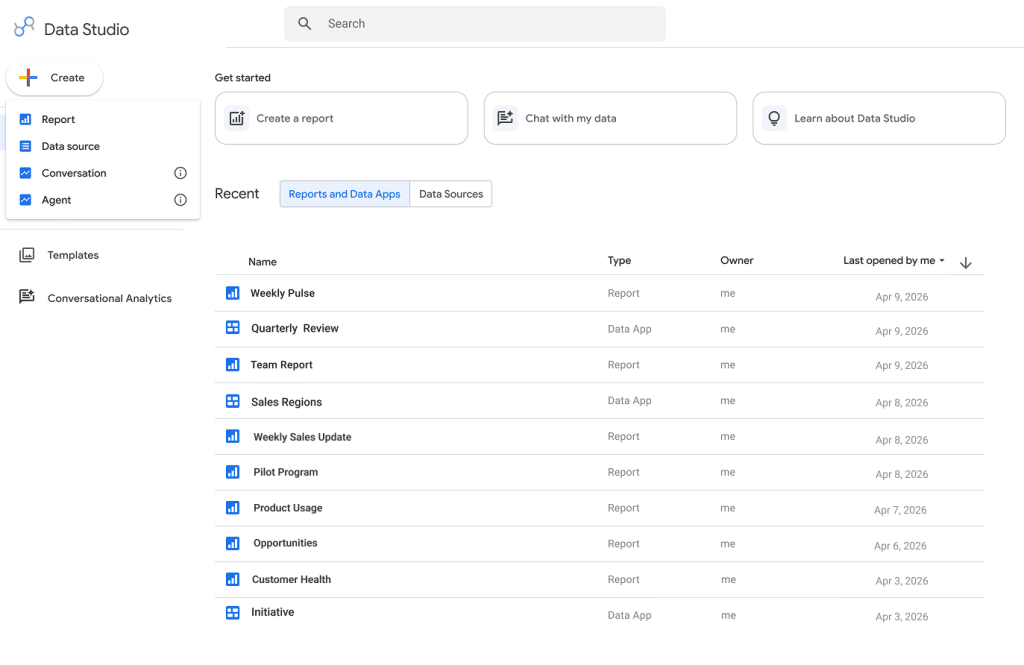
- Au-delà du renommage, Data Studio devient un hub central pour les assets Google Data Cloud : rapports, agents conversationnels BigQuery et applications de données Colab.
- Deux éditions coexistent : une version gratuite et une version Pro payante, anciennement appelée Looker Studio Pro.
Retour aux origines : pourquoi Google a fait marche arrière
Le 11 octobre 2022, Google avait rebaptisé Data Studio en Looker Studio pour unifier son portefeuille de Business Intelligence sous la marque Looker, acquise en 2020. L’intention était claire : positionner Looker comme la plateforme BI d’entreprise, et Data Studio comme sa version légère en libre-service, le tout sous un même ombrelle de marque.
Sur le papier, la logique tenait la route. En pratique, le résultat a été problématique.
Avoir deux produits distincts partageant le même nom principal (« Looker » et « Looker Studio ») a semé la confusion. Les clients ne savaient plus quel outil choisir. Les équipes commerciales et marketing peinent à expliquer la différence entre Looker, Looker Studio et Looker Studio Pro. La stratégie d’unification, cohérente dans un organigramme produit, s’est avérée contre-productive sur le terrain.
Google ne l’a pas dit explicitement dans son annonce, mais le choix des mots est révélateur : la marque Data Studio est décrite comme un « nom aimé et familier » que l’on « réintroduit ». C’est implicitement reconnaître que le renommage de 2022 n’a pas rendu service aux utilisateurs.
Un positionnement enfin lisible
Avec ce retour au nom originel, Google acte une différenciation claire entre ses deux outils d’analyse :
- Data Studio s’adresse à l’exploration personnelle de données. C’est l’outil pour créer des rapports ad hoc, construire des dashboards interactifs rapidement et visualiser des données issues de l’écosystème Google : BigQuery, Google Sheets, Google Ads. Il reste entièrement gratuit pour cet usage individuel.
- Looker reste la plateforme BI d’entreprise. Elle cible les organisations qui ont besoin de données gouvernées, de modèles sémantiques centraux et de capacités agentiques basées sur l’IA. Looker a d’ailleurs récemment reçu des investissements significatifs sur ses fonctionnalités de self-service et de visualisation.
Cette séparation nette entre les deux produits est en réalité plus utile pour les clients que le schéma précédent, où deux outils de niveaux très différents partageaient la même étiquette « Looker ».
Ce que Data Studio devient dans l’ère de l’IA
Le renommage ne se limite pas à une question de branding. Google repositionne Data Studio comme un hub central pour l’ensemble des assets Google Data Cloud. Concrètement, dans une seule interface, l’utilisateur pourra accéder à :
- Ses rapports Data Studio classiques
- Des agents conversationnels BigQuery
- Des applications de données construites dans des notebooks Colab
C’est une évolution notable par rapport à l’ancien Looker Studio, qui était principalement centré sur la visualisation. La vision affichée par Google est de fournir un point d’entrée unique pour naviguer dans l’ensemble de son écosystème data, à mesure que l’IA s’intègre dans les flux de travail analytiques.
Google précise que les détails de cette feuille de route seront présentés au Google Cloud Next ’26, prévu plus tard ce mois-ci.
Deux éditions : gratuite et Pro
L’offre s’organise en deux niveaux :
- Data Studio (gratuit) : analyse individuelle, création de rapports et de dashboards interactifs, partage de données. C’est le point d’entrée pour toute personne souhaitant visualiser ses données dans l’écosystème Google sans débourser quoi que ce soit.
- Data Studio Pro (payant) : anciennement Looker Studio Pro, cette version cible les équipes et organisations qui ont besoin de fonctionnalités avancées : sécurité de niveau entreprise, gestion, conformité, capacités IA et intégration approfondie avec Google Cloud. Les licences s’achètent directement depuis la console Google Cloud ou la console d’administration Google Workspace.
Pour les utilisateurs actuels : rien à faire
C’est le point central pour quiconque utilise Looker Studio au quotidien : la migration est transparente. Tous les rapports, sources de données, assets et utilisateurs existants seront automatiquement transférés vers la nouvelle expérience Data Studio. Aucune action n’est requise.
Le changement de nom n’implique pas de reconstruire des dashboards ni de reconfigurer des connexions. La fonctionnalité de base reste inchangée pour l’instant, même si des évolutions d’interface sont à prévoir dans les semaines et mois qui suivent l’annonce.
Pour les professionnels qui utilisent l’outil dans un contexte de reporting client, la continuité est assurée. La question qui demeure ouverte, soulevée par plusieurs observateurs du secteur, est de savoir si la « Looker vision hub central pour les assets data » se matérialisera réellement sous forme de fonctionnalités concrètes, ou restera au stade de la promesse de lancement.
L’article “Google ressuscite Data Studio : la fin de l’expérience Looker Studio” a été publié sur le site Abondance.