Produire un contenu avec ChatGPT ≠ Rédiger un contenu répondant aux attentes de Google. A l’occasion de la sortie du Guide de rédaction SEO pour débutant de Louis Bazile, on vous a concocté un quiz afin de tester vos connaissances éditoriales en SEO. 8 questions autour des mots-clés, de l’intention de recherche, des éléments SEO onsite. Let’s go !
Quelle est l’intention de recherche du mot-clé “iPhone moins de 200 euros” ?
- Acheter un iPhone qui coûte moins de 200 €
- Savoir s’il existe des iPhone de moins de 200 €
- Choisir le meilleur iPhone parmi ceux qui coûtent moins de 200 €
Réponse
Les 3 ! Un mot-clé peut avoir plusieurs intentions de recherche et, parfois, des intentions auxquelles nous ne pensons pas car elles sont subtiles ou secondaires.
Le plus important : identifier l’intention de recherche que Google attend, en analysant la page de résultat de recherche (appelée “SERP“). De quoi parlent les concurrents ? Quel axe éditorial choisissent-ils (comparatif, article de fond, interview, page commerciale) ? Tant d’indices qui vous aideront à savoir comment structurer votre page.
Pour se positionner sur “meilleure pizza nantes”, quel est le meilleur titre <h1> d’un contenu ?
- “Notre sélection des 10 meilleures pizza de Nantes”
- “Graziella, le meilleur restaurant de pizza à Nantes”
- “Célèbre cheffe nantaise, elle révèle sa meilleur recette de pizza !”
Réponse
La réponse 1 “Notre sélection des 10 meilleures pizza de Nantes” ! Pourquoi ? “Nantes” indique une recherche locale, souvent synonyme de point de vente ou, à minima, de présence locale. “Meilleure pizza” sous-entend une volonté de comparer les pizzas pour choisir la meilleure. C’est pourquoi ce titre est celui qui a le plus de chance de fonctionner.
Maaaiiisss…. le restaurant Graziella pourrait tout à fait tenter de se positionner : dans un monde où elle serait mondialement reconnue comme étant le restaurant faisant la meilleure pizza, où elle aurait des backlinks et des citations dans les magazines les plus influents, pourquoi ne serait-elle pas légitime ? Parfois, une intention de recherche secondaire (LA meilleure pizza) peut prendre le pas sur l’intention principale (LES meilleures pizzas).
Enfin, il sera compliqué pour cette Cheffe nantaise de se positionner avec une recette (contenu informationnel) sur une requête locale (intention locale / commerciale).
Sur une SERP, se positionnent : 5 pages catégories, 3 fiches produits et 1 page d’accueil. Quelle page choisir pour essayer de se positionner ?
- Une page catégorie
- Une fiche produit
- Une page d’accueil
Réponse
“ça dépend”… mais vous avez de plus fortes chances de vous positionner avec une page catégorie. Pourquoi ? Eliminons déjà la page d’accueil : page la plus puissante d’un site, il arrive qu’elle se positionne si le site est pertinent mais que Google ne trouve pas de meilleure page. Autre possibilité : c’est une requête de marque et c’est la page d’accueil de la marque qui se positionne.
Maintenant, pourquoi pas une fiche produit ? Plus de catégories que de fiches produits positionnées = il y a fort à parier que la requête est générique. Dans ce cas, la présence de fiches produits s’explique par le fait que Google les préfère aux catégories (à vous de trouver la raison si c’est votre cas !). Evidemment, tout ça est théorique et chaque cas est différent.
Ce que vous devez faire : fiez-vous à la majorité des templates sur la SERP et analysez le mot-clé (générique ou spécifique ?) pour identifier s’il faut proposer une page générique (catégorie) ou spécifique (fiche produit).
En dehors du contenu de la balise <title>, qu’est-ce que Google utilise pour écrire le titre bleu du résultat dans sa SERP ?*
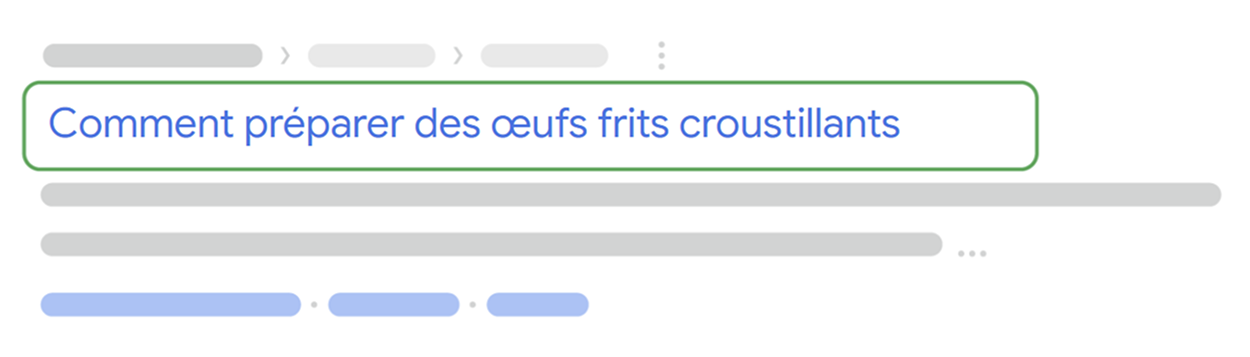
- Titre visuel principal affiché sur la page
- Éléments de titre comme <h1>
- Contenu des balises og:title meta
- Texte d’ancrage sur la page
- Données structurées WebSite
*Parfois Google réécrit la balise <title> afin d’en proposer une plus pertinente. Dans ce cas, il utilise d’autres éléments dans la page.
Réponse
Toutes les réponses ! Et oui, jusqu’aux microdonnées ! Trois autres éléments sont officiellement listés par Google comme source pour réécrire la balise <title> affichée dans les SERP (source) :
- “Autre contenu de grande taille ou qui apparaît de manière proéminente via l’utilisation de styles spécifiques”
- “Autres éléments de texte sur la page”
- “Texte des liens qui renvoient vers la page”
Rappelez-vous l’essentiel : le titre doit représenter et de décrire au mieux chaque résultat. Vous voulez absolument faire apparaitre un élément ? Mettez ce texte dans le titre <h1> de la page, dans l’introduction ou, à minima, assez haut et proéminent dans la page.
Quelle phrase a le plus de potentiel SEO ?
- “Besoin de vous changer les idées ? Découvrez la Sicile ! Pour bien organiser votre séjour, voici notre sélection d’hôtels siciliens qui ont la cote. Pensez à emmener vos papiers, sinon pas de plage cet été !”
- “Envie de voyager ? Choisissez parmi les meilleurs hôtels pour séjourner en Sicile ! Préparez votre passeport ou carte d’identité avant de prendre l’avion, ce serait dommage de stresser à l’aéroport !”
Réponse
La réponse 2 ! Votre objectif, quand vous rédigez (ou relisez votre contenu généré avec ChatGPT), est de mettre du sens dans les termes que vous utilisez, pour maximiser la sémantique. A la relecture, remplacez les termes “pauvres de sens”. Exemples :
 Remplacez “découvrez la Sicile” par “voyagez en Sicile”. Remplacez “les hôtels de Sicile qui ont la cote” par “les meilleurs hôtels où séjourner en Sicile”. Remplacez “pensez à emmener vos papiers” par “préparez votre passeport ou carte d’identité avant de prendre l’avion”.
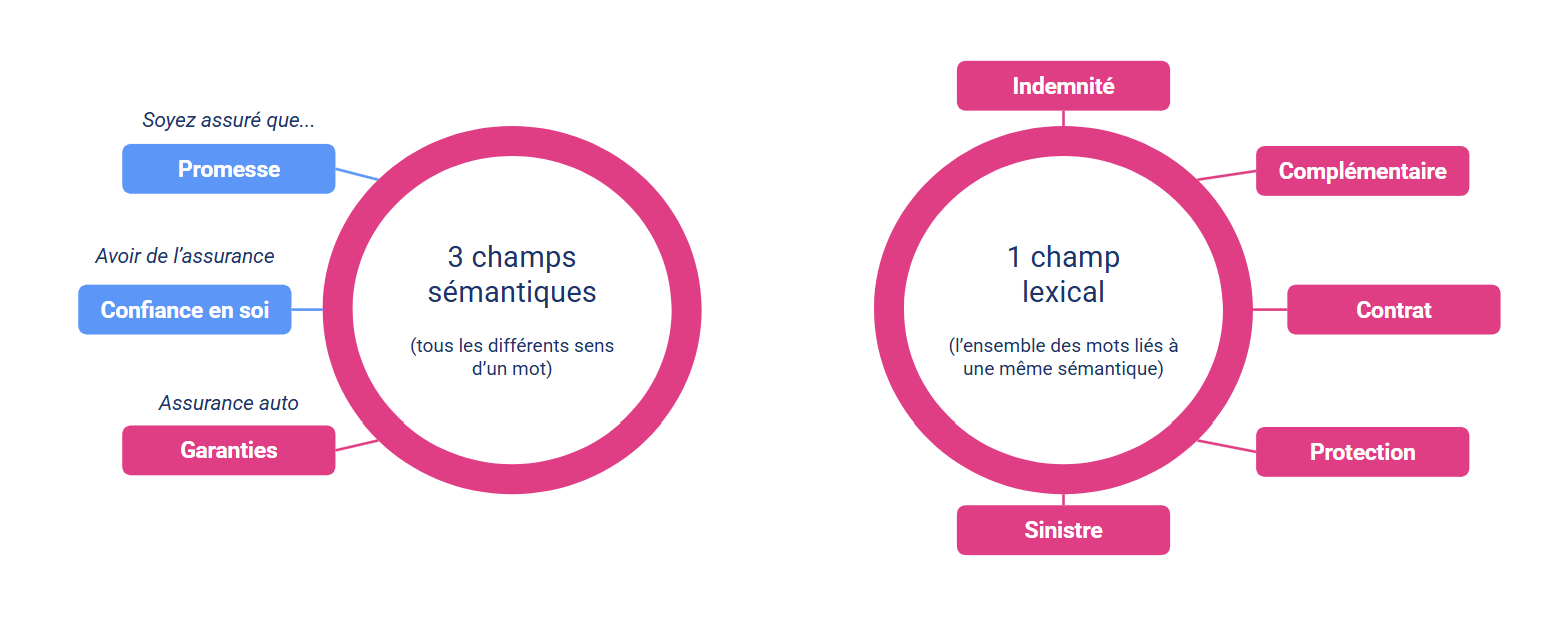
Quelle est la différence entre “champ lexical” et “champ sémantique” ?
- Le champ sémantique est l’ensemble de synonymes d’un mot, alors que le champ lexical inclut des antonymes et des variantes stylistiques.
- Le champ sémantique regroupe les significations d’un mot ou d’une expression en fonction de son contexte, tandis que le champ lexical est l’ensemble des mots qui se rapportent à une même thématique ou notion sans tenir compte du contexte.
- Le champ sémantique concerne uniquement les termes techniques spécifiques à un domaine, tandis que le champ lexical comprend tous les mots utilisés couramment dans le langage général autour de ce domaine.
Réponse
La réponse 2 ! Un exemple pour le mot “assurance” qui a 3 champs sémantiques (à gauche sur le schéma). A droite, le champ lexical de “assurance” dans le contexte de l’assurance automobile :
E-E-A-T est-il un critère de classement ?
- Oui
- Non
Réponse
Non (non, et non) ! EEAT est un concept créé par Google pour évaluer la qualité et la pertinence d’une page ou d’un site web. Il fait partie des consignes données aux évaluateurs des résultats de recherche (appelés “Quality Raters“.
Il est parfois confondu avec un critère de classement car on peut y associer des caractéristiques concrètes démontrant la qualité d’un contenu : la présence d’un auteur, les preuves d’experience (certifications, récits, photos, etc.), des sources fiables, un contenu frais, etc.
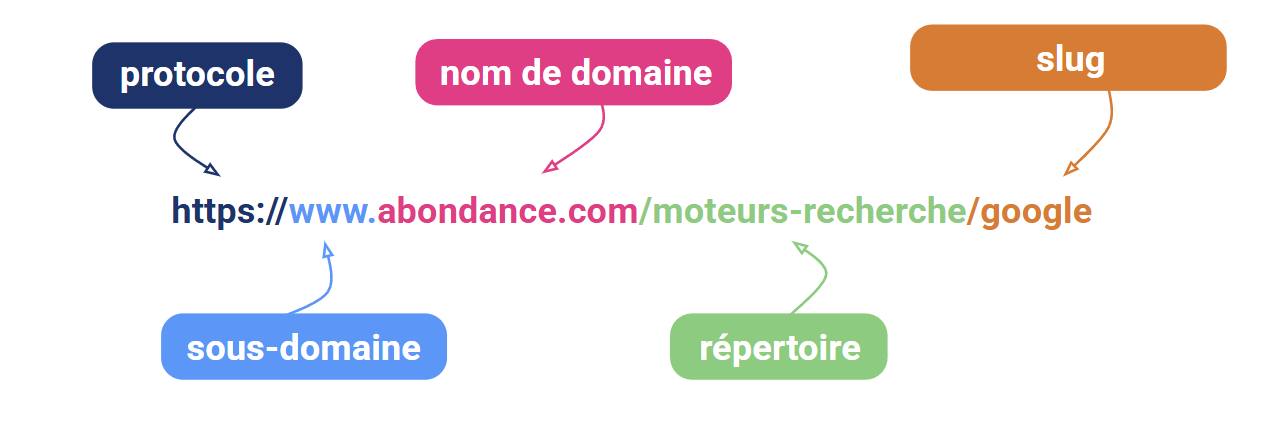
Dans l’URL https://www.abondance.com/moteurs-recherche/google comment se nomme la dernière partie “google” ?
- Maillon
- Répertoire
- Slug
PS : ne vous prenez pas trop la tête avec vos URL, faites simple et lisible, elles ont très peu de poids en SEO (certains diront “aucun”).
Réponse
La réponse 3 ! Voici l’explication de chaque partie de l’URL :
Si vous souhaitez améliorer la sémantique et la structure de vos contenus rédigés ou générés par IA, notre expert, Louis Bazile, a produit un guide précis et simple pour s’assurer d’avoir des bases saines.
L’article “Questions pour un Référenceur : testez vos connaissances « Onsite » !” a été publié sur le site Abondance.