59% des entreprises réalisent des A/B tests durant leurs campagnes emailing. Pourquoi ? Parce que les tests sont importants pour optimiser les résultats de vos newsletters.
Ils permettent de comprendre comment vos abonnés pensent et se comportent. Ils donnent aussi de précieuses indications sur les préférences de votre cible.
Pour optimiser le taux de conversion de vos emailings, vous ne pouvez pas seulement compter sur votre intuition. Pour savoir comment séduire votre audience, vous avez besoin de faits concrets et d’analyser en profondeur le contenu et le design de vos emails. C’est ici que le A/B test intervient…
Essayer différentes versions de vos emails améliore les taux d’ouverture, de clics et de conversions. Mais pour cela, vous devez tester plusieurs éléments !
L’A/B test vous permet de proposer deux versions d’un contenu web de façon à déterminer lequel produit les meilleurs résultats. Ces deux variations sont appelées A et B et sont proposées de façon aléatoires à votre audience. L’analyse des ces versions permet de tester l’efficacité de chacune.
Envie d’améliorer votre newsletter ? Voici 30 A/B tests à réaliser pour augmenter vos ouvertures et le taux de conversion de vos emails.
A/B test version texte vs email HTML
Les FAI avaient l’habitude de privilégier le texte brut, mais tant que vos images sont accompagnées d’un texte alternatif, votre délivrabilité ne sera pas affectée.
Cependant, vous devez réaliser des A/B tests pour voir quelle version est la plus appréciée par vos abonnés. Vous pourriez constater des différences entre vos clients et prospects, entre les hommes ou les femmes, ou entre clients fidèles et nouveaux acheteurs.
A/B tester l’objet du mail

C’est la première chose que voit votre audience lorsqu’elle ouvre sa boîte de réception. L’objet peut à lui seul convaincre ou non votre prospect d’ouvrir le mail. Si le sujet ne l’attire pas, il peut simplement décider de l’envoyer directement dans la corbeille.
La formulation de l’objet de votre newsletter peut faire une énorme différence dans le taux d’ouverture. Vous pouvez tester différentes variations de la ligne d’objet :
- Avec une question ou plutôt une exclamation
- Simple (“frais de port offerts sur toute la boutique”) ou mystérieux et accrocheur (“Vous allez adorer cette offre”)
- Avec ou sans le prénom du destinataire
- Avec ou sans émojis
- Avec ou sans chiffres / statistiques
Faire des A/B tests sur le préheader

Il s’agit plus ou moins d’un second objet de mail et d’une autre carte à jouer pour attirer l’attention du prospect. Le préheader incite à lire le contenu de l’email.
Certains expéditeurs utilisent toujours le même et d’autres sont plus inventifs. Si vous n’en utilisez pas, c’est le moment d’essayer cette version !
A/B tester le design de vos newsletters
La conception d’une newsletter englobe plusieurs paramètres tels que les médias enrichis, la réactivité et l’interactivité. Vos emails doivent invariablement être adaptés aux smartphones et tablettes pour répondre aux besoins des abonnés mobinautes.
Vous pouvez ainsi tester :
- les couleurs,
- le contraste,
- la structure,
- la symétrie…
- et tout ce qui peut modifier la navigation au sein de votre newsletter.

L’A/B test d’images
La façon dont vous utilisez les images a son importance. Utilisez-vous une seule grande image ou plusieurs petites ? Quels visuels de votre photothèque choisissez-vous d’insérer dans vos emails ?
En fonction de votre secteur et de votre type d’activité, testez l’utilisation de différents éléments visuels tels que :
- des photographies de tailles variées
- des icônes
- des GIF
- des vidéos dans vos emails
Les A/B tests sur les appels à l’action

Les éléments visuels sont à prendre en compte et les boutons d’appel à l’action ont un rôle essentiel en email marketing. Votre email doit attirer l’attention de vos lecteurs mais il doit surtout générer du trafic vers votre site.
Votre appel à l’action influence les conversions. Cependant, il peut être décliné en plusieurs formats, coloris ou wording. Assurez-vous de trouver la formule qui va maximiser les visites sur votre site internet et testez :
- La formulation : faut-il utiliser l’impératif, la 1ère personne, le « vous »… ?
- La forme : bouton ou lien ?
- La couleur : vive ou sobre ?
- Le placement : en début ou fin de newsletter ?
- La taille
Le call to action a le dernier mot, c’est lui qui détermine l’envie de votre audience d’accéder ou non à votre site web.
Tester la longueur de votre email
Tout est permis dans une newsletter ! Vous pouvez envoyer une brève ou, au contraire, plusieurs informations. Jouez avec la longueur du message pour découvrir les préférences de vos abonnés.
Est-ce que votre audience apprécie les contenus plutôt longs ou courts ? Si vous souhaitez avant tout générer du trafic vers votre site, le test A/B sur des contenus plus courts sera prioritaire.
En revanche, si vous voulez établir un lien de confiance et de proximité avec votre audience, le contenu peut être plus long avec une vraie valeur ajoutée.
Voici quelques questions à vous poser pour réaliser des A/B tests efficaces :
- Les abonnés veulent-ils plus de contenu et de contexte dans le message, ou juste assez pour susciter leur intérêt ?
- Quelle est la longueur idéale pour différents types d’emails ? Ou pour différents appareils ?
- Tous les segments préfèrent-ils la même longueur de message ?
Testez différents tons dans votre newsletter
Selon le profil de votre audience, quel est le ton le plus adapté ? Vous pouvez tester un ton plus informel de façon à créer un lien personnalisé avec vos prospects.
Aujourd’hui, il est même possible de proposer au prospect de choisir le contenu des newsletters dès son inscription en définissant certains paramètres. Ainsi, il peut décider de recevoir des offres promotionnelles ou des emails informatifs sur votre marque, etc.
La personnalisation est largement utilisée en webmarketing mais ne convient pas forcément à tous les domaines.
Faire un A/B test du nombre de produits intégrés
Voilà un A/B test intéressant si vous êtes dans l’e-commerce ! Pour optimiser les conversions, faut-il se focaliser sur un seul produit ou proposer une sélection ? Combien d’articles maximum devez-vous intégrer : 3, 4, 5 ou plus ?
Pour le savoir, vous devrez tester plusieurs versions de votre newsletter.
A/B tester le nombre de liens dans la newsletter
L’inclusion de trop ou trop peu de liens peut avoir un effet négatif sur les performances de votre newsletter.
Lorsque vos emails en contiennent plusieurs, cela peut gonfler la taille de votre message (surtout si vous utilisez des liens de suivi). Résultat, si vos messages dépassent 102 Ko, ils risquent d’être coupés par des FAI. Par ailleurs, intégrer trop de liens risque de créer la confusion dans l’esprit des internautes. Ils ne sauront pas où cliquer.
Testez différentes versions de vos emails avec plus et moins de liens pour déterminer le bon ratio pour vos campagnes.
Testez différents noms d’expéditeur
La manière dont vous libellez la section « expéditeur » influence le taux d’ouverture.
Vous pouvez choisir de le personnaliser, avec le prénom de la personne en charge de votre marketing ou du SAV, par exemple, ou simplement mettre le nom de votre entreprise. En général, les spécialistes du marketing utilisent leur nom de marque, le nom d’une personne ou un mix des deux.
Si votre audience a des relations solides avec une personne liée à votre entreprise, mettre un nom en tant qu’expéditeur peut générer plus d’ouverture d’email.
L’idée étant de tester l’impact de chaque libellé pour connaître le plus performant.
Des A/B tests sur votre adresse expéditeur
La personnalisation de l’adresse d’expéditeur peut également permettre à vos contacts de mieux s’identifier avec votre offre.
Tester différentes heures d’envoi
Il existe diverses études concernant le meilleur moment pour envoyer votre newsletter. Cependant, ce qui fonctionne pour d’autres entreprises peut ne pas fonctionner pour la vôtre.
Vous devez essayer différentes heures pour connaître les pics de connexion de votre audience. Est-ce durant leur temps de travail, pendant la pause déjeuner ou lorsqu’ils sont rentrés chez eux ? Vous le saurez grâce à un A/B test !
À quel moment votre audience est-elle plus disponible pour ouvrir ses emails ? La plupart des marques font les envois d’emailing tôt le matin ou en soirée mais cela dépend de votre public. Faites différents tests pour identifier les habitudes de votre audience.
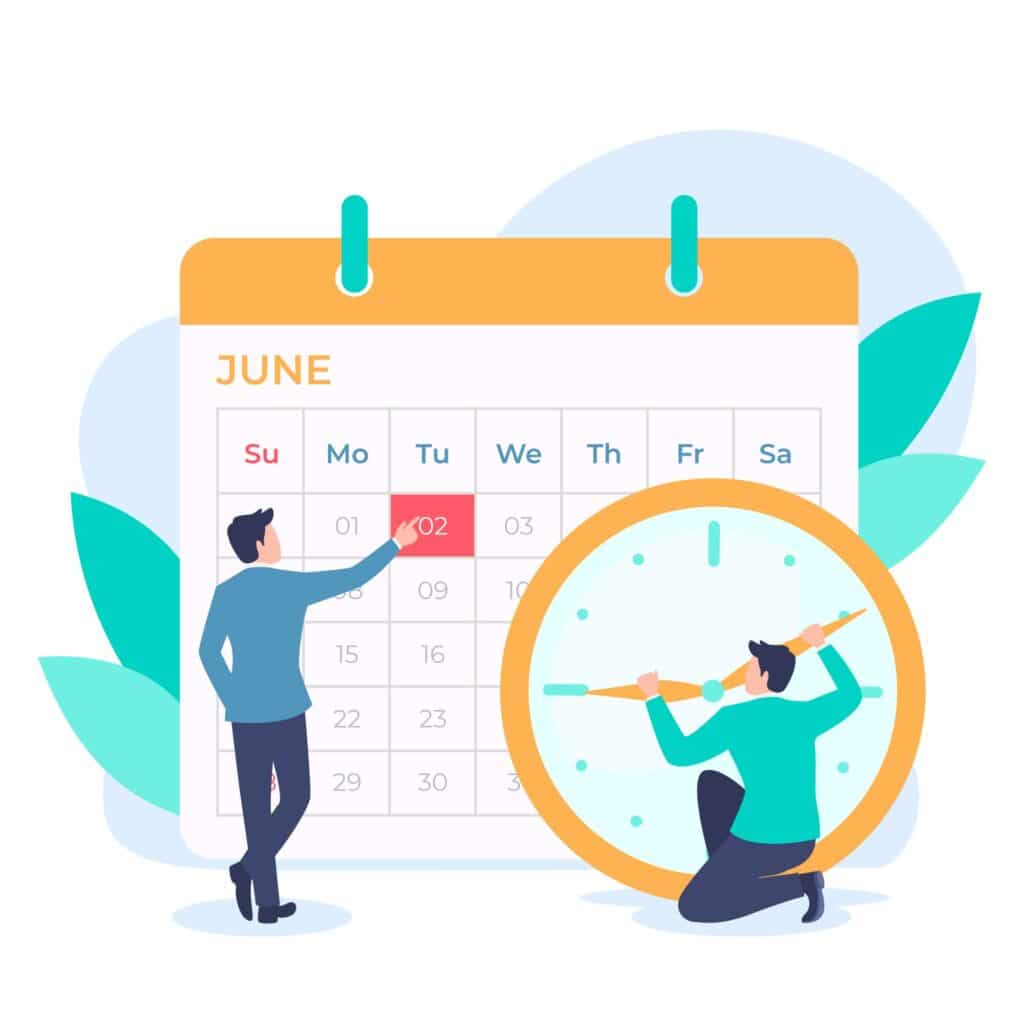
Un A/B test pour trouver le meilleur jour de la semaine
Comme avec le moment de la journée, il n’existe pas de jour de semaine idéal pour envoyer une newsletter. Les taux de réponse varient selon le secteur d’activité et l’audience ciblée.
Par exemple, si vous commercialisez des produits B2C, les taux de réponse peuvent être importants le week-end, lorsque vos utilisateurs sont plus enclins à faire du shopping en ligne. À l’inverse, en B2B, vous aurez sûrement un meilleur impact durant la semaine.
Testez plusieurs périodes d’envoi de votre newsletter : en semaine, le week-end, le mercredi…
Faites des A/B tests sur les liens vers vos réseaux sociaux

En tant que marque, il est essentiel d’être présent sur différents canaux. Vous avez donc forcément une présence sur un ou plusieurs réseaux sociaux.
Vous pouvez tester l’ajout de boutons associés à tous vos réseaux pour savoir si c’est attrayant pour votre audience. Essayez plusieurs formes et tailles de boutons, comme pour le call to action.
Conclusion
Les A/B tests vous aident à trouver la formule la plus performante, celle qui va vous aider à remplir vos objectifs.
Faites ces tests A/B puis vérifiez vos statistiques pour savoir quelles modifications sont efficaces auprès de votre fidèle audience ! C’est une excellente façon de rendre votre campagne d’email marketing plus performante et d’augmenter votre taux de conversion.
Avec ces 30 exemples, vous pourrez affiner vos newsletters pour atteindre plus facilement vos objectifs. À vous de jouer !
Vous pouvez également faire appel à des prestataires freelances pour des nouveaux designs d’emailings. Pour cela, publiez gratuitement votre annonce sur Codeur.com et recevez de nombreux devis, rapidement.