Dans l’univers du référencement, il est communément admis que SEMRush fait partie des outils les plus puissants disponibles et qu’il utilise une panoplie de fonctionnalités couvrant tous les besoins d’optimisation SEO. C’est un outil tout-en-un, aussi puissant dans la recherche de mots-clés et de suggestion de mots-clés que dans l’analyse de backlinks.
Mais SEMRush n’est pas le seul outil disponible pour le SEO : il existe de nombreux autres outils, différents de SEMRush et à un prix plus doux (et parfois, entièrement gratuits).
A la fin de la période d’essai de SEMrush, vous devez payer un abonnement mensuel pour continuer de bénéficier de ses fonctionnalités. En fonction des fonctions que vous souhaitez retrouver dans votre tableau de bord, le tarif démarre à partir de 69€ par mois.
Souvent, à la fin de la version gratuite, de nombreux utilisateurs recherchent des alternatives à Semrush non pas parce qu’ils ne sont pas satisfaits, mais parce qu’ils doivent payer, et assez cher qui plus est. Parmi les alternatives, ces utilisateurs peuvent tomber sur pléthore de logiciels, mais rarement aussi efficaces que celui-ci, et il faudra peut-être combiner plusieurs outils…
Voici donc une sélection d’outils qui, au moins par certains égards, peuvent remplacer SEMrush.
Les alternatives gratuites à SEMrush
1. UpCity
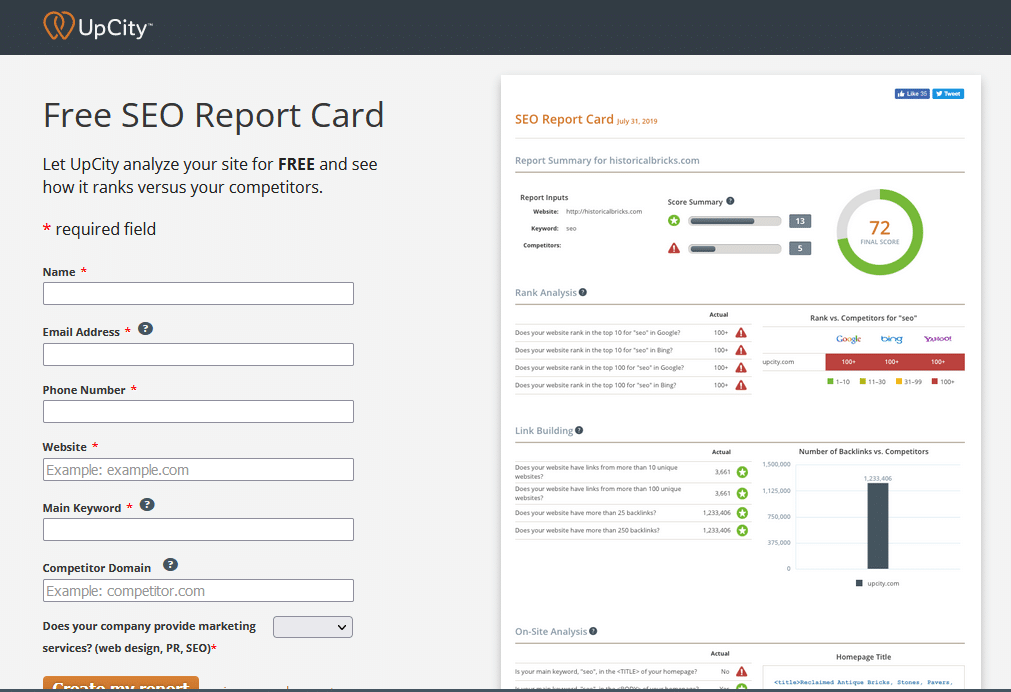
Le « SEO Report Card » d’UpCity analyse votre site pour voir comment il se compare à ses concurrents. Les petites entreprises qui recherchent des métriques simples et faciles à comprendre pour évaluer le succès de leur stratégie de référencement pourraient bien s’en satisfaire.
Pour un outil gratuit, il fournit tout de même des données assez approfondies sur le classement de votre site (dans plusieurs moteurs de recherche), ainsi que sur le succès de votre stratégie de mots-clés.
La plateforme fournit également des métriques de confiance et des informations sur l’accessibilité du site, ce qui permet à l’utilisateur d’évaluer des données clés telles que le niveau d’autorité de votre site et son temps de chargement.
2. Ubersuggest de Neil Patel
Venant de Neil Patel, parmi les leaders d’opinion les plus en vue dans le domaine, Ubersuggest est un outil gratuit avec des attributs de base comparables à Google Keyword Planner, bien qu’un peu différent : en effet, contrairement à Google Keyword, Ubersuggest affiche seulement 3 métriques : la quantité de recherches associée à la requête, le prix PPC (CPC) et la difficulté de référencement, mais les 3 sont assez précis, et similaires à SEMRush.
En outre, il a récemment créé un nouvel attribut «Idées de contenu», où il suggérera des réflexions sur le sujet, ainsi que des métriques utiles telles que le nombre de backlinks créés par des articles identiques et les visites mensuelles estimées.
Par rapport à SEMRush ou à Google Keyword Planner, il ne donne pas beaucoup d’idées de mots clés. Vous pouvez en revanche rechercher vos suggestions de mots clés dans Google Keyword Planner et la répliquer sur UberSuggests, pour obtenir des mesures plus précises (et des suggestions d’articles).
Les autres alternatives à SEMrush (outils payants)
3. Majestic
Majestic est l’un des premiers outils de référencement, et c’est toujours l’un des outils les plus puissants sur le marché.
Spécialisé dans l’analyse complète des liens, Majestic fournit des informations fiables et actualisées, en mettant à disposition des utilisateurs une énorme base de données de liens qui leur permet d’approfondir les détails du référencement. L’un de ses principaux avantages est la possibilité d’explorer un domaine ou une URL en profondeur grâce à un outil unique d’exploration du site.
4. SEO PowerSuite

SEO PowerSuite est une boîte à outils tout-en-un basée sur desktop, et utilisée par plus de 5 millions de spécialistes du référencement et de gestionnaires de sites.
Composé de 4 outils différents, il est idéal pour plonger dans les données techniques de référencement et pour réaliser des audits de référencement approfondis afin de définir une stratégie SEO. Ses outils analytiques supérieurs sont excellents pour évaluer ce que vos concurrents font de bien.
5. Ahrefs

Il n’est probablement pas surprenant qu’Ahrefs se trouve dans cette liste, car il est l’un des principaux concurrents de SEMrush : outil sans doute le plus proche de ce dernier, il offre des fonctionnalités comparables, avec quelques bonus…
Ahrefs dispose d’excellentes capacités d’exploration à l’échelle de l’Internet ou de sites spécifiques, ainsi que de fonctions puissantes comme la gestion des mots-clés et l’analyse concurrentielle. Bien que son interface puisse sembler déroutante, c’est un outil qui fait autorité pour les professionnels du marketing.
6. Moz Pro
Autre grand nom du monde du référencement, vous avez peut-être déjà rencontré Moz par le biais de son excellent blog sur le marketing numérique.
Moz Pro est une plateforme SEO polyvalente et puissante combinant le meilleur de la recherche de mots clés, de l’analyse concurrentielle et du marketing de contenu. Facile à utiliser, la présentation claire de Moz en fait une option pratique et conviviale.
7. SerpStat
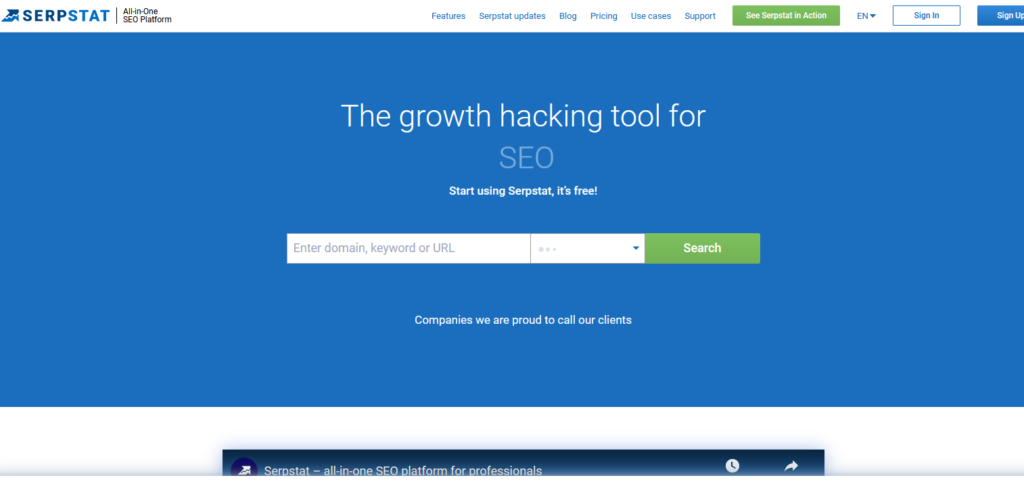
Serpstat est une plateforme SEO qui met l’accent sur son outil de recherche de mots-clés facile à utiliser et approfondi, tant pour votre propre site que pour les domaines concurrents.
Fournissant des informations sur 180 millions de domaines, il a une base de données significativement plus petite que SEMrush, qui a des données de 816 millions de domaines. Cependant, la base de données de domaines de Serpstat reste déjà importante en soi.
Les visuels épurés permettent aux utilisateurs de voir les métriques clairement présentées avec un code couleur et de chiffres.
8. Cognitive SEO

En se concentrant sur le crawling du site, Cognitive SEO va parcourir l’ensemble de votre site et en découvrir ses points faibles, que vous pourrez améliorer en modifiant votre stratégie de référencement.
En exécutant des algorithmes d’audit de référencement, Cognitive SEO repère les points les plus fins du référencement à travers votre site, y compris la vérification des backlinks et la stratégie de mots-clés pour s’assurer que votre stratégie est cohérente et entièrement optimisée.
9. SpyFu
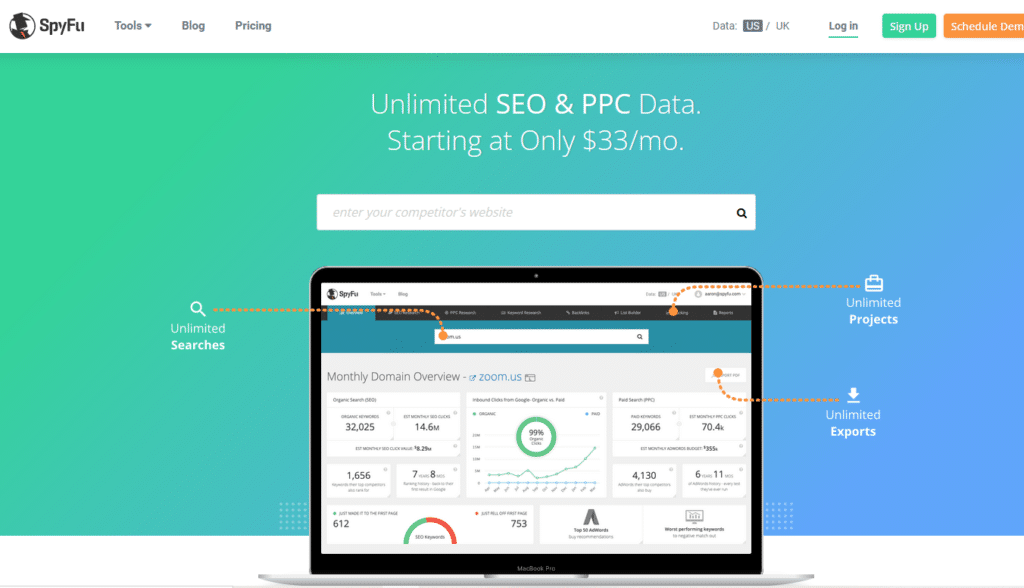
Comme son nom l’indique, SpyFu se concentre sur l’espionnage des sites de vos concurrents : si SEMrush offre des mesures similaires, SpyFu dispose d’analyses de la concurrence plus complètes et plus variées. L’outil est présenté de façon claire, mais ne vous laissez pas tromper par la simplicité de l’interface utilisateur : SpyFu suit 80 millions de domaines et 5 milliards de résultats.
Découvrez les tactiques secrètes de la concurrence en matière de SEO et de PPC, et prenez une longueur d’avance sur vos concurrents avec votre propre stratégie.
10. GrowthBar
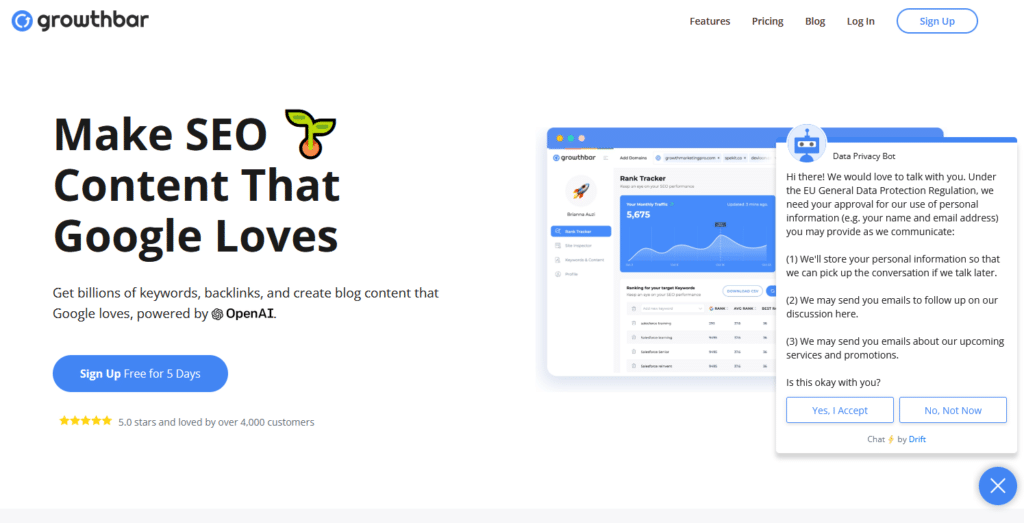
GrowthBar est l’un des outils de référencement prisé des spécialistes du marketing et des blogueurs : conçu pour la croissance, sa mission est de rendre « 10x plus facile » l’acquisition de nouveaux clients.
Il s’agit d’une application Web qui facilite la recherche de mots clés, l’analyse concurrentielle, la génération de contenu en un clic et le suivi du classement.
L’entreprise propose en outre une extension pour Chrome, qui affiche les données de référencement à la volée pendant que vous naviguez sur le Web…
Mais sa fonction la plus impressionnante est son outil de génération de contenu : saisissez n’importe quel mot-clé et la puissante IA de GrowthBar créera instantanément pour vous un plan de contenu qui vous indiquera exactement ce que vous devez écrire pour obtenir un bon classement.
GrowthBar est en effet gratuit pendant 5 jours, puis les plans commencent à 29$/mois.
Conclusion
SEMrush est souvent considéré comme la mesure étalon des plateformes de référencement. Cependant, si vous débutez dans le domaine, son coût élevé peut être prohibitif, et l’énorme quantité de fonctionnalités et d’outils peut rebuter le néophyte.
Ceci étant, même pour un professionnel chevronné du référencement, il peut être bon d’examiner la concurrence, pour voir s’il n’y a pas de nouvelles fonctionnalités qui vous échappent.
Avant de prendre une décision, réfléchissez aux fonctionnalités dont vous avez le plus besoin, au nombre de sites que vous allez surveiller, à la taille de votre équipe ainsi qu’à votre budget de référencement.
Et bien sûr, avant de vous engager dans un abonnement, n’oubliez pas de profiter de toutes les fonctionnalités gratuites et des périodes d’essais. Une fois que vous avez trouvé une plateforme qui convient à votre entreprise, allez-y, mais gardez tout de même un œil sur les alternatives.
Vous pouvez aussi déléguer la gestion de votre SEO à un consultant en référencement freelance. De cette manière, vous n’aurez plus à trouver d’outils SEO : votre prestataire s’en chargera et vous fournira directement les résultats de ses analyses et ses recommandations.