Quelles sont les 11 tendances marketing B2B à suivre en 2024 ? C’est à cette question aussi directe qu’essentielle qu’on a voulu répondre dans cet article !
Pourquoi ? Parce que le marketing B2B évolue d’année en année pour, parfois, se rapprocher du B2C. Même si le sérieux et le professionnalisme restent au cœur de cette stratégie, l’émotion, les engagements et l’humanisation arrivent dans les contenus B2B. Un rédacteur web freelance pourra d’ailleurs vous aider à adapter votre content marketing à ces nouvelles tendances.
Le retour du snack content, l’hyper personnalisation de votre stratégie, le marketing d’influence, les contenus interactifs, les formats phares… Tout ce que vous devez savoir sur les 11 tendances marketing B2B de 2024 est dans cet article !
1. Combiner longs contenus et snack content
Pour séduire le grand public, il est important de toujours miser sur une solide stratégie de contenu. Mais même quand il y a de gros enjeux professionnels, la durée d’attention de l’être humain reste ce qu’elle est : une matière fragile, éphémère, qu’un rien peut balayer et envoyer en un clin d’œil chez la concurrence !
Diversifier vos supports de communication et les rendre « scannables » est la clé du succès. Les images captent l’œil, c’est une donnée neurologique indéniable : recyclez une partie du contenu de vos blogs en images, en contenus vidéo ou en micro-conseils.
Ainsi, vous atteindrez votre prospect par la raison dans l’article de blog posé et rassurant, tandis que vous l’atteindrez par l’émotionnel dans un visuel punchy ou un post jouant sur l’humour et l’empathie.
L’idéal est de ne pas choisir, mais au contraire de varier au maximum !
En 2024, vous devez recycler et transformer vos articles longs ou livres blancs en contenus « snackables » courts, mais très pertinents.
À lire aussi : Comment maîtriser votre communication corporate ?
2. Disposer d’un site Internet professionnel et personnalisé
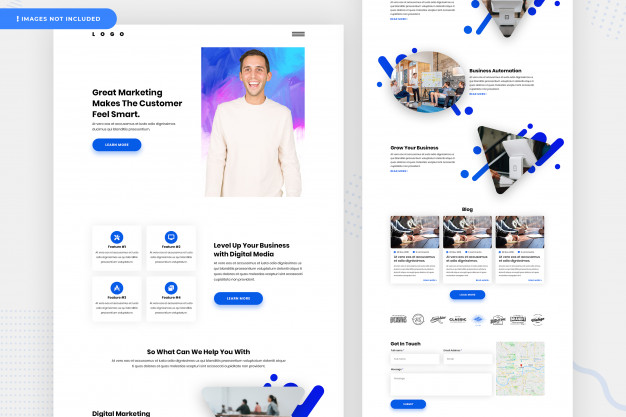
Aujourd’hui, un site est très souvent la première impression, la carte de visite indélébile que vous imprimez dans l’esprit de votre prospect.
En matière de marketing B2B, vous devez soigner votre site pour qu’il reflète votre professionnalisme jusque dans les moindres détails, ainsi que vos valeurs.
Il existe une multitude de sites identiques, aux modèles préétablis. Ils sont effectivement moins onéreux qu’un site réalisé avec l’aide d’un web designer, mais ils ne vous permettront pas de vous démarquer et donneront une image de vous peu professionnelle aux entreprises du B2B.
Nos conseils :
- Pensez votre charte graphique dans des tons neutres connotant l’ordre et la stabilité (blanc, noir, gris, beige), avec une touche de couleur vive pour le dynamisme (rouge, orange, jaune, ou vert si vous êtes sur un secteur écologique).
- Soyez utile : les professionnels vont plus facilement s’identifier à un contenu marketing qui leur ressemble et qui apporte des réponses à leurs questions. Vous augmenterez ainsi votre taux de conversion.
- Travaillez l’ergonomie de votre site, afin que celui-ci s’adapte aux conditions d’utilisation de vos prospects. L’idée est d’alléger au maximum le parcours pour parvenir jusqu’à l’information ou jusqu’au produit que l’on recherche.
- Plutôt que de sur vendre vos produits et/ou services, valorisez-les « de biais » : en affichant judicieusement sur la page d’accueil vos labels, vos certifications, vos normes ISO (s’il y a lieu), mais aussi vos partenariats extérieurs.
3. LinkedIn, toujours au top des tendances marketing B2B
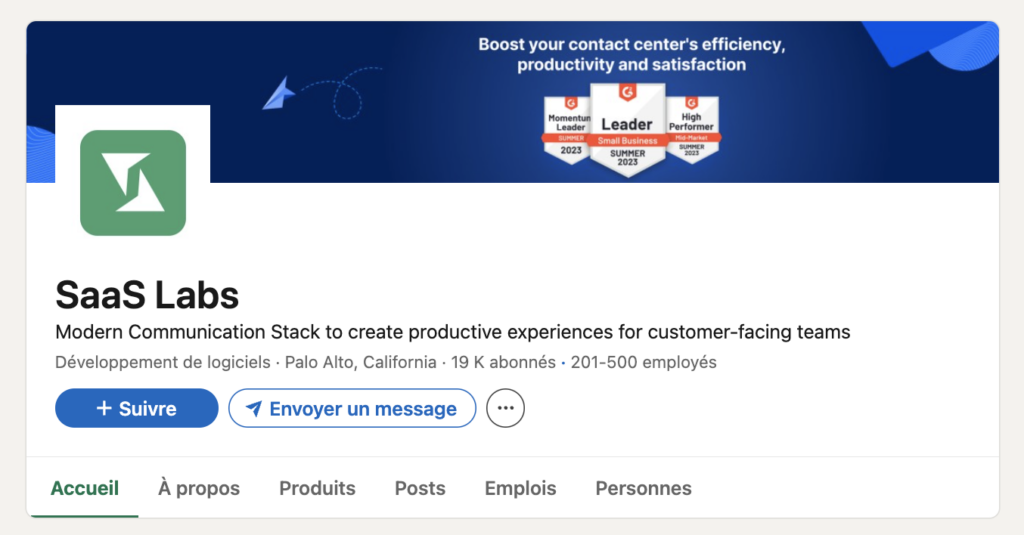
94 % des entreprises du B2B sont présentes sur LinkedIn et 80 % des leads B2B proviennent de ce réseau spécialisé à la communication interentreprises. Ces chiffres se suffisent à eux-mêmes pour vous démontrer l’importance de votre communication marketing sur LinkedIn !
Si vous voulez performer sur ce réseau social B2B, voici nos conseils :
- Testez le format carrousel : il dispose d’une bonne réception de la part des utilisateurs, ainsi que d’une portée organique plus forte.
- Utilisez le Lead Generation Forms pour vos campagnes destinées à acquérir des leads. Très efficace, il permet de collecter des données depuis LinkedIn, ce qui facilite les conversions.
- Lancez une campagne LinkedIn Ads : vous voulez acquérir de nouveaux clients ou booster votre visibilité auprès d’une cible B2B ? Sur LinkedIn, vous pouvez cibler l’audience en fonction des attributs professionnels et donc remplir vos objectifs commerciaux via la publicité.
- Encouragez vos équipes à créer un profil sur LinkedIn, à se connecter avec vos prospects et clients, et à partager les publications de votre page. Cela va booster la visibilité de vos publications.
- Soyez humain : la teneur des posts LinkedIn a quelque peu évolué ces derniers temps. L’émotion, l’expérience personnelle et les opinions ont pris une grande importance. Montrez qui vous êtes, quels sont vos valeurs et vos engagements quotidiens, parlez de ce que votre vie personnelle apporte à votre vie professionnelle (et vice-versa) pour humaniser votre communication.
À lire aussi : Social commerce : comment vendre sur les réseaux sociaux ?
4. Le webinar reste un format phare du marketing B2B
Le webinar est un outil marketing B2B très efficace qui génère non seulement de nombreux leads, mais qui engendre un taux de conversion très important.
Le webinar va vous permettre de créer un lien direct avec les prospects interentreprises. Vous pourrez démontrer en direct votre expertise et répondre aux interrogations des futurs acheteurs.
Les webinaires sont des solutions interactives très prisées et si elles sont correctement organisées, c’est le succès garanti ! Forts de leur succès, des centaines de webinaires ont lieu chaque jour. Là encore, vous devrez vous démarquer de la concurrence en choisissant minutieusement votre sujet et en étant créatif.
À lire aussi : Les 9 meilleurs outils pour diffuser votre webinar
5. Place à l’ABM : un marketing B2B ultra personnalisé
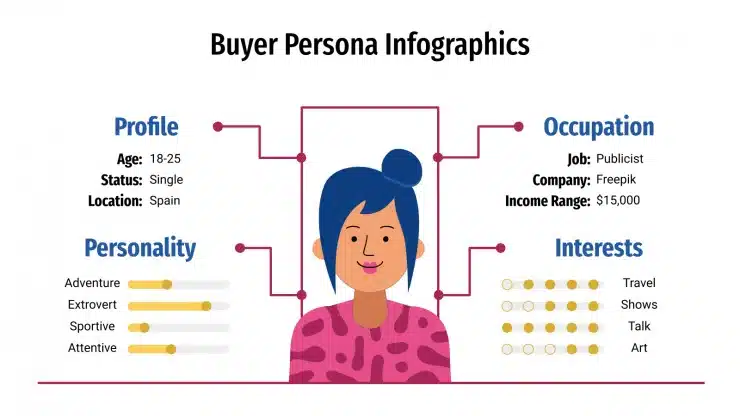
Ne perdez jamais de vue votre buyer persona. Il est et doit être au centre de votre stratégie marketing. Si votre prospect ne se sent pas unique, il ira voir la concurrence.
En B2B, adaptez votre communication en fonction du poste occupé, du type d’entreprise ou du secteur d’activité. En résumé : faites de l’Account Based Marketing (ABM).
Le concept est simple : créez du contenu en fonction du parcours de réflexion d’un client spécifique ou d’un groupe type de clients.
Comment mettre en œuvre une stratégie ABM ?
- Identifiez vos cibles de grande valeur : il s’agit des décisionnaires ou entreprises qui ont le plus grand potentiel en termes de chiffre d’affaires et de conversions.
- Effectuez des recherches sur ces entreprises ou acheteurs pour identifier leurs points de douleur et objectifs. Analysez également leur positionnement dans le parcours client.
- Développez des campagnes de marketing personnalisées en fonction des informations obtenues : rédigez (ou déléguez la rédaction !) des articles de blog, publications sur les réseaux sociaux, emails et autres contenus destinés à « nourrir » chaque cible.
- Paramétrez l’envoi du contenu pour accompagner les prospects dans leur parcours de décision, jusqu’à leur transformation.
6. Se démarquer par la RSE
La Responsabilité Sociale et Environnementale (RSE) est un « label d’entreprise », un « ethos » comme on dit en rhétorique. En d’autres termes, c’est un discours montrant vos valeurs.
Fournir des produits de qualité ne suffit plus : l’excellence, c’est un refrain qu’on a trop entendu.
Fournir des produits peu chers ne suffit plus non plus : la guerre des prix a été décuplée avec la mondialisation et la digitalisation du commerce. Si vous misez tout sur vos produits, vous risquez de perdre la guerre du marketing, y compris en B2B.
Aujourd’hui, il faut vendre du sens. L’éco-anxiété se répand chez les jeunes générations : la conscience des différences abyssales de niveau de vie entre le Nord et le Sud influe sur les choix d’achat.
Valorisez et documentez une de vos démarches en commerce équitable, obtenez une certification reconnue par les professionnels de votre milieu, filmez cet atelier où l’écart des salaires n’est par exemple que 1 à 2, investissez dans le durable et dans le local… Bref, démontrez que votre entreprise s’engage pour un monde meilleur !
Cela pourra vous attirer les faveurs de vos prospects en B2B à plus d’un titre : d’une part, cela touchera leur conscience personnelle ; d’autre part, en tant que professionnel, si vous liez un partenariat, ils pourront à leur tour faire rejaillir votre RSE sur leur entreprise (ce qui sera excellent pour leur propre image de marque).
À lire aussi : 4 étapes indispensables dans le parcours client BTOB
7. L’explosion du self-service digital dans l’univers B2B
Les acheteurs B2B veulent effectuer des recherches par eux-mêmes et gérer une plus grande partie de leur parcours de réflexion, seuls, avant de parler aux commerciaux. Cette tendance n’est pas nouvelle, mais elle ne fait que s’accentuer d’année en année !
Un rapport de TrustRadius révèle que pratiquement 100 % des acheteurs veulent s’occuper eux-mêmes d’une partie de leur parcours d’achat (soit une augmentation de 13 % par rapport à 2021).
La clé pour profiter de cette tendance marketing B2B ? Offrir des outils permettant à vos prospects de se renseigner en toute autonomie. En plus de publier de nombreux contenus sur votre blog d’entreprise ou les réseaux sociaux, proposez des newsletters segmentées, lancez un chatbot, organisez des webinaires, animez une émission sous forme de podcast…
« Nourrissez » au maximum vos potentiels clients pour qu’ils puissent obtenir facilement les informations qu’ils recherchent et vous contacter lorsqu’ils arrivent en fin de parcours d’achat !
8. La montée en puissance de l’IA

L’IA générative est aujourd’hui de plus en plus présente dans le web. Site internet créer à partir d’IA, campagnes publicitaires, gestion des réseaux sociaux… L’IA est incontournable et se tourne maintenant vers le marché B2B.
Si l’on parle beaucoup plus de B2B, de nombreuses entreprises commencent, peu à peu, à implanter l’IA dans leur processus de création de contenu ou dans leur tunnel de vente. Des chatbots beaucoup plus personnalisés et personnalisables, l’automatisation des gestions de commandes, de logistique, de facturation, des réponses au service client… En d’autres termes : des tâches demandant énormément de temps, mais que l’IA automatise et optimise !
9. La montée du Dark Social
Le Dark Social monte en puissance dans l’univers du marketing B2B. Il est tentant de croire qu’à l’heure du digital et des réseaux sociaux, tous les points de contact sont traçables et transparents. Mais c’est faux ! Il existe encore de nombreux échanges “invisibles” entre acheteurs. Des conversations et recommandations qui ont lieu en coulisses et qui ne sont pas suivies par les outils d’analyse web.
Internet n’a pas effacé la tendance du bouche-à-oreille. Les avis et témoignages d’autres utilisateurs restent importants, notamment dans le B2B où les produits/services sont parfois complexes et souvent coûteux.
À cet effet, le Dark Social reste une opportunité importante pour les marques B2B. C’est l’occasion de découvrir qui sont réellement leurs clients potentiels, leurs intérêts et leurs principales préoccupations.
Pour en tirer profit : découvrez les plateformes et groupes de discussion où se cachent vos prospects, en traquant notamment les sites où sont partagés vos contenus, ainsi que les endroits où votre raison sociale est prononcée. Inscrivez-vous sur ces plateformes, lisez et analysez les échanges de la communauté pour mieux la comprendre.
10. La démocratisation du marketing d’influence B2B
En vogue dans le secteur B2C, le marketing d’influence devient incontournable sur le marché B2B. Après tout, cela rejoint la tendance précédente concernant le Dark Social. L’influenceur devient ambassadeur d’une entreprise pour la recommander à sa communauté. Étant donné l’importance des prescripteurs en B2B, pourquoi ne pas optimiser le bouche-à-oreille numérique en s’associant à des influenceurs avec une forte expertise dans leur métier ?
Sur LinkedIn, repérez les dirigeants et décisionnaires qui parlent souvent de leur travail de manière inspirante, qui donnent des conseils pratiques et des listes d’outils incontournables. Vous y trouverez forcément des partenaires potentiels qui accepteront de tester vos services, produits ou logiciels en échange d’un post sur le réseau social ou d’un article de blog.
11. Des contenus interactifs et immersifs à l’heure du Métaverse

Le métaverse commence à peine sa percée dans le monde B2C. Il va encore falloir quelques années avant qu’il soit une grande tendance du marketing B2B. Néanmoins, cet univers alternatif fera la part belle aux contenus interactifs et immersifs. Or, ce type de format est une véritable tendance en dehors de ce monde numérique parallèle !
Mettez-le au menu de votre content marketing dès maintenant, car il génère un taux d’engagement élevé par rapport aux autres méthodes. Vous pourrez proposer des démonstrations interactives de produits ou services, les visites de vos coulisses en réalité augmentée, des quiz, des mini-jeux, des outils en ligne gratuits, des carrousels, etc.
Notre astuce pour faire du marketing B2B
Voici les 11 tendances marketing B2B à suivre en 2024 ! Analyser sa stratégie actuelle pour la revoir afin de coller aux futures bonnes pratiques nécessite du temps et une certaine expertise. Surtout lorsqu’il s’agit de créer de nouveaux contenus !
Vous pouvez confier ce projet à des professionnels de l’écriture web que vous trouverez sur notre plateforme de rédaction.
L’article Les 11 tendances 2024 du Marketing B2B est apparu en premier sur Redacteur.com.