Vous souhaitez communiquer davantage sur Internet, pour promouvoir votre activité ou votre entreprise ? Il est temps de choisir une plateforme de blog populaire pour partager des conseils, informations et exemples utiles pour vos potentiels clients.
D’ailleurs, pour qu’un blog fonctionne, il est important de l’animer régulièrement avec des articles de qualité. Pensez à vous faire accompagner par un rédacteur Web freelance pour recevoir du contenu de qualité.
WordPress, Drupal, Wix, Squarespace, Joomla, Ghost, Weebly… Découvrez 20 plateformes de blog populaires pour vous lancer dans le content marketing !
Les outils de cet article ont été sélectionnés par notre équipe et ne sont pas sponsorisés. Découvrez comment sponsoriser votre outil.
Les meilleures plateformes de blog en 2024
Les CMS et plateformes de création de contenus sont nombreux sur le marché. Chaque outil dispose de ses avantages… Pour choisir la plateforme de blog populaire qui répondra à vos besoins en termes de fonctionnalités, personnalisation, hébergement et référencement, voici notre top 20 !
1. WordPress.org : la plateforme de blog la plus populaire
Numéro un sur le marché des CMS, WordPress.org permet de créer un blog, un site Web professionnel ou un e-commerce. Parmi ses fonctionnalités phares, vous retrouvez :
- Un fonctionnement et une interface simples, même pour les débutants.
- Une installation facilitée.
- Une personnalisation illimitée grâce à des milliers de thèmes flexibles et éditables.
- Des options supplémentaires accessibles et gratuites grâce aux extensions.
- L’installation est gratuite, par contre vous devrez acheter un nom de domaine ainsi qu’une offre d’hébergement.
- Une communauté active, prête à vous aider et vous accompagner dans la création d’un blog.
2. WordPress.com : la plateforme de blog en version hébergée
Ici, il s’agit de la version auto-hébergée de WordPress, pour laquelle vous n’avez pas besoin d’un nom de domaine ou d’un hébergement. Il suffit de vous inscrire gratuitement pour pouvoir publier vos premiers contenus.
Cependant, vous aurez une adresse du type : nomdublog.wordpress.com. Si vous souhaitez obtenir une URL personnalisée et débloquer des fonctionnalités de personnalisation, vous aurez le choix entre plusieurs formules payantes allant de 4€ à 45€ par mois.
Ainsi, l’utilisation de WordPress.com est pertinente pour :
- Créer un blog personnel.
- Tester une idée.
- Se familiariser avec l’interface WordPress avant d’envisager d’installer le CMS.
- Éviter le processus d’installation sur son propre serveur.
3. Wix : une plateforme de blog clé en main très populaire
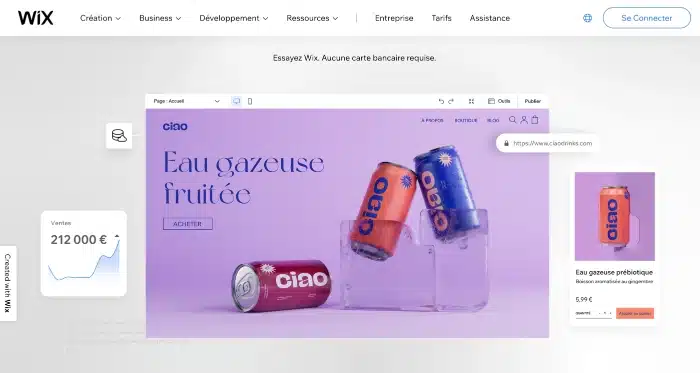
Wix est l’une des plateformes de blogs les plus populaires en raison de sa facilité d’utilisation. Pour créer un blog, il n’est pas nécessaire d’avoir des compétences en programmation : il vous suffit de créer votre compte, de personnaliser le design de votre site Web (de façon limitée, cependant) et de commencer à rédiger votre contenu.
Wix s’adresse aux blogueurs débutants à la recherche d’un hébergement et d’une plateforme de blog en un seul endroit. Néanmoins, cela ne l’empêche pas d’être polyvalent et de proposer des fonctionnalités HTML pour celles et ceux qui souhaitent personnaliser davantage le design du site, monétiser leur blog, suivre les performances (notamment le trafic), etc.
Côté tarif, Wix propose des plans entre 6.60€ et 34.80€ par mois. Vous pouvez aussi confier la création de votre site Wix à un développeur professionnel. Contrairement à WordPress, le coût pour créer un site Wix par un professionnel est beaucoup plus abordable car il s’agit surtout d’un travail d’intégration plus qu’un travail de développement.
4. Squarespace : une autre plateforme de blog propriétaire
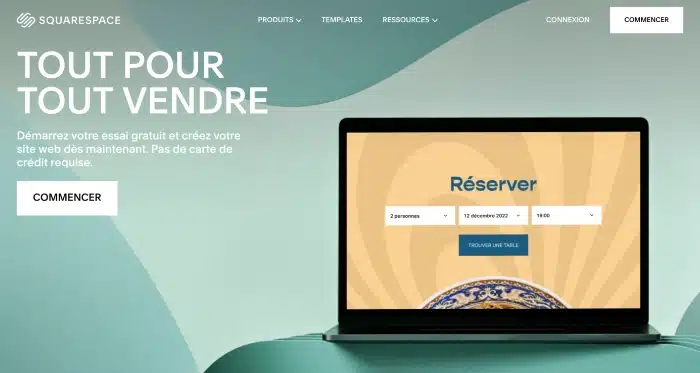
Plateforme de blog populaire, idéale pour créer du contenu riche en images, Squarespace propose des modèles de conception primés ! L’outil offre même des intégrations avec Getty Images, Unsplash et Google AMP, afin que vous puissiez créer des contenus visuellement attrayants. Autant dire que si vous voulez lancer un blog sur un thème où la photo est essentielle (mode, voyage, beauté, décoration…), ou partager un portfolio, c’est un CMS incontournable.
Cependant, vous avez la possibilité de lancer un blog sur n’importe quel sujet. Avec sa soixantaine de templates personnalisables, vous trouverez forcément votre bonheur.
Squarespace ne propose aucun plan gratuit. Vous devrez choisir parmi des formules comprises entre 11 € et 36€ par mois.
5. Jimdo : une plateforme de blog pour débutant
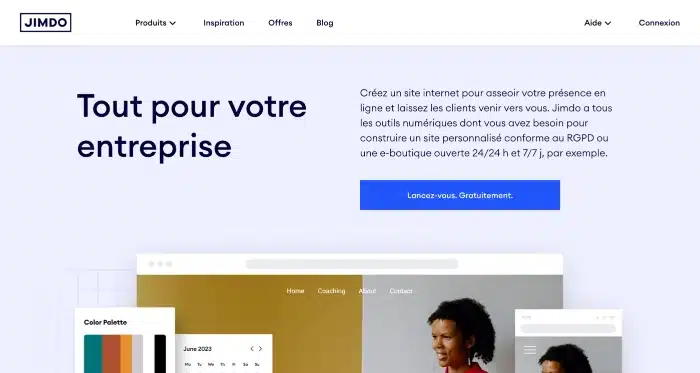
Jimdo vous promet de publier votre site professionnel en quelques minutes ! Tout comme Wix, Squarespace et WordPress.com, il suffit de vous inscrire pour créer un blog. Parmi ses options principales, vous trouvez :
- Des thèmes personnalisables.
- Un système de drag & drop pour créer un blog facilement.
- La possibilité de connecter vos pages Facebook et Instagram pour publier vos articles en un clic.
- Un affichage optimisé pour les mobiles.
- Un site Web conforme au RGPD.
- L’achat d’un domaine personnalisé.
Il existe une offre gratuite pour tester Jimdo. Pour débloquer un maximum de fonctionnalités, comptez entre 9€ et 39€ par mois.
6. HubSpot CMS : une plateforme de blog pour les grandes entreprises
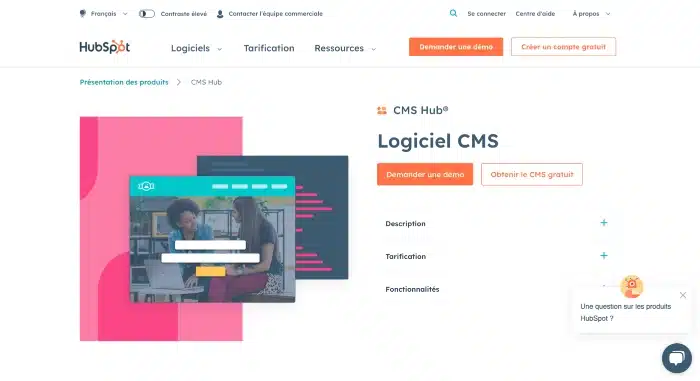
La célèbre plateforme de marketing automation propose un outil dédié à la création de blog : HubSpot CMS. Avec un prix démarrant à 25€ par mois, la solution s’avère très complète et dispose des caractéristiques suivantes :
- Des fonctionnalités SEO avancées pour le référencement du blog.
- Des thèmes professionnels et personnalisables.
- Un outil de suivi des statistiques.
- Un CRM intégré, idéal si votre blog a pour objectif d’attirer des prospects.
- Un éditeur en glisser-déposer pour personnaliser le design du site.
- La création de contenus multilingues.
- La possibilité d’effectuer des tests A/B sur une même page.
7. Blogger : la plateforme de blog de Google
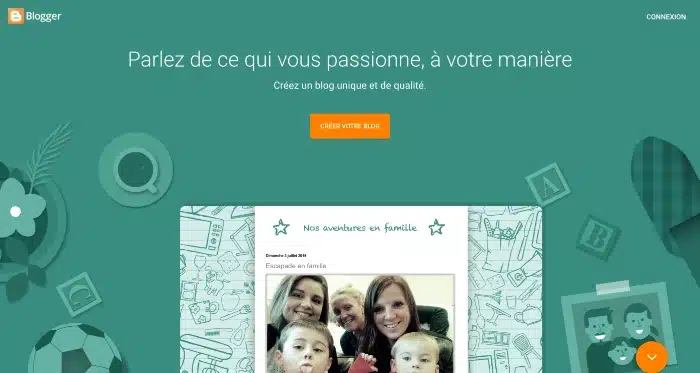
Si vous êtes à la recherche d’une plateforme extrêmement simplifiée, pour publier vos billets et expériences sans trop de production, Blogger est ce qu’il vous faut !
Il vous suffit d’avoir un compte Google pour y accéder. Même s’il est gratuit, Blogger propose des fonctionnalités intéressantes comme :
- L’achat d’un domaine personnalisé.
- Des paramètres de référencement personnalisables.
- La synchronisation avec les autres outils Google : Analytics, AdSense, Ads, YouTube…
- Un certificat SSL pré-installé gratuitement.
8. Drupal : une plateforme open-source auto-hébergée
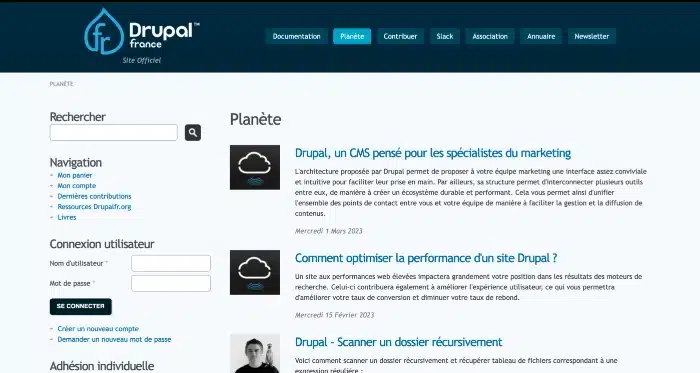
Système de gestion de contenu (CMS) open source très flexible, Drupal convient parfaitement aux blogs complexes et de grande envergure. Il dispose de centaines d’options et de modules prêts à l’emploi, pour personnaliser au maximum le webdesign, la structure, le référencement et l’affichage de votre site Web.
Étant donné la richesse de ses fonctionnalités, il s’adresse plutôt aux utilisateurs ayant des connaissances en CSS et HTML, des besoins complexes, recherchant une solution auto-hébergée.
9. Joomla : une autre plateforme open-source auto-hébergée
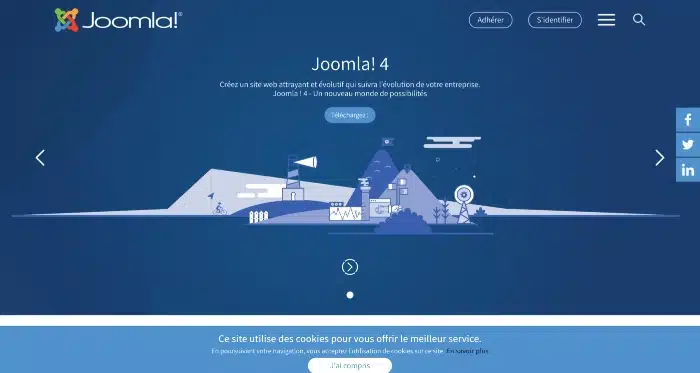
Principale alternative à WordPress et Drupal, Joomla est un CMS open source doté de fonctions de gestion de contenu avancées. Parmi ses atouts principaux :
- La possibilité de créer des types d’articles personnalisés.
- La gestion de centaines d’utilisateurs (pratique si vous voulez ajouter de nombreux contributeurs à votre blog !).
- La publication du contenu en plusieurs langues.
- Un design 100% personnalisable.
- Une boutique d’extensions pour ajouter des fonctionnalités et caractéristiques à votre blog.
Comme tous les CMS open-source, Joomla est entièrement gratuit.
10. Medium : une plateforme de blog intégrée
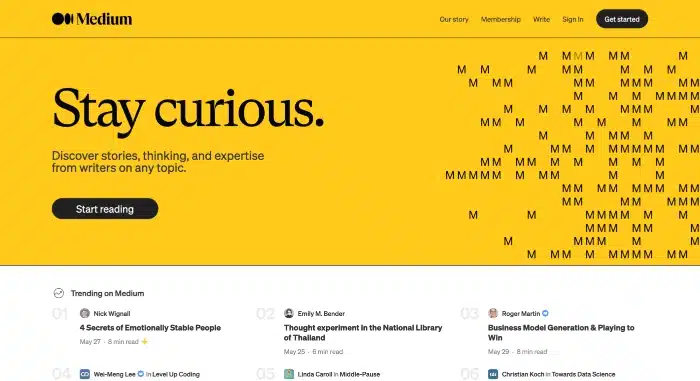
Lancée par l’un des créateurs de Twitter, Medium se veut un mélange de WordPress et d’un réseau social. Son principal objectif est d’attirer toute l’attention sur le contenu publié.
En plus d’encourager les articles de qualité, Medium vous permet de rejoindre une communauté d’écrivains qui, comme vous, sont désireux de présenter leurs projets et d’offrir du contenu utile. C’est l’outil idéal pour gérer votre image de marque et vous faire connaître en tant que freelance.
11. Weebly : une plateforme de blog propriétaire
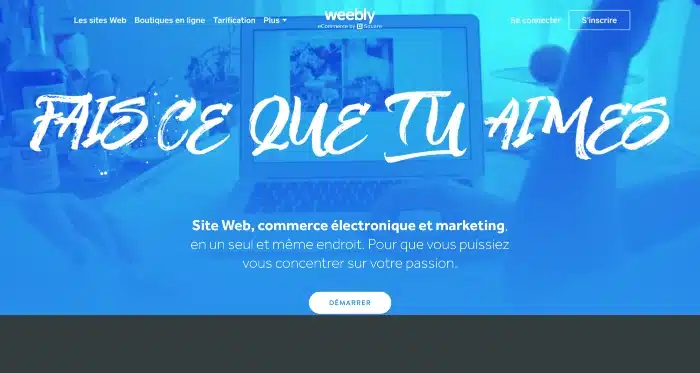
Le constructeur Weebly offre une solution clé en main pour créer rapidement un blog. En partant d’un template, vous disposez d’options de personnalisation et d’une interface en glisser-déposer pour concevoir un site à votre image.
Il existe une formule gratuite. Cependant, pour un domaine personnalisé ou des fonctionnalités marketing, SEO ou analytics avancées, vous devrez choisir un plan entre 14€ ou 25€ par mois.
12. Webador : une plateforme de blog gratuite
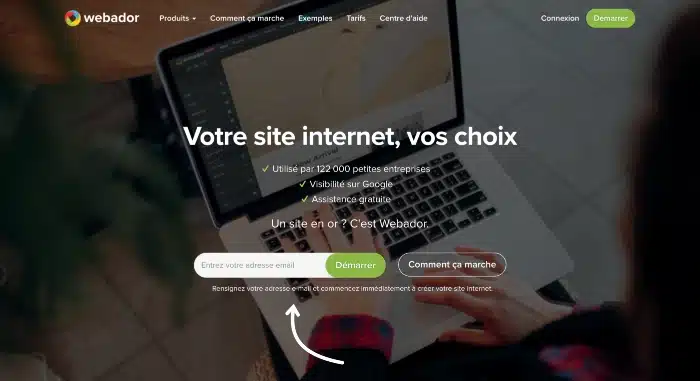
Gratuite, la plateforme de blog populaire Webador s’adresse aux blogueurs débutants, qui veulent tester une idée ou démarrer un projet rapidement. Avec son interface intuitive, sous un système de drag & drop, vous ajoutez facilement votre logo, vos photos, vos vidéos ou tout élément de votre charte graphique.
Le plan gratuit vous donne une adresse en webador.fr. Si vous souhaitez un nom de domaine personnalisé, comptez 1€ par mois, les 3 premiers mois, puis 6€ par mois. Une formule intéressante pour essayer ce CMS !
13. E-monsite : une autre plateforme de blog gratuite
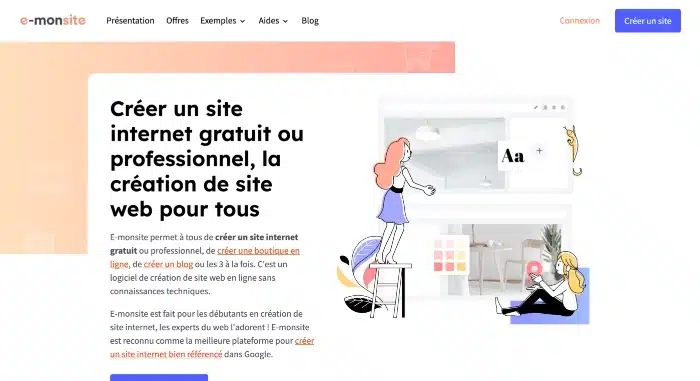
Leader français parmi les plateformes gratuites de blog, E-monsite permet de créer rapidement un blog au design épuré, simple et moderne. Si vous souhaitez un espace dépouillé, qui laisse place à votre contenu, c’est la solution idéale. Grâce à l’outil de création de pages Internet, vous personnalisez rapidement le webdesign, en sélectionnant vos polices et couleurs favorites.
L’interface se veut ludique, avec des modèles responsives, pour créer un blog 100% cohérent avec votre image !
14. Typepad : une plateforme de blog pour partager ses passions
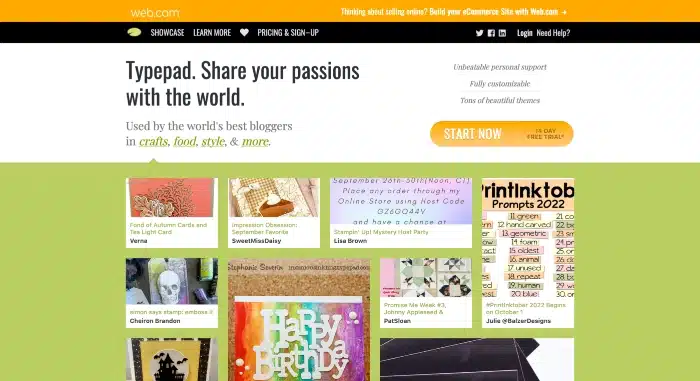
Vous aimez les designs simples et rétro ? Typepad est la solution parfaite ! Son objectif est de vous aider à promouvoir votre passion, plutôt que votre activité professionnelle. Cependant, les deux peuvent être liés ! Alors, si vous recherchez une plateforme pour lancer un blog authentique, avec une interface intuitive et la possibilité de planifier du contenu, Typepad reste à envisager.
Niveau tarif, la formule de base est à 8.95$ par mois.
15. Tumblr : une plateforme de microblogging
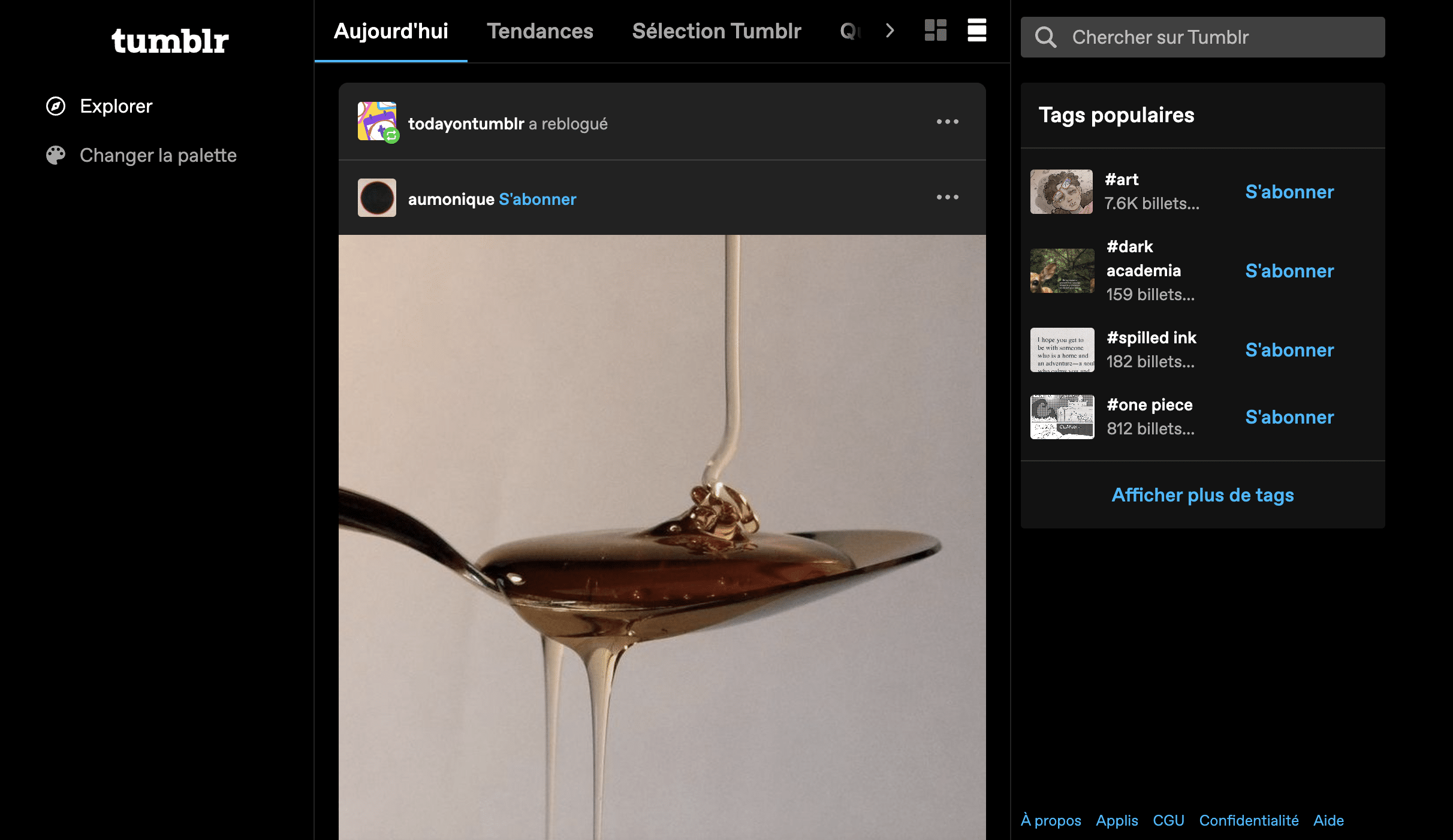
100% gratuite, la plateforme de blog populaire Tumblr s’adresse aux utilisateurs qui recherchent un design visuel et accrocheur. Ce n’est pas un hasard si cet outil abrite le monde artistique, ainsi que des esprits créatifs en quête d’authenticité et de simplicité.
Si vous avez essentiellement des images, des vidéos et des GIFs à partager, c’est là que vous devez être.
16. LiveJournal : un outil de blogging en ligne
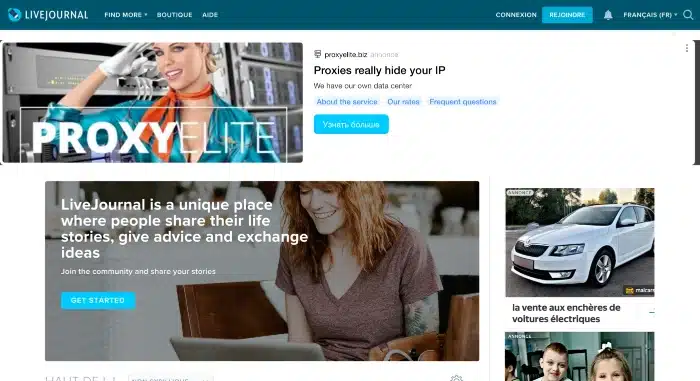
LiveJournal a été l’une des premières plateformes de blogs sur Internet. Tout comme Médium, elle est un mélange entre un réseau social et un webzine. Simple et gratuite, la création d’un compte offre plusieurs avantages :
- La publication et la planification du contenu.
- L’accès à une grande communauté d’utilisateurs, en quête de contenus utiles.
- Des statistiques de visites et de trafic.
- Une interface épurée et intuitive.
La plupart des fonctionnalités sont incluses dans le plan gratuit, mais il est possible d’en débloquer davantage avec un pack professionnel à 19,95 $ par an.
17. Ghost : une autre plateforme de blog auto-hébergée
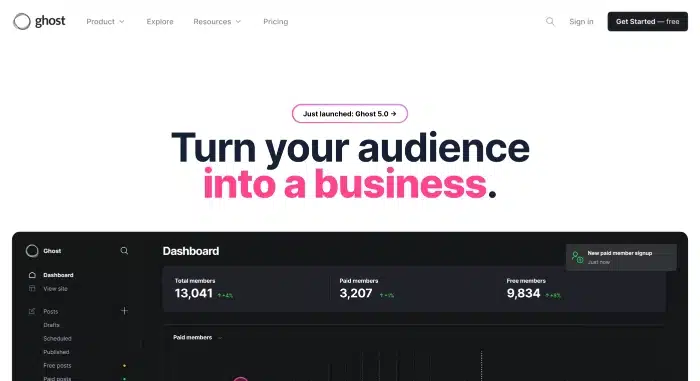
Créée par certains des développeurs de WordPress et Mozilla, cette plateforme de blog populaire présente une interface élégante pour la rédaction et la publication d’articles. Ghost propose deux versions de son outil :
- Un CMS open source (donc gratuit !) que vous pouvez facilement télécharger et installer sur votre serveur.
- Une solution clé en main pour créer un blog en quelques clics, dont le premier plan démarre à 9$ par mois.
Néanmoins, si vous avez besoin de fonctionnalités avancées comprenant l’optimisation du référencement, les mots de passe utilisateurs, la planification du contenu ou encore le raccourcissement d’URL, il faudra choisir une formule entre 25$, 50$ ou 199$ par mois.
18. Webnode : une plateforme de création de blog gratuite
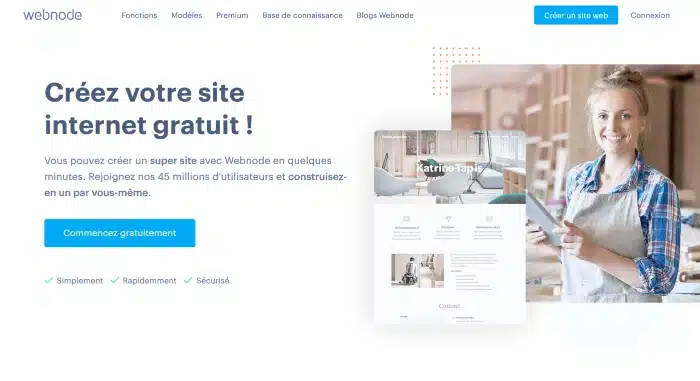
Revendiquant plus de 45 millions d’utilisateurs dans le monde, Webnode est un autre constructeur de sites Web à connaître. Parmi ses principaux avantages, nous pouvons citer :
- Le prix : les formules sont accessibles et démarrent à 3.50€ par mois.
- La prise en charge du multilingue pour les publications et les pages.
- L’éditeur en glisser-déposer.
- Les modèles modernes et adaptés aux mobiles.
- La possibilité d’ajouter une petite boutique en ligne en quelques clics.
- Un support technique réactif.
19. Blog4ever : créer un petit blog en ligne
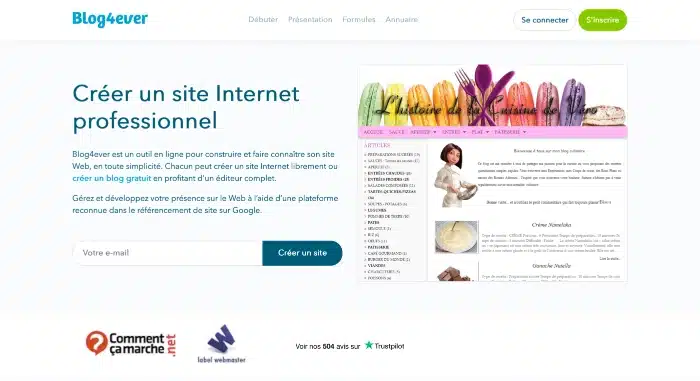
Pour les freelances et TPE, Blog4ever reste la plateforme idéale. Avec sa formule gratuite, vous pouvez créer un blog en toute simplicité et publier vos premiers contenus. Le design étant très simplifié, il laisse la place complète à vos articles.
Si vous avez besoin de fonctionnalités premium, notamment concernant la personnalisation des modèles, la sécurité et le retrait de la publicité, optez pour un plan entre 5.90€ et 19.90€ par mois.
20. Alboom : une plateforme de blog gratuite sans limites de pages

Plateforme de blog brésilienne, Alboom permet de créer un site professionnel, moderne, responsive, sans limites de pages ! Si vous avez l’intention de publier de nombreux contenus, cet éditeur mérite le coup d’œil. Les différents templates disponibles laissent énormément de place aux visuels et photos. Si vous êtes sur un secteur créatif, vous trouverez forcément un modèle fait pour vous.
Parmi les autres avantages d’Alboom, nous pouvons lister :
- L’ajout possible d’un CRM.
- La prise en charge des avis clients.
- La possibilité d’utiliser la Réalité Augmentée.
- Un design 100% personnalisable.
- Des prix accessibles : il existe une formule gratuite, un plan à 9€ par mois et une offre à 18€ par mois.
Pourquoi utiliser une plateforme de blog ?
Si vous souhaitez lancer rapidement votre site et vous simplifier la création de contenus, utiliser une plateforme de blog populaire est la meilleure solution ! Voici, selon nous, le top 3 des avantages de ce type d’outil :
Adaptée à la publication d’articles
Pas de surprise, une plateforme de création de blog vous offre tout le nécessaire pour rédiger, planifier et optimiser vos articles.
Vous disposez souvent d’un éditeur intuitif pour mettre en page votre texte et l’illustrer. Certains outils proposent même de publier automatiquement vos nouveaux contenus sur vos réseaux sociaux.
Des plateformes adaptées à la gestion d’utilisateurs
Qui dit blog, dit parfois rédacteurs au pluriel ! Si vous souhaitez lancer un webzine collaboratif et faire intervenir plusieurs blogueurs, ainsi que des correcteurs ou traducteurs, ces plateformes vous offrent la possibilité de créer différents profils utilisateurs.
Vous pouvez gérer les droits d’accès de chacun et maîtriser parfaitement votre vivier de collaborateurs.
Des fonctionnalités SEO avancées en fonction des plateformes
La plupart des éditeurs de blog proposent des options SEO plus ou moins avancées, pour optimiser le référencement de vos contenus. Un aspect primordial si vous souhaitez monétiser votre site Web ou l’utiliser pour améliorer votre visibilité auprès de vos prospects.
Quels sont les avantages des plateformes de blog auto-hébergées ?
WordPress, Joomla, Drupal… Ces CMS offrent des modèles, plugins et fonctionnalités avancés pour développer vos sites Web. Avec ces plateformes auto-hébergées, les possibilités de personnalisation n’ont aucune limite.
Vous pouvez créer un blog 100% conforme à vos attentes, qui saura évoluer en même temps que vos besoins et/ou votre activité.
Qu’est-ce qui peut vous pousser à choisir une plateforme de blog propriétaire ?
Les plateformes telles que Wix, Jimdo, Squarespace ou WordPress.com s’adressent aux blogueurs débutants, qui veulent rapidement lancer leur site. Les utilisateurs qui ont besoin de peu de personnalisation ou de fonctionnalités se dirigent vers ces options, simples à utiliser et mettre en œuvre.
Inutile d’avoir des connaissances en HTML ou CSS, d’installer le CMS sur un serveur ou de réserver par soi-même un hébergement et un nom de domaine. Tout se déroule via le même tableau de bord.
Notre astuce pour choisir la meilleure plateforme de blog
Pour choisir la plateforme de blog populaire adapté à votre projet, sondez vos besoins, votre budget et vos compétences en développement Web. Pour un maximum de personnalisation et de flexibilité, privilégiez un CMS auto-hébergé. Surtout si vous maîtrisez un minimum le code. À l’inverse, pour un blog simple, sans fioriture et à mettre en ligne rapidement, les solutions propriétaires vous conviendront davantage.
Dans les deux cas, vous aurez besoin de contenus de qualité afin que votre blog décolle ! Pensez à faire appel à un rédacteur sur notre plateforme de rédaction, Redacteur.com.
L’article Les 20 plateformes de blog les plus populaires en 2024 est apparu en premier sur Redacteur.com.