Le mobile est aujourd’hui un outil incontournable. Dans le monde, près d’1 personne sur 3 possède un smartphone. En France, le couple smartphone et tablette crée chez les consommateurs, de nouvelles attentes, tournées le plus souvent vers l’instantanéité, la simplicité d’utilisation et l’abondance de l’offre. L’application mobile répond à ses critères et offre des fonctionnalités très appréciées de la population.
Pourquoi créer une app mobile ?
Créer une application mobile de A à Z répond à une évolution lié à la révolution numérique.
L’augmentation continue du marché des applications mobiles
C’est un marché qui bénéficie d’une croissance incroyable depuis quelques années. Les raisons en sont d’une part le fort taux de pénétration des smartphones, la réalité virtuelle et les objets connectés qui impliquent l’utilisation d’app mobiles.
Un très grand nombre de connexions se font sur internet et de nombreuses études indiquent des chiffres d’affaires avoisinants les 110 milliards de $ en 2021. On retrouve l’intérêt pour les applis de jeux, les applications de création pour photos ou vidéos…
L’e-commerce se positionne sur cette évolution et attend une forte poussée sur le marché de l’app dans les années à venir.
Recevoir une rémunération
L’application mobile payante ressemble un peu au Graal. Les sommes de revenus possibles sont très importantes. Il existe 4 types d’apps qui génèrent des revenus.
- L’application payante avec un paiement par abonnement,
- Le paiement in-app qui correspond à de l’achat de services. L’utilisateur enclenche par son achat un service que l’application va lui rendre. (exemple : l’utilisateur achète des vies pour une application de jeux),
- L’e-commerce correspond à l’achat de biens physique par l’intermédiaire d’une application,
- La publicité est un autre type d’application mobile qui va créer des revenus. Plus votre app est téléchargée et utilisée, et plus vous aurez de propositions de la part d’annonceurs à qui vous pourrez vendre des espaces sur vos écrans et affichages.
Vous avez un projet de création d’app mobile
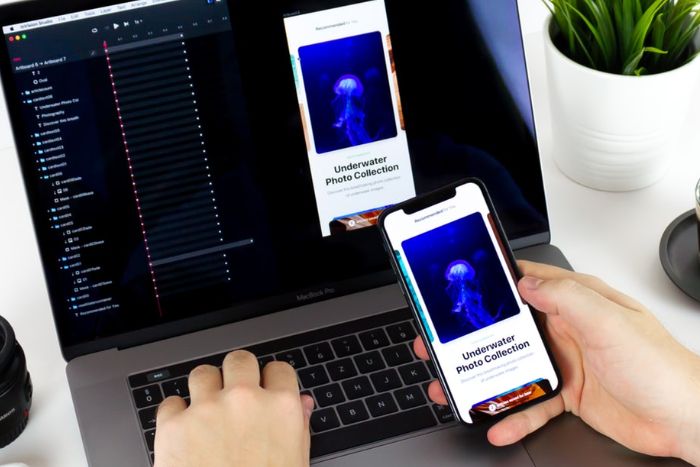
Vous souhaitez créer une application mobile de A à Z, il va vous falloir mettre vos idées dans l’ordre afin de réaliser votre projet dans les meilleures conditions.
Étudier vos ressources ?
Nous ne parlerons pas de budget dans cette partie, mais de ressources humaines. Qui va s’occuper de la prise en charge du développement ?
Quelle que soit la personne choisie, elle devra t’être motivée et avoir quelques notions liées au développement, c’est-à-dire :
- Culture web
- Graphisme
- Notions de code et d’intégration
- Quelques bases en UX et ergonomie
- …
Déterminer les besoins de vos clients
Dans cette mission, vous devez réaliser vos personas. Mettre en évidence le profil type de vos clients ou prospects.
Il est important de savoir à qui vous allez vous adresser pour mettre en place une application adaptée, à forte valeur ajoutée par rapport à votre concurrence.
Cette partie est un peu longue, mais très intéressante et surtout nécessaire. Analysez vos concurrents. Téléchargez les applications, testez-les et notez tout ce qui pourrait-être amélioré.
IMPORTANT : Regardez attentivement les avis, c’est là que vous pouvez piocher pour mettre en place un outil performant. Découvrez les fonctionnalités qui manquent aux utilisateurs, et ce qu’ils aiment.
Noter les objectifs que vous souhaitez atteindre avec votre app mobile
Tout le monde ne crée pas une application mobile pour les mêmes raisons. Pour être sûr d’arriver à ses objectifs, il faut avant tout les définir :
- Souhaitez-vous fidéliser votre clientèle ?
- Souhaitez-vous acquérir de nouveaux clients ?
- Voulez-vous montrer une image de marque à la pointe de l’innovation
- …
C’est vous seul qui pouvez définir vos objectifs. C’est important, car les fonctionnalités que vous allez développer auront un lien direct avec ces choix.
Établir un budget

Créer une application mobile de A à Z peut avoir un coût conséquent en fonction de si on décide de la développer en interne ou si vous faites appel à une agence web. Vous avez aussi la possibilité de contacter un « freelance » qui peut proposer des solutions moins onéreuses du fait qu’il n’a pas de structure à gérer. Dans les prix, sont compris
- Le développement
- Le design
- La communication
- La maintenance
- et plus selon les contrats.
Déterminer le modèle économique de votre application mobile
Cette partie sera en lien direct avec les objectifs que vous souhaitez suivre. Il existe plusieurs modèles possibles :
- L’application mobile gratuite
Appelée aussi « freemium ». Elle offre des fonctionnalités basiques gratuitement et propose en plus des fonctionnalités plus avancées et payantes. C’est un modèle très présent sur le marché, car les personnes peuvent tester avant d’aller plus loin. C’est rassurant.
On retrouve aussi l’application avec publicité. Ce sont les publicités qui payent la personne qui a créé l’app.
- L’application mobile payante.
Sauf si votre marque est déjà réellement populaire, pour lancer une app payante, il faut prévoir un budget conséquent, car vous allez devoir démontrer l’intérêt de votre outil sans passer par la phase test…
Les encarts dans la presse, les spots publicitaires font vite monter les coûts.
Commencez par mettre en place votre projet, budgétisez et voyez !
Les étapes de création d’une application mobile
La partie première partie de la création de votre application mobile est terminée, vous allez pouvoir entrer dans le vif du sujet. Que vous choisissiez de créer une application native ou hybride, sur iOs ou Android, le principe reste le même. Le choix de la plateforme influera évidemment les étapes de développement et de publication de votre appli. Mais pour la concevoir, les étapes sont les mêmes quelle que soit la plateforme.
Le cahier des charges
Comme pour tout projet, il est important de commencer par le début et d’écrire votre cahier des charges. C’est une étape capitale de la création de votre application mobile, mais qui peut vous sembler laborieuse.
Il doit comprendre :
- La présentation du sujet
- Les informations sur votre entreprise
- Les informations sur vos produits, services
- Les cibles visées
- Détaillez les fonctionnalités que vous souhaitez développer
- Quel est le modèle économique choisi
- Parlez de vos concurrents
- Mettez en avant les contraintes
- Indiquez votre budget et les délais de réalisation que vous souhaitez.
Maintenant, on passe à la partie développement : Suivez le guide !
Le prototypage d’application mobile
C’est la partie conception incomplète de l’appli. C’est une étape qui doit servir à tester l’utilisation avant la réalisation finale. C’est en quelque sorte une maquette interactive. Elle va nous servir à vérifier les fonctionnalités utiles ou pas entre autre.
L’UX et le graphisme
Le graphisme utilisé pour l’interface de votre app mobile est importante, car elle est susceptible de faire la réussite ou pas de votre projet. Vous devez établir une charte graphique puis choisir un design UX adapté à votre projet et à votre cible.
À savoir : Le terme UX (User eXperience) désigne l’expérience que vit l’utilisateur en ce qui concerne une interface, une tablette, un service… Dans le domaine de l’application mobile, on utilise plus communément l’UX design pour nommer la qualité de l’expérience utilisateur concernant l’interface de l’application.
Le temps du développement
Voilà la partie qui peut vous poser le plus de difficulté. Le temps du développement est venu. C’est une partie fastidieuse qui demande de l’attention et quelques connaissances. Utilisez le mode Agile en mettant en place la technique de l’User Story Map. C’est une technique qui donne la possibilité de lancer votre application avec les fonctionnalités de base, de l’éprouver auprès du public ensuite d’apporter les fonctionnalités utiles.
Trackez les performances de votre appli
Le tracking pour les applications mobiles donne la possibilité d’analyser les comportements de vos utilisateurs et le suivi de la performance de votre application. Avant de lancer votre appli mobile pour le grand public, procurez-vous un outil de tracking comme Google Analitic ou Mobile App Analytics GA pour analyser l’EX et le parcours client.
La version test
On l’appelle aussi la version bêta. Elle est destinée aux utilisateurs qui ont l’habitude d’acheter tout ce qui est nouveau, ou pour vos ambassadeurs de marque. Elle vous donne la possibilité d’identifier les problèmes et autres points de friction que rencontrent les personnes qui utilisent votre application mobile.
Faites certifier votre appli par les plateformes de téléchargement

Lorsque vous recherchez une application mobile, votre premier réflexe est de vous rendre sur un Play Store ou App Store. C’est la raison pour laquelle il est important de proposer votre application afin d’essayer de la faire référencer sur leurs boutiques.
Promouvoir votre application mobile
Vous avez développé votre application. Vous en êtes fiers et elle vous parait bien réalisée. Si personne n’a connaissance de son existence, elle risque de ne pas rencontrer le succès escompté. La communication et très importante. Trouvez les moyens pour promouvoir votre appli et inciter les utilisateurs à aller plus loin dans son utilisation.
De nombreux moyens sont à votre disposition pour lancer votre application. En voici quelques-uns :
- Les réseaux sociaux
Le canal incontournable de notre temps. Déployer votre communication sur les réseaux tels que Facebook, Instagram, LinkedIn, Twitter… en fonction de la cible que vous souhaitez atteindre.
- Une landing page
La landing page est un endroit ou arrive les internautes une fois avoir cliques sur un lien externe. Ce type de page peut-être créée pour réaliser une newsletter, mais aussi une information de communication. Dans le cas de votre application, vous pourriez créer cette page pour expliquer le fonctionnement et les fonctionnalités de votre application mobile.
- La presse
Prenez contact avec des journalistes qui pourront réaliser une interview de vous. Cela vous permet de parler de votre appli.
- La publicité
Vous pouvez utiliser les campagnes de pub (réseaux sociaux, affichage…) afin de gagner en visibilité.
Conseil : Ne perdez pas du temps en vous éparpillant sur tous les canaux. Cela risque d’être moins productif que prévu. Analysez votre cible et sélectionnez les bons outils de promotion.
Notre astuce pour créer une application mobile de A à Z
Pensez à tester votre application sur le marché. Vous pouvez le faire en lançant votre application rapidement et en analysant les retombées. En fonction du choix du store sur lequel vous allez publier votre appli, l’Apple Store pour iOs ou le Play Store pour Android, la cible ne sera pas tout à fait la même.
Demandez un retour aux utilisateurs. Les avis sont très importants et vont vous permettre de modifier votre appli pour que l’UX soit la meilleure possible.
Vous pourrez développer les fonctionnalités manquantes au fur et à mesure du retour que vous feront les utilisateurs.
Qu’ils se révèlent positifs ou négatifs, les avis sont une source extraordinaire pour améliorer votre appli mobile et en faire un succès.
Enfin, proposez des mises à jour régulières. Cela permet d’améliorer l’appli, de corriger les problèmes.
Les développements d’applications peuvent aussi être réalisés par un développeur mobile freelance. Cela économise les frais de structure. Rendez-vous sur Codeur.com