La gamification a progressivement fait son entrée dans le monde du sport. En transformant les efforts physiques en une expérience ludique avec des objectifs, des récompenses et une dimension communautaire, la gamification permet à chacun de se fixer des défis et de repousser ses limites.
Voici sept exemples d’outils qui intègrent ces mécaniques pour encourager une activité physique régulière et aider les utilisateurs à rester actifs et engagés.
1. Strava
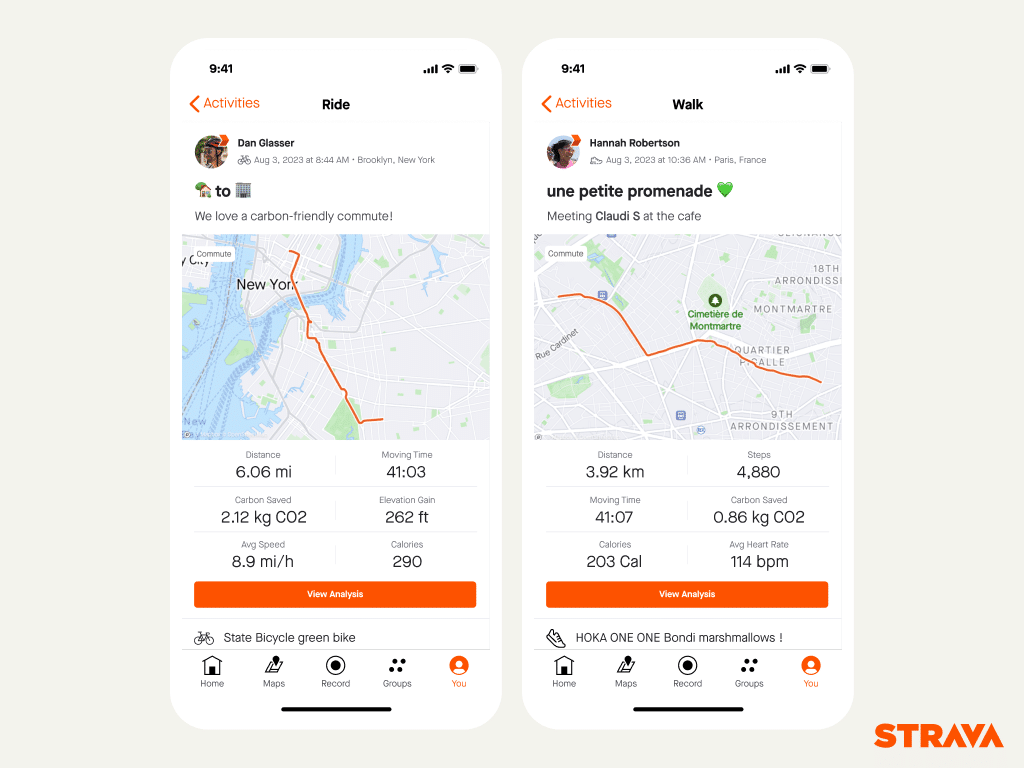
Strava exploite pleinement la gamification pour motiver ses utilisateurs. En plus des défis, classements et segments qui permettent à chacun de se mesurer aux autres, l’application intègre des mécaniques de jeu à travers son fil d’actualité social, qui joue un rôle central dans la motivation. Ce fil permet non seulement de partager ses performances et d’obtenir des “kudos” (l’équivalent des likes), mais aussi de se comparer aux autres.
Cette dimension sociale renforce le côté compétitif en ajoutant une reconnaissance publique des exploits de chacun, ce qui incite à se surpasser pour obtenir des félicitations et grimper dans les classements. En associant gamification et interaction sociale, Strava transforme chaque sortie sportive en un défi partagé, tout en maintenant l’engagement par le jeu.
2. Les podomètres
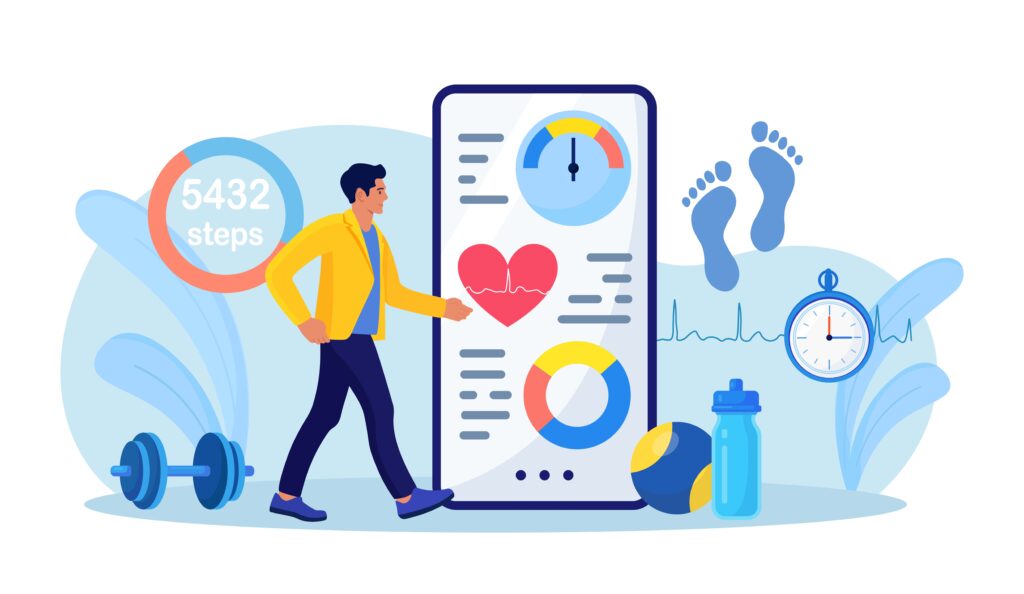
Les podomètres, qu’ils soient intégrés dans des applications de smartphone ou des dispositifs de suivi d’activité, utilisent des mécaniques simples mais efficaces de gamification pour encourager l’activité physique quotidienne. En comptant les pas et en fixant des objectifs journaliers, ils créent une forme de défi personnel constant. Chaque jour, l’utilisateur est incité à atteindre un certain nombre de pas, et la satisfaction de voir son objectif accompli agit comme une petite récompense psychologique.
De plus, certaines applications de podomètres vont plus loin en proposant des badges ou des trophées pour récompenser les objectifs atteints, ou en introduisant des classements et des défis communautaires. Par exemple, des plateformes permettent de se fixer des défis avec des amis ou de rejoindre des groupes pour comparer les performances, ajoutant une dimension compétitive.
Enfin, certaines applications, comme WeWard, offrent des récompenses monétaires ou des dons aux utilisateurs pour atteindre leurs objectifs de pas, introduisant ainsi une motivation supplémentaire avec une valeur tangible.
3. Zwift
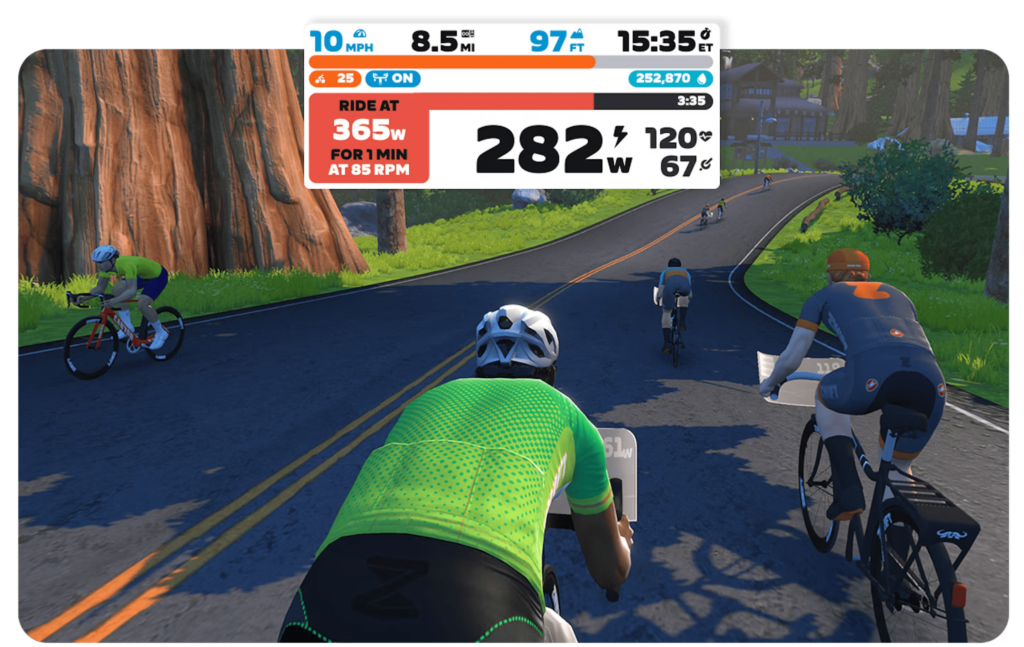
Zwift mélange sport et monde virtuel pour le cyclisme, transformant l’entraînement en une expérience ludique grâce à la gamification.
La plateforme introduit des éléments classiques de jeux vidéo pour rendre l’entraînement plus engageant. Par exemple, à chaque séance, les utilisateurs accumulent des “XP” (points d’expérience) qui permettent de monter en niveau et de débloquer de nouveaux équipements pour leurs avatars : vélos, vêtements ou accessoires. Ce système de récompenses encourage les sportifs à s’entraîner régulièrement pour débloquer de nouveaux items, créant un sentiment de progression.
Zwift se distingue également par ses compétitions en temps réel, où les utilisateurs peuvent participer à des courses virtuelles contre d’autres sportifs du monde entier. Les défis hebdomadaires et mensuels offrent des objectifs spécifiques, accompagnés de classements et de récompenses, pour maintenir l’engagement à long terme.
Enfin, l’aspect communautaire de Zwift, avec des groupes d’entraînement et des événements spéciaux, renforce l’envie de rester actif. Les interactions sociales en direct ajoutent un élément compétitif et collectif, rendant chaque séance plus stimulante.
4. Les applications de course à pied

Nike Run Club ou encore Adidas Running sont des plateformes qui utilisent largement la gamification pour rendre la course plus motivante et interactive. Les deux applications permettent aux utilisateurs de suivre leurs performances, de fixer des objectifs personnels, et d’accumuler des badges pour récompenser leurs progrès. Les défis hebdomadaires et mensuels, souvent proposés par des athlètes professionnels ou des équipes, créent un environnement compétitif qui pousse les coureurs à se surpasser.
Nike Run Club, par exemple, propose des entraînements guidés et la possibilité de participer à des courses virtuelles avec d’autres utilisateurs, renforçant l’aspect communautaire. De son côté, Adidas Running permet aux coureurs de rejoindre des équipes pour participer à des défis collectifs, augmentant la motivation à travers un sentiment d’appartenance.
Ces plateformes intègrent également des classements qui permettent aux utilisateurs de se comparer à leurs amis ou à des athlètes du monde entier, stimulant ainsi la motivation par la compétition tout en rendant l’expérience plus ludique et gratifiante.
5. Fitbit
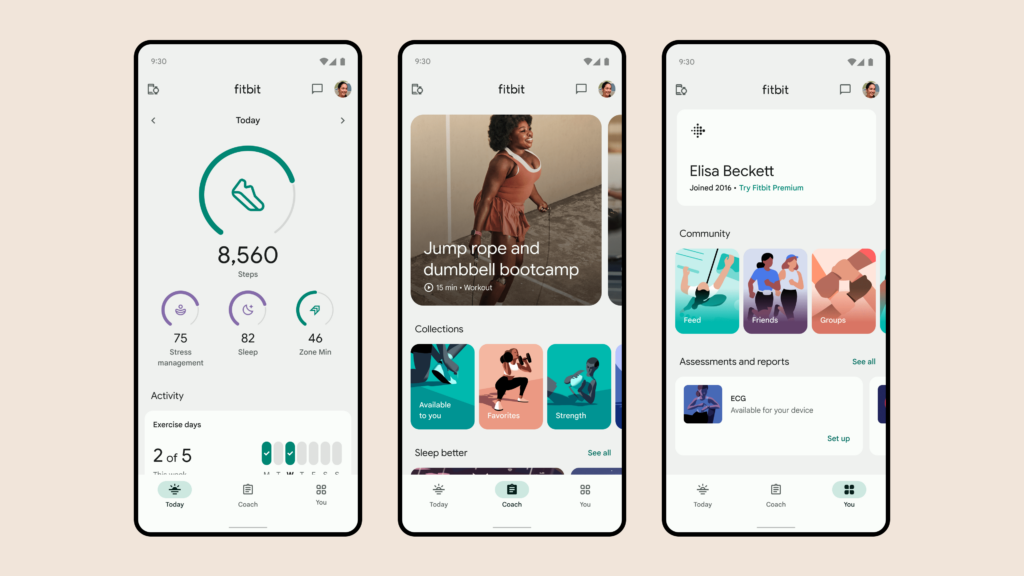
Fitbit est une plateforme qui va au-delà du simple suivi de l’activité physique. Avec ses montres connectées et son application, elle utilise la gamification pour motiver les utilisateurs à atteindre leurs objectifs de santé et de remise en forme. Les utilisateurs peuvent participer à des défis de pas, s’affronter avec des amis ou rejoindre des groupes pour des compétitions amicales.
L’application propose également des badges pour des réalisations spécifiques, comme atteindre un certain nombre de pas ou s’entraîner un nombre déterminé de jours consécutifs. Ces éléments de gamification encouragent une routine d’exercice régulière tout en créant un sentiment d’accomplissement. En intégrant des fonctionnalités de suivi du sommeil et de l’alimentation, Fitbit offre une approche globale du bien-être, incitant les utilisateurs à adopter un mode de vie plus sain.
6. MyFitnessPal
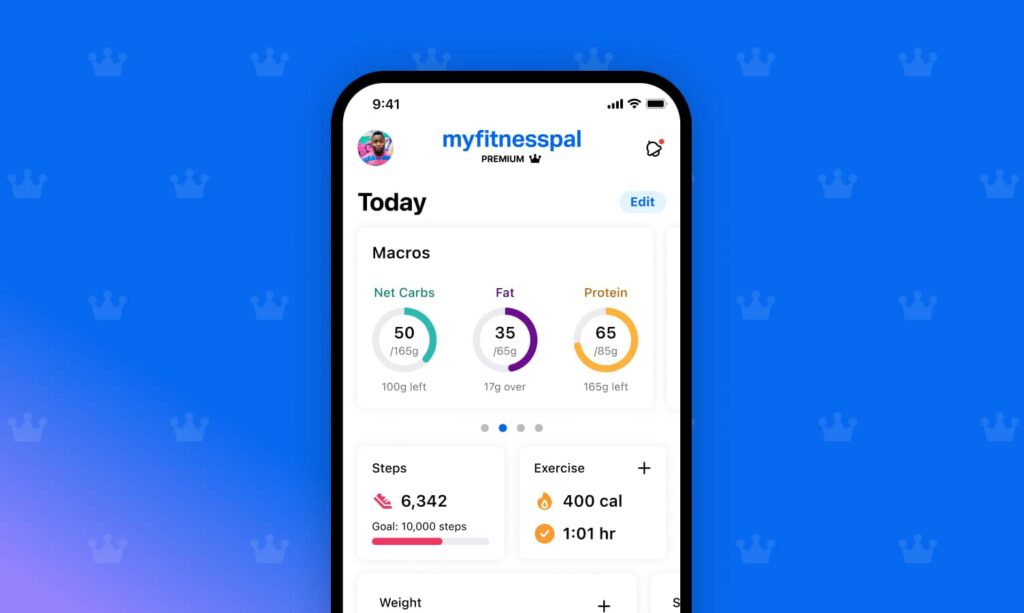
MyFitnessPal est une application de suivi alimentaire qui utilise des éléments de gamification pour encourager une alimentation saine tout en soutenant un mode de vie actif. Les utilisateurs peuvent fixer des objectifs nutritionnels en lien avec leurs activités sportives, suivre leur consommation de calories et recevoir des récompenses sous forme de badges pour avoir atteint leurs objectifs hebdomadaires ou mensuels en matière de sport et de nutrition.
L’application propose également des défis communautaires où les utilisateurs peuvent s’inscrire pour suivre leurs progrès en relation avec leurs entraînements, stimulant ainsi l’engagement par la compétition. De plus, MyFitnessPal facilite le partage des réussites sportives et nutritionnelles sur les réseaux sociaux, renforçant la motivation et la responsabilité personnelle. En intégrant des éléments de jeu dans le suivi nutritionnel et sportif, MyFitnessPal aide les utilisateurs à rester sur la bonne voie vers une meilleure santé et des performances sportives optimales.
7. Geocaching
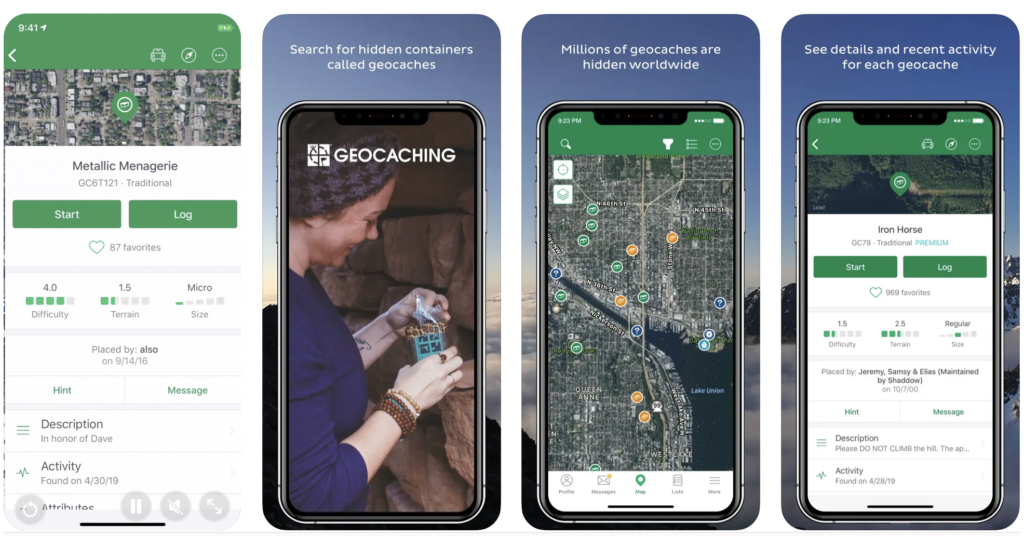
Geocaching est un jeu de plein air qui utilise des éléments de navigation GPS pour transformer des promenades ou des randonnées en aventures ludiques. Les utilisateurs recherchent des “caches” (des petites boîtes contenant des objets) qui sont cachées à divers endroits, souvent dans des parcs ou des zones naturelles.
La gamification dans Geocaching est renforcée par des classements, des badges et des récompenses pour la découverte de caches, ainsi que par la possibilité de créer et de partager ses propres caches. Cela incite non seulement à l’activité physique, mais aussi à l’exploration et à l’aventure en plein air, tout en favorisant un sentiment de communauté parmi les géocacheurs. Ce mélange de chasse au trésor et d’exercice en plein air fait de Geocaching une activité engageante et stimulante pour ceux qui souhaitent rester actifs.
La gamification : un outil stratégique pour les entreprises
La gamification est un puissant levier pour les entreprises souhaitant encourager l’activité physique et le bien-être de leurs employés. En intégrant des éléments de jeu dans des programmes de santé et de fitness, les entreprises peuvent créer un environnement stimulant qui incite à rester actif.
De plus, la gamification peut s’appliquer à de nombreux secteurs, rendant l’engagement des clients plus ludique et interactif. Que ce soit à travers des défis, des récompenses ou des classements, cette approche favorise l’implication des utilisateurs et transforme les objectifs en expériences motivantes. En adoptant la gamification, vous pouvez attirer et fidéliser vos clients, tout en créant un lien plus fort autour de votre marque.