Depuis que Mark Zuckerberg a annoncé le changement de nom de la maison mère de Facebook, les discussions sur l’avènement annoncé du « métavers » ont dominé l’actualité high-tech de ces derniers mois.
En Octobre 2021, le géant des réseaux sociaux a en effet rebaptisé sa société « Meta » et en a profité pour lancer un ensemble d’outils de développement de métavers pour les développeurs. Depuis, tout le petit monde a commencé à étudier la possibilité de créer d’autres métavers, et à réfléchir aux bénéfices que cela pourrait apporter. L’implication de grandes entreprises dans le métavers offre sans aucun doute des opportunités d’avenir pour quiconque veut se professionnaliser et devenir « développeur métavers ».
Alors que la tendance de construction du métavers prend de l’ampleur, il est raisonnable de s’interroger sur les opportunités de carrière. Bien sûr avant cela, il faut d’abord essayer de comprendre ce qui semble être un nouvel Eldorado.
Le métavers, qu’est-ce que c’est ?
Grosso-modo, un metavers, c’est un espace numérique dans lequel on trouve des représentations numériques de personnes, de lieux et de d’objets. En d’autres termes, c’est un « monde numérique » avec des personnes réelles représentées par numériquement. Si vous n’avez pas vu « Matrix », c’est le moment !
À bien des égards, dans une session Microsoft Teams, Zoom ou même Discord, on est déjà dans une forme de métavers. Vous êtes « là » dans la pièce, mais vous pouvez être représenté par image statique, comme un avatar, ou une vidéo en direct.
On peut l’utiliser pour plein de choses : des réunions bien sûr, mais pourquoi pas la visite d’une d’usine, une formation… En fait, presque tous les programmes liés aux Ressources Humaines peuvent être repensés pour devenir des métavers. Et si on y ajoute des lunettes 3D, alors le métavers offre une expérience totalement immersive. C’est presque comme la Matrice, vous dis-je ! Sauf que bien sûr, les métavers ne s’arrête pas à une réunion Zoom, qui diffère encore beaucoup de ce qu’a prophétisé le fondateur de Facebook.
Les métavers seront bien plus :
- Ils seront persistants, c’est-à-dire qu’ils ne se réinitialiseront jamais, ne feront pas de pause et ne se termineront jamais : ils seront là indéfiniment.
- Ils seront synchrones, et « vivants » : des événements préprogrammés et autonomes se produiront, comme dans la « vraie vie », mais le métaverse sera une expérience vivante existant pour tout le monde, de manière constante, en temps réel.
- Ils n’auront pas de limite d’utilisateurs simultanés, bien que chaque utilisateur aura un sentiment individuel de « présence ». Tout le monde peut faire partie d’un métaverse et participer à un événement, se rendre dans un lieu, exercer une activité spécifique avec d’autres participants, en même temps.
- Ils auront une économie fonctionnelle : les individus et les entreprises pourront créer, posséder, acheter, vendre, investir, dans une toute chose qui possède une « valeur » reconnue par les autres.
- Ils devront proposer une expérience s’étendant aussi bien au monde numérique que physique, aux réseaux ou (expériences) privés et publics, et aux plateformes ouvertes et fermées.
- Ils offriront une interopérabilité sans précédent quant aux données, aux actifs numériques, au contenu, etc. Par exemple, votre armure préférée de World Of Warcraft pourrait également être utilisée pour vous habiller dans Fortnite, et même être offerte à un ami sur (ou via) Facebook. Fini, le monde numérique se comportant comme un centre commercial où chaque boutique utilise sa propre monnaie, demande des cartes d’identité pour chaque client, possède des unités de mesure différentes pour des choses comme des chaussures ou des vêtements, etc.
- Ils seront peuplés de « contenus » et « d’expériences », créés, exploités et consommés par un très éventail de contributeurs, dont certains seront des individus, d’autres seront des groupes organisés de manière informelle, et bien sûr des entreprises à vocation commerciale.
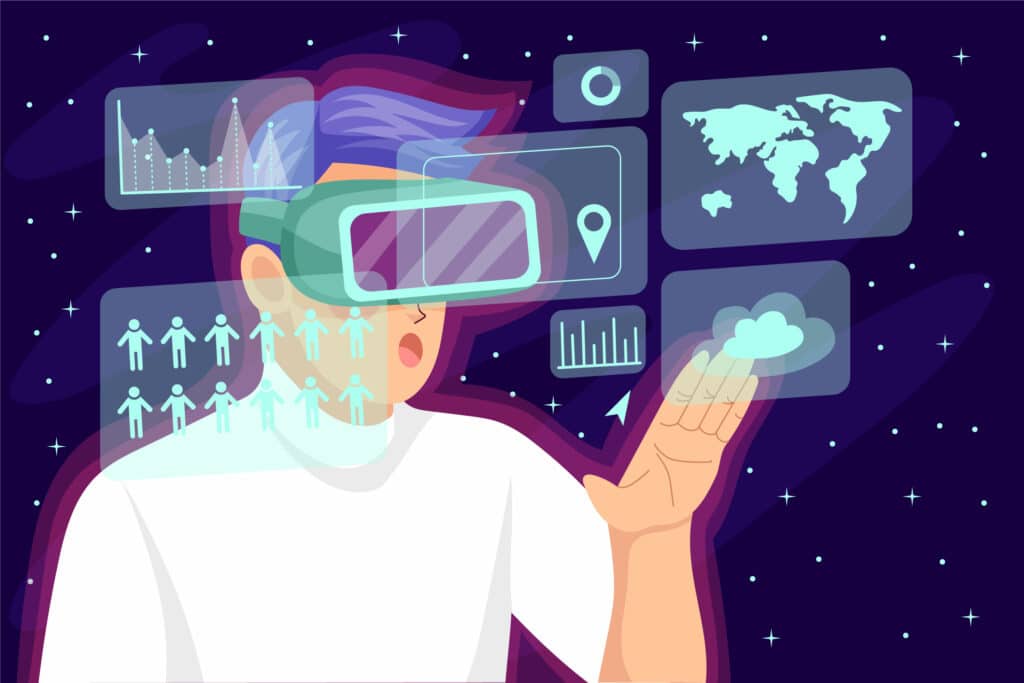
Métavers : Qui seront les acteurs principaux ?
Vous l’aurez compris, il n’y aura pas qu’un seul métavers, mais de nombreux : certains pour les affaires, d’autres pour le commerce, d’autres pour l’éducation et d’autres pour le divertissement…
De nombreuses entreprises vont investir dans ce nouvel espace : Facebook, bien sûr, qui a choisi de renommer toute son entreprise, pour marquer le coup. Mais aussi Microsoft qui est déjà très présent. Et la tendance va devenir beaucoup plus forte : en fait, à peu près toutes les entreprises technologiques, tous les commerçants et toutes les entreprises de divertissement veulent participer.
Réfléchissez à ce que pourraient faire Disney, Netflix, Amazon et les autres dans un tel contexte ?
Si on essaie de comprendre ce qui va suivre, alors nous allons voir fleurir beaucoup de métavers. Prenons exemple avec l’industrie du divertissement. Disney a récemment annoncé qu’il allait « connecter les mondes numérique et physique » pour ses histoires et les animations de ses parcs. Qui ne voudrait pas entrer dans un film Disney (en 3D ou avec un avatar) et parler aux personnages ? Disney affiche son ambition de devenir « l’endroit le plus heureux du métavers ».
Et enfin, qu’en est-il du métavers du shopping ? Imaginez vous rendre dans un magasin Amazon (ou Darty, Ikea…) pour acheter un meuble, faire vos courses, acheter un livre, en allant directement discuter avec l’auteur ou voir un produit alimentaire en 3D. D’ailleurs Amazon possède Twitch, le plus grand réseau « gaming » au monde : vous pensez qu’Amazon ne travaille pas sur un truc et qu’il attend les bras croisés ?
Métavers : Quels langages de programmation ?
Le métavers aura un besoin constant d’ingénieurs, de développeurs et de programmeurs. Presque toutes les plus grosses entreprises (et les plus influentes) du monde, comme Facebook, Microsoft, Apple, ainsi que les « nouvelles » entreprises comme OpenSea, Roblox, Niantic, The Sandbox, Decentraland… recrutent déjà pour des postes concernant le métavers, que ce soit en RA (réalité augmentée) ou en RV (réalité virtuelle), voire un mélange des deux, ou via la blockchain. Étant donné que le métavers englobe de nombreuses facettes de la technologie et de la société, les connaissances et les compétences que l’on peut mettre à profit sont très variées.
Que vous codiez pour la réalité augmentée, la réalité virtuelle ou dans le domaine de la blockchain et de la cryptomonnaie, il existe un certain nombre de langages de programmation que vous devrez connaître pour pouvoir contribuer à la construction du métavers. Voyons lesquels.
C#
C# a été conçu par Microsoft en 2000 : c’est le principal langage de programmation du moteur de jeu Unity depuis 2005. Unity est une plateforme très populaire pour qui développe des applications de réalité virtuelle. La plateforme compte déjà plus de 750 000 développeurs, parmi lesquels de grands éditeurs de jeux, mais également des studios indépendants, et même des étudiants ou simples amateurs. Unity est l’un des deux principaux moteurs de jeu, très populaires auprès des développeurs.
C++
L’autre moteur de jeu utilise C++ comme langage principal. Créé par Epic, il s’agit d’Unreal.
Souvent considéré comme plus puissant et plus rapide que le C#, vous verrez souvent des descriptions de poste exigeant des connaissances dans l’un et l’autre de ces deux langages, ainsi que pour Unity et Unreal : les deux font la paire.
JavaScript
Considéré comme le langage de l’Internet, JavaScript est complexe, mais relativement facile à apprendre. Vous pouvez construire sur une blockchain avec JavaScript et comme il s’agit d’un langage familier à de nombreux navigateurs, il est très souvent utilisé dans les applications Web de Réalité Virtuelle ou de Réalité Augmentée VR. C’est un choix sûr pour les débutants, un excellent langage « de base » qui débouche sur un grand nombre d’utilisations.
Python
Comme Python utilise un processus de développement ouvert et transparent, avec une base de code open-source et un grand nombre de modules tiers, c’est le langage idéal pour apprendrà créer des scripts ou des interfaces de réalité virtuelle. Il est considéré comme l’un des langages les plus faciles à maîtriser, et il est souvent mis à contribution dans des applications industrielles pour la RV et la RA. Avec Python, il est également facile de passer ensuite sur un langage plus avancé, comme C#.
Solidity
Développé par Ethereum, la populaire blockchain, Solidity est un langage orienté objet qui sert principalement à écrire et à mettre en œuvre des « smart-contracts » dans la blockchain Ethereum. Si vous avez déjà acheté ou vendu un NFT, les chances sont grandes qu’il ait été créé en utilisant Solidity. Un forum de support, gratuit, est mis à disposition de ceux qui s’intéressent ou souhaitent s’investir dans le langage Solidity et l’écosystème gravitant autour.
Rust
Rust existe depuis 2010. Il s’agit d’un langage de programmation compilé multi-paradigme, conçu et développé par Mozilla Research. Il a été pensé pour être « un langage fiable et pratique », supportant les styles de programmation purement fonctionnels, ainsi qu’orienté objet (sous certains aspects).
Solana, la blockchain qui monte, utilise Rust pour ses programmes. Solana dispose d’un écosystème de développeurs et d’applications en croissance rapide, c’est le moment de monter à bord !
Notre conseil
Si vous souhaiter développer des applications à destination du métavers, nous vous conseillons d’apprendre ces langages de programmation.
Sinon, vous pouvez faire appel à un freelance sur Codeur.com pour vous accompagner dans vos projets autour du métavers pour ne pas rater le train en marche !