Chaque mois en France, 200 millions de podcasts, qu’ils soient natifs ou des replays radio, captivent un auditoire avide d’histoires et d’informations. Avec une hausse annuelle de 52% des auditeurs, dont 35% qui écoutent quotidiennement ces émissions web, l’engouement pour ces formats audio ne cesse de croître.
De plus, 81% des podcasts téléchargés sont écoutés intégralement, témoignant d’une réelle implication des utilisateurs. Face à cette audience grandissante et engagée, l’opportunité de monétiser votre podcast est plus palpable que jamais. Cet article vous dévoile 10 stratégies efficaces pour transformer votre passion en une entreprise lucrative. Préparez-vous à faire prospérer votre podcast !
1. La diffusion de publicités
L’insertion de spots publicitaires représente une stratégie de monétisation efficace pour les podcasteurs. Cette tactique, loin d’être intrusive, s’harmonise avec le contenu offert… à condition d’avoir un rapport avec le thème de votre émission web.
L’intégration de publicités ciblées enrichit l’expérience d’écoute, tout en stabilisant les revenus du créateur.
Pour monétiser son podcast via cette technique, rejoindre des réseaux publicitaires est vivement recommandé ! AdvertiseCast, Midroll, Podcorn… ces plateformes vous connectent avec des annonceurs de tous horizons, pour maximiser vos revenus publicitaires.
Bon à savoir : Si vous publiez votre podcast sur Spotify, sachez que la plateforme dispose d’outils pour aider les podcasteurs à intégrer des publicités directement dans leurs épisodes, générant ainsi des revenus en fonction de leur audience.
2. Le placement de produits
L’intégration de promotions dans le contenu d’un podcast doit se faire avec subtilité et finesse. L’efficacité du placement de produit ou service dépend de sa pertinence vis-à-vis de l’audience ciblée. Un alignement précis entre les intérêts des auditeurs et les caractéristiques de l’offre maximise l’impact et favorise une réceptivité accrue.
Par exemple, une émission audio dédiée aux voyages pourrait, parfois, glisser subtilement le nom d’accessoires utiles aux baroudeurs, comme des marques vendant des sacs à dos, des gourdes, des tentes, des boussoles, etc.
Bon à savoir : soyez transparent concernant cette stratégie de monétisation ! Afficher ouvertement votre partenariat renforce la confiance des auditeurs, tout en augmentant le respect qu’ils portent au créateur pour son intégrité.
3. Proposer des contenus exclusifs contre un abonnement
Pour les podcasteurs souhaitant approfondir leur relation avec leur audience, tout en générant des revenus supplémentaires, l’offre de contenu exclusif via des plateformes d’abonnement est une stratégie clé.
Des services tels que Patreon ou les fonctionnalités d’abonnement de Spotify permettent de proposer des épisodes bonus, des accès en avant-première ou des contenus spéciaux réservés aux abonnés.
Par exemple, le podcast “5 à 7”, animé par Rose et Jess, qui s’adresse aux jeunes dans la vingtaine, propose différentes formules enrichit d’expériences supplémentaires à ses auditeurs. Les tarifs s’adaptent au public et vont de 2.50 à 9.50 € par mois.

En plus de l’abonnement, la vente d’épisodes spécifiques ou de web séries spéciales représente une autre source de revenus. Cette méthode permet aux créateurs de monétiser directement des contenus premium ou des analyses approfondies qui attirent un public prêt à payer.
4. Vendre des produits dérivés
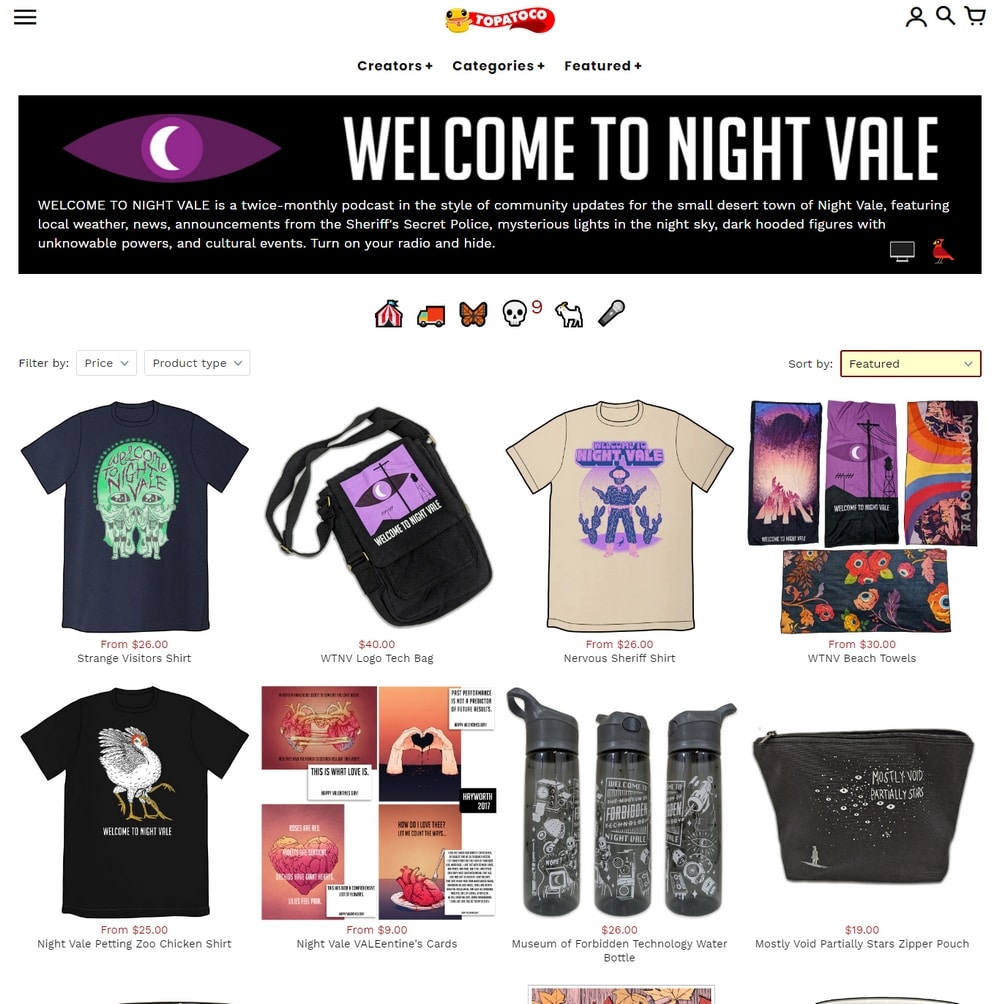
La vente de marchandise est une excellente manière de monétiser un podcast, tout en renforçant votre image de marque. Des produits tels que des t-shirts, des mugs, des totebags ou des autocollants qui reflètent l’identité du podcast, ou des blagues internes, peuvent créer un lien fort avec votre communauté.
“Welcome to Night Vale”, un podcast qui a su captiver par son univers distinctif, propose une vaste gamme de produits dérivés incluant des t-shirts, des affiches, des livres et des vinyles, transformant ainsi ses auditeurs en ambassadeurs de la marque.
5. Vendre via le marketing d’affiliation
L’affiliation est une méthode sophistiquée pour augmenter les revenus. Cette stratégie implique de sélectionner des produits ou services en adéquation avec les intérêts de votre audience.
En négociant des commissions sur les ventes réalisées grâce aux liens partagés dans les descriptions des épisodes ou sur les réseaux sociaux, les podcasteurs peuvent tirer profit de chaque transaction effectuée par leur communauté.
Cette stratégie de monétisation génère des revenus additionnels et renforce la confiance des auditeurs, qui apprécient les recommandations ciblées et pertinentes.
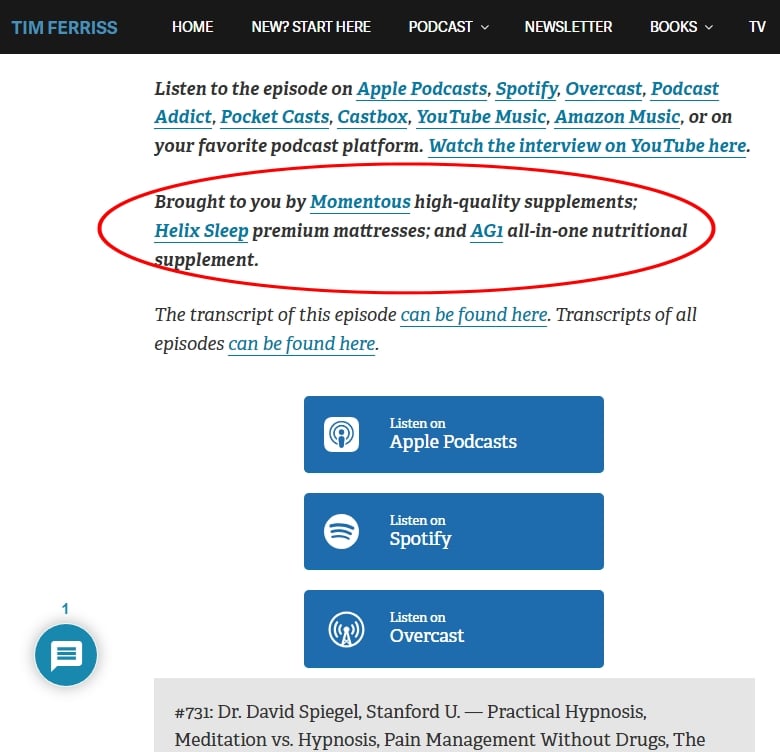
Par exemple, Tim Ferriss, utilise fréquemment des liens d’affiliation pour promouvoir des produits et services durant son podcast « The Tim Ferriss Show ». Afin de capter l’attention (et les revenus) des personnes qui téléchargent son émission, il partage des liens vers des livres, outils et autres ressources mentionnés pendant ses interviews.
6. Encourager le micro-mécénat
Le micro-mécénat est une excellente manière de permettre aux fans de soutenir leur podcast préféré par des contributions modiques et spontanées. Des plateformes comme Ko-fi ou Buy Me a Coffee offrent une alternative moins contraignante aux abonnements mensuels, où les auditeurs peuvent faire des dons à la carte pour exprimer leur appréciation du contenu.
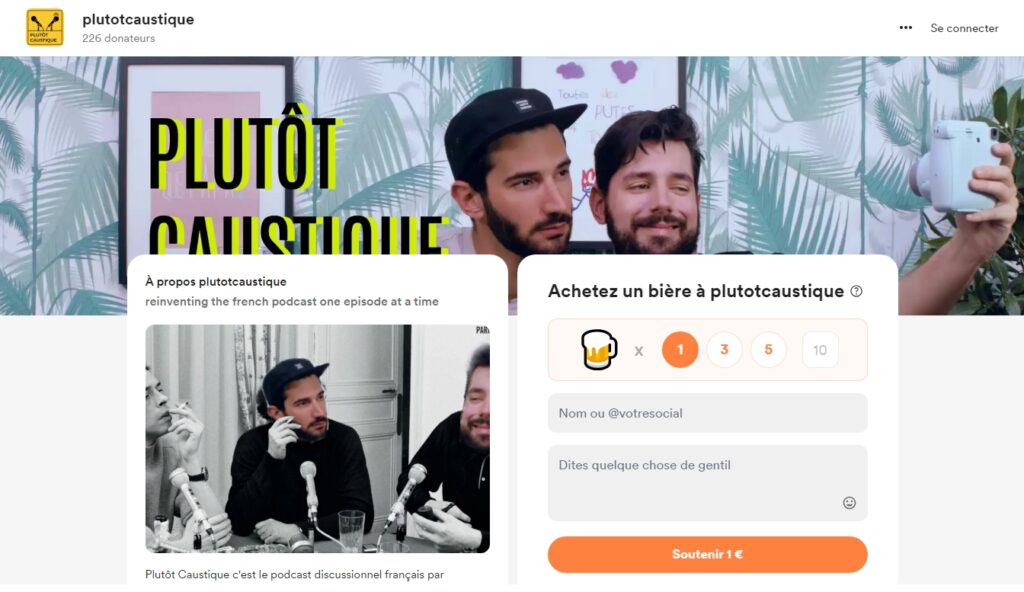
Par exemple, le podcast “Plutôt Caustique” utilise Buy Me a Coffee pour recevoir des dons ponctuels, de la valeur d’une bière. Cette méthode rend le soutien financier accessible et flexible, favorisant ainsi une participation plus large de sa communauté.
7. Vendre les droits de son podcast
Vous pouvez proposer votre émission web à des stations de radio, des services de streaming audio, des applications, et même des compagnies aériennes ou des chaînes d’hôtels qui pourraient être intéressées par l’inclusion de podcasts dans leur offre de divertissement.
Cette méthode consiste à négocier des droits de licence et vous ouvre de nouvelles voies de monétisation.
Vous avez aussi la possibilité de diversifier vous-même les canaux de diffusion : Apple Music, YouTube, Deezer… À l’instar du podcast “TED Talks Daily” qui est disponible sur diverses plateformes de streaming, ce qui lui permet d’atteindre une audience élargie.
8. Établir des partenariats éducatifs
Comment mettre en œuvre concrètement les conseils et astuces diffusés durant votre podcast ? Grâce à des formations et tutoriels !
Vous pouvez monétiser vos contenus audio en développant des modules ou des cours en ligne, inspirés par les thèmes abordés dans chaque épisode. Pour ce faire, lancez vos propres formations et faites-en la promotion durant votre émission, à l’oral et dans la description écrite.
Autre solution : collaborer avec des plateformes éducatives ou des institutions académiques pour offrir un contenu structuré et pédagogique. Ces formations peuvent être monétisées par des frais d’inscription ou via des accords de partage de revenus avec les plateformes partenaires.
Cette approche diversifie les sources de revenus de votre podcast, tout en renforçant votre crédibilité et votre autorité.
9. Vendre ses services
Lorsque votre podcast tourne autour de votre expertise spécifique, il ouvre naturellement la porte à la vente de services complémentaires. Si vous êtes perçu comme un véritable professionnel dans un domaine particulier, vous pouvez offrir des consultations privées, des ateliers, des séminaires payants ou vos services.
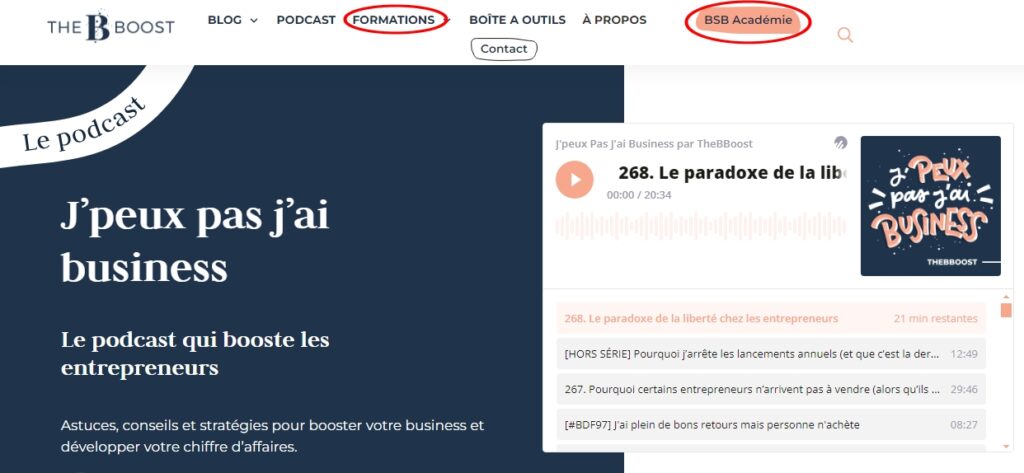
Par exemple, le podcast “J’peux Pas J’ai Business” par TheBBoost, qui se concentre sur l’entrepreneuriat et le développement de business en ligne, sert aussi de canal pour promouvoir ses services de consultation, ses formations payantes et sa BSB Académie.
Cette stratégie de monétisation permet de générer des revenus directs, mais aussi de renforcer l’engagement des auditeurs en leur offrant un accès plus personnel et approfondi à l’expertise partagée dans le podcast.
10. Utiliser le sponsoring
Méthode éprouvée pour monétiser un podcast, le sponsoring représente une des stratégies les plus directes pour gagner de l’argent. Ce système repose sur un partenariat où une entreprise paie pour des insertions spécifiques dans vos contenus, comme des publicités verbales, des bannières sur le site web du podcast, ou des mentions durant les épisodes.
L’objectif principal, pour le sponsor, est de bénéficier de l’exposition à votre audience, qui correspond souvent à un segment de marché ciblé par la marque.
À la différence d’un partenariat, le sponsoring est une collaboration de long terme qui peut s’étendre au-delà de l’émission en elle-même, avec une promotion directe dans la description du podcast et sur le site web. Trouver un sponsor n’est pas toujours facile mais est rentable sur le long terme.
“Serial”, le célèbre podcast narratif, illustre bien cette approche puisqu’il est sponsorisé par le célèbre outil d’emailing : Mailchimp.
Notre dernier conseil pour monétiser votre podcast
Pour choisir la méthode de monétisation la plus adaptée à votre podcast, évaluez d’abord l’alignement entre les intérêts de votre audience et les options disponibles. Considérez aussi la fréquence de vos épisodes et le niveau d’engagement de vos auditeurs, sans oublier de tenir compte de vos propres ressources !
En choisissant judicieusement comment monétiser votre podcast, vous pourrez maximiser vos revenus tout en maintenant la qualité et l’intégrité de votre contenu.
Pour une stratégie personnalisée, postez votre annonce gratuitement sur Codeur.com et trouvez un consultant freelance en marketing.