Pour les commerçants souhaitant produire et gérer aisément un contenu produit à destination de plusieurs canaux numériques, le recours à une solution PIM est nécessaire : il devient une source unique pour les méta-descriptions de produits, les images et toutes les caractéristiques techniques de ces derniers.
A la faveur de la pandémie mondiale de COVID-19, le commerce en ligne a connu un véritable essor de la demande. Les marques doivent maintenant s’organiser pour proposer une offre adéquate, en organisant et optimisant de grandes quantités de données sur leurs produits et en fournissant des informations précises et identiques sur une variété toujours plus grande de plateformes d’achat en ligne.
La mise en œuvre d’une solution PIM aide une marque à s’assurer que des données de qualité sont organisées à la fois dans le cadre d’un usage interne et d’une distribution multicanale, en regroupant les informations pertinentes sur les produits sur une solution unique. Avec la croissance rapide des ventes en ligne et l’expansion grandissante de nouveaux canaux, le recours à une solution PIM peut aider à connecter ces différents canaux pour préserver la qualité des données produit.
Qu’est-ce qu’un logiciel PIM ?
Les spécialistes du marketing, les responsables du commerce électronique et les équipes d’analyse des données peuvent tous utiliser une application PIM (« Product information management ») pour collecter, enrichir, rationaliser et améliorer les données relatives aux produits, et les faire se répercuter automatiquement sur plusieurs canaux.
Cela contribue à améliorer l’expérience client, tout en aidant les entreprises à prendre l’avantage sur leurs concurrents, en arrivant plus rapidement sur un marché tout en réduisant les frais généraux et le gaspillage de ressources.
Si une application PIM permet une gestion fluide de l’information produit, enrichie et complétée par des médias, elle devient un outil d’autant plus puissant lorsqu’elle est combinée à un DAM (pour « Digital Asset Management », traduit par « gestion des ressources numérique ») qui vous permet de télécharger, stocker, organiser, gérer, partager et suivre toutes vos ressources numériques en un seul endroit, à partir d’une source unique.
Dans le cadre d’un développement stratégique omnicanal, le duo « PIM-DAM » devient alors le nœud central indispensable à une bonne gestion de l’information.
Certains des outils présentés dans cet article combinent ces 2 logiciels. Passons maintenant en revue quelques-uns de ces logiciels, parmi les plus populaires.
1. Akeneo

Open-source et gratuit, Akeneo est un logiciel PIM qui s’adresse aux chefs de produits qui souhaitent apporter de la cohérence dans la saisie de données de manière collaborative.
Différents utilisateurs peuvent en effet se répartir les tâches relatives aux données produits tout en suivant facilement le nombre d’éléments qui doivent encore être complétés, qui sont en cours et qui sont terminés.
Chaque page produit est notée avec des scores d’enrichissement et de cohérence des données. En effet, Akeneo intègre des mesures de quantité et de qualité des données, dans le but de fournir une aide à la collaboration et au travail en équipe.
Son interface graphique est élégante et intuitive, il est facile de passer des informations sur les produits au DAM, ou à la gestion des tâches. Le tableau de bord de suivi des progrès montre en un coup d’œil quels sont les produits en cours de réalisation.
Si Akeneo fait beaucoup de choses bien, il est dommage que ses services soient limités lorsqu’il faut substituer un produit par un autre, et établir des relations entre produits pour déployer des opportunités de vente incitative et de vente croisée.
Akeneo s’intègre à votre pile d’outils à l’aide d’API REST. Les intégrations d’applications incluent des plateformes de commerce électronique populaires comme Magento, Salesforce Commerce Cloud, Google Shopping, PrestaShop, OroCommerce, ShopifyPlus, etc.
2. Pimcore
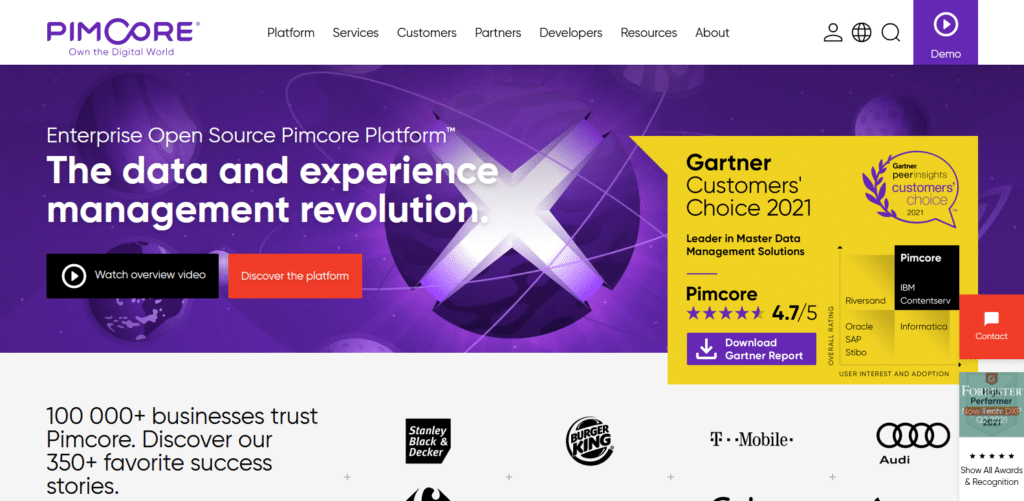
Pimcore est également une solution open-source de gestion de l’information produit. L’outil permet de modéliser des données, de les gérer, d’en contrôler de la qualité, d’organiser la gestion du flux de travail. Il est doté d’un DAM et offre la publication omnicanale grâce à des intégrations faciles avec des applications tierces.
L’édition communautaire de Pimcore est offerte à vie : ce plan gratuit permet d’obtenir une licence de logiciel open source (GPLv3) avec un code source accessible au public. Le plan gratuit de Pimcore comprend PIM/MDM/DAM et permet un nombre illimité d’entités, de données et d’utilisateurs.
L’extension DAM de Pimcore n’étant pas encore compatible avec les appareils mobiles, vous ne trouverez malheureusement pas de compatibilité fiable avec les smartphones iOS ou Android. Les équipes travaillant de manière collaborative regretteront quand à elles qu’il n’y ait pas de moyen de voir qui apporte des modifications aux données du produit en temps réel, ce qui peut entraîner le remplacement accidentel en cas de modifications simultanées.
3. ContentServ
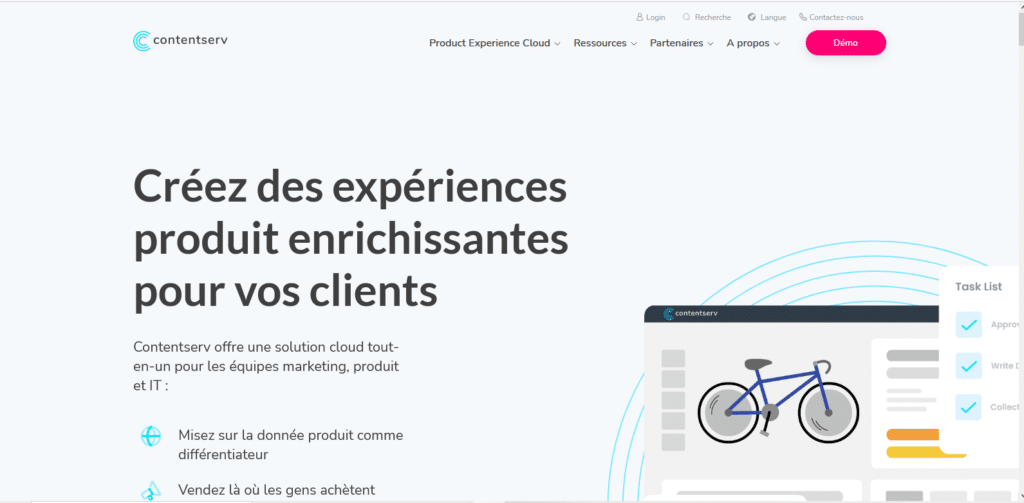
Contentserv est une solution de gestion des informations produit basée sur le cloud computing. Conçue pour aider les distributeurs, fabricants et détaillants de petite et moyenne taille à importer, valider et gérer le contenu de leurs produits sur plusieurs canaux de vente.
Collaboratif, l’outil permet aux membres d’une équipe de configurer des flux de travail intégrés et de limiter l’accès aux seuls contenus et tâches pertinents grâce à des autorisations basées sur les rôles.
Les principales fonctionnalités de Contentserv comprennent la syndication de contenu, la gestion des fiches produits, le contrôle des versions, le tout grâce à des outils de collaboration.
La solution permet en outre d’effectuer un contrôle de la qualité des données et leur modélisation.
La possibilité d’importer automatiquement des données produit dans différents formats à partir de sources multiples (telles que des fournisseurs de matières premières, des agrégateurs de contenu tiers, des systèmes ERP existants, etc.) est un des points forts de ContentServ, qui permet aux également à ses utilisateurs de gérer des associations de produits en fonction des informations sur le fournisseur, le lieu ou la marque.
Contentserv permet d’entrer des informations de localisation des produits, ce qui permet aux entreprises de traduire ces informations dans les langues souhaitées ou d’identifier un contenu qui nécessite une traduction initiale ou une correction. La plateforme permet aux équipes de se faire une idée des flux de travail grâce à des options de visualisations comme la vue « calendrier » et les diagrammes de Gantt.
Contentserv aide enfin les membres du personnel « sur place » à créer des aperçus des fiches produits en les présentant du point de vue des clients, avant leur publication sur les canaux imprimés ou numériques.
4. Pimalion

Pimalion est avant tout une plateforme de gestion de la relation client (CRM). Basée dans le cloud, l’outil est pensé pour aider les entreprises à gérer leur contenu et rationaliser les opérations de marketing. Les utilisateurs peuvent ainsi utiliser un outil de planification pour créer des campagnes marketing selon le plan d’action commercial, identifier les parties prenantes à travers les processus, et analyser les performances grâce à des tableaux de bord.
Les entreprises peuvent utiliser le module de visualisation en ligne de Pimalion afin de valider la production de publications imprimées. Il permet aux responsables d’effectuer des opérations d’extraction, de transformation et de chargement des données téléchargées. Une fonction d’indexation facilite l’organisation des actifs numériques et les utilisateurs peuvent stocker des informations produits dans un référentiel centralisé, et en trier le contenu en fonction des différents canaux de communication : web, print, magasin, mobile, médias sociaux.
Un système de rôles d’utilisateurs permet de créer différents niveaux d’autorisation d’accès aux données afin de réduire le risque d’exploitation non-autorisées.
5. Syndigo
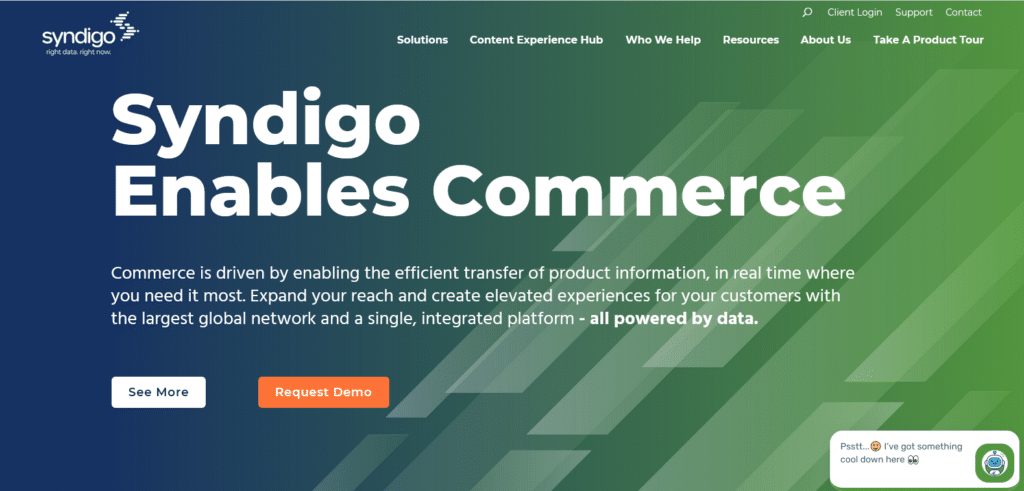
Conçue pour aider en particulier les entreprises des secteurs de la santé, de l’hôtellerie, et de l’automobile à capturer et à stocker des données sur leurs produits dans un référentiel centralisé, Syndigo est une solution Web de gestion de contenu permettant aux fournisseurs et aux fabricants de visualiser les informations sur les produits à travers plusieurs canaux de vente, et d’interagir avec toutes les parties prenantes.
Cette plateforme permet aux employés de demander (et de recevoir) des informations sur les produits de la part des fabricants et de télécharger des photos et des vidéos haute résolution, dans plusieurs formats de fichiers. Parmi les nombreuses fonctionnalités de Syndigo, la gestion de catalogues, une bibliothèque de contenu, le marketing multicanal, le contrôle d’accès, la catégorisation des actifs, et plus encore.
Syndigo permet aux professionnels de rechercher des informations en utilisant des noms de marque, des numéros de produit ou des numéros de pièce du fabricant.
6. Feedonomics

Feedonomics se présente comme un système de gestion des flux de produits complet : l’outil recueille, organise et optimise les données relatives à vos produits, en fournissant des informations sur les différentes places de marché du commerce en ligne, comme Amazon et Google Shopping. Feedonomics peut également vous aider à automatiser l’exécution des commandes sur tous les canaux.
Contrairement à certaines solutions PIM plus orientées vers les entreprises, Feedonomics est intuitif à utiliser avec du texte rouge ou vert clairement signalés pour indiquer quelles données doivent être saisies ou transformées. Feedonomics a conclu des partenariats avec Google, Amazon, Facebook et Walmart et peut tirer parti de ces relations privilégiées pour effectuer du remarketing.
Feedonomics offre une tonne de champs et de colonnes de données ce qui est top lorsqu’on en a l’utilité… Sinon, c’est vite encombrer et la possibilité de supprimer des champs inutiles aiderait les utilisateurs à rester organisés et à mieux contrôler leurs données. L’interface d’administration est donc un peu déstabilisante et demande du temps pour s’y former, au gré de l’exploration du logiciel.
Feedonomics s’intègre aisément à Shopify, WooCommerce, Salesforce Commerce Cloud, Google Shopping, Facebook Shops, Amazon, eBay… et peut même vous aider à connecter des solutions eCommerce les unes aux autres, comme Shopify à Amazon, par exemple.
Vous avez beaucoup de données clients et produits mais vous n’arrivez pas à les structurer pour les utiliser correctement ? Demandez l’aide d’un expert data freelance en postant votre projet gratuitement sur Codeur.com.