60% des mobinautes ont utilisé la recherche vocale au moins une fois au cours de ces douze derniers mois.
44% des utilisateurs d’enceintes connectées commandent, chaque semaine, des produits via leur appareil. Il n’y a pas de doute, la voix est l’avenir du marketing !
Du V-commerce à l’essor du speech analytics, en passant par l’IA, voici les grandes tendances qui influenceront le secteur du marketing vocal en 2025.
1. Le marketing vocal et les IA conversationnelles
Avec l’essor des intelligences artificielles conversationnelles comme ChatGPT, Bard ou d’autres assistants personnalisés, une nouvelle dimension du marketing vocal émerge : les interactions humanisées à grande échelle.
Ces IA permettent aux marques d’établir des dialogues plus engageants et personnalisés avec leurs utilisateurs, que ce soit pour répondre à des questions, offrir des recommandations de produits ou même accompagner les consommateurs dans leur parcours d’achat.
Les applications sont nombreuses :
- Service client amélioré : Les IA conversationnelles intégrées à des interfaces vocales permettent de résoudre rapidement des requêtes complexes sans intervention humaine, tout en offrant une expérience fluide et naturelle.
- Guides vocaux intelligents : Par exemple, un utilisateur peut demander à une IA : “Quel produit est le mieux adapté à ma peau sèche ?” et obtenir une réponse détaillée, accompagnée de suggestions personnalisées.
- Création de contenus interactifs : Grâce à ces IA, les marques peuvent proposer des expériences vocales immersives, comme des histoires interactives ou des tutoriels guidés par voix.
- Optimisation de la publicité vocale : Les IA permettent de créer des annonces adaptées au ton et aux préférences de l’utilisateur, améliorant leur efficacité.
Pour tirer parti de cette tendance, les entreprises doivent investir dans des solutions d’IA conversationnelle de pointe capables de comprendre et de répondre à des requêtes complexes. Former leurs modèles d’IA avec des données pertinentes pour s’assurer qu’elles répondent aux attentes de leur public cible est essentiel.
Le véritable challenge sera de parvenir à intégrer les IA dans leur écosystème existant, comme les applications mobiles, les enceintes connectées ou les sites web, pour une expérience omnicanale.
En 2025, les consommateurs attendront des interactions plus naturelles et engageantes avec les marques. Miser sur des IA conversationnelles couplées à des interfaces vocales sera donc un véritable atout pour se démarquer de la concurrence.
2. Place au V-commerce
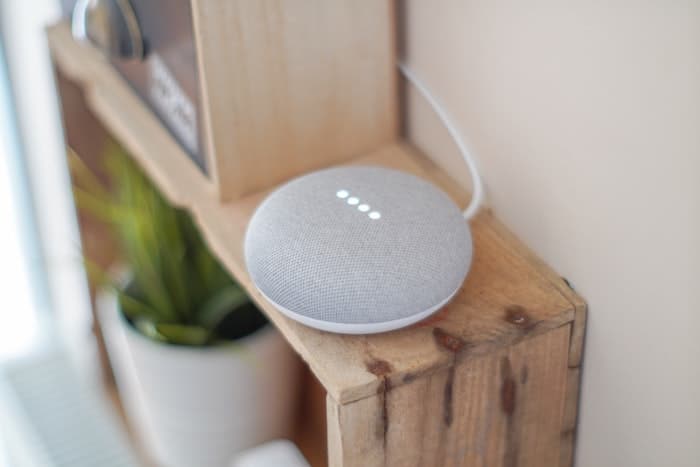
Le V-commerce consiste à rechercher des produits, créer un panier et/ou réaliser des achats via les enceintes connectées ou la commande vocale d’un smartphone. Son objectif principal est de faciliter le processus d’achat pour fournir une alternative efficace à l’utilisation d’un clavier et d’une souris.
Vous pensez que le monde n’est pas encore prêt pour cette nouvelle déclinaison de l’e-commerce ? Détrompez-vous ! 62% des utilisateurs d’enceintes vocales sont susceptibles d’acheter quelque chose par l’intermédiaire d’un objet connecté. Pour saisir le V-commerce en marche :
- Analysez comment fonctionnent les algorithmes de recherche vocale : par exemple, dans les résultats de recherche avec Amazon Echo, la priorité est donnée aux prix les plus bas, en limitant les marques/produits alternatifs disponibles à l’achat.
- Créez des expériences vocales uniques : identifiez où et quand vos consommateurs peuvent se servir de la voix pour trouver et interagir avec vos produits (chez eux en rentrant du travail, pendant qu’ils font leurs courses, le dimanche…).
- Travaillez le SEO vocal : plus d’informations dans le point suivant…
À lire aussi : 6 grandes évolutions technologiques à ne pas rater en 2025
3. Le SEO par le marketing vocal
Avec le SEO traditionnel, vous pouvez très bien vous contenter d’une position en première page des résultats. Le marketing vocal, quant à lui, exige une optimisation pour la première place uniquement. Si vous n’êtes pas en avance sur vos concurrents, vous n’obtiendrez pas de trafic vocal.
Alors, comment optimiser votre SEO pour la recherche vocale ?
- Écrire les contenus sur un ton naturel et conversationnel
- Se concentrer sur les réponses utiles plutôt que sur les mots-clés
- Privilégier la recherche sémantique
- Travailler avec l’intention de l’utilisateur
- Fournir des réponses contextuelles
- Produire des contenus longs de 2 300 mots ou plus
- Utiliser les données structurées
- Utiliser la propriété SPEAKABLE dans schema.org pour identifier les sections qui sont adaptées à la lecture audio.
Faites appel à des professionnels du SEO pour booster votre SEO vocal rapidement. Décrivez votre projet sur Codeur.com et recevez les devis de consultants SEO freelances rapidement.
4. L’essor de l’UX vocal

Avec la voix, la réalisation d’un achat devient plus rapide et peut être effectuée à tout moment de la journée, même en prenant une douche ! Ce qui optimise l’expérience d’utilisation.
Cependant, il faut garantir une fluidité dans l’utilisation des appareils et une compréhension rapide des requêtes. En 2025, les fabricants travailleront pour découvrir dans quel contexte leurs appareils sont utilisés (en cuisine, en voiture, au bureau…). En effet, l’essor du vocal étant assez récent, il y a encore peu de données sur l’expérience utilisateur et la façon de l’améliorer.
Si vous décidez d’utiliser le marketing vocal en 2025, soyez attentif aux études d’UX à paraître !
5. L’essor du speech analytics
Le speech analytics consiste à analyser les enregistrements vocaux ou les appels de clients, afin de trouver des informations utiles pour garantir la qualité des produits ou services. Les logiciels de speech analytics identifient les mots et scrutent les modèles audio pour détecter les émotions et le stress dans la voix d’un interlocuteur.
Ces derniers peuvent analyser les phrases utilisées par les clients pour identifier rapidement leurs besoins, leurs désirs et leurs attentes. Ils servent aussi à fournir des réponses scénarisées basées sur des appels précédents, notamment aux commerciaux ou service-client. Une analyse utile pour adapter vos scripts, chatbots et contenus et mieux « parler » à votre audience.
6. Le marketing vocal et la vie privée

55% des utilisateurs s’inquiètent au sujet de l’écoute continue des enceintes connectées. 63% sont préoccupés par la possibilité que les hackers puissent utiliser ces appareils pour accéder à leur domicile ou à des informations personnelles. La protection de leurs données est au centre des préoccupations des consommateurs depuis longtemps. Le vocal n’échappe pas à la règle.
Si vous utilisez ou intégrez un assistant vocal sur votre site, vous avez alors des obligations légales. Vous devez notamment vous conformer au Règlement Général sur la Protection des Données (RGPD). Votre politique de protection de la vie privée doit mentionner l’utilisation d’un assistant vocal et mettre l’accent sur l’obtention du consentement avant la collecte de toutes données.
La bonne nouvelle est que si vous souhaitez intégrer votre application ou votre produit aux célèbres assistants vocaux (Siri, Google Assistant ou Alexa), les fabricants vous fourniront les instructions nécessaires.
Par exemple, l’assistant Google se charge d’obtenir le consentement par le biais de sa propre application et s’occupe également des options de modification ou de retrait du consentement.
Des juristes peuvent vous accompagner dans votre mise en conformité avec le RGPD. Décrivez votre besoin sur Codeur.com pour recevoir leurs devis gratuitement.
7. La personnalisation vocale en temps réel
En 2025, la personnalisation sera plus que jamais au cœur des stratégies marketing, et la voix ne fait pas exception. Grâce aux avancées en analyse de données et en intelligence artificielle, il est désormais possible de personnaliser les interactions vocales en temps réel.
Les appareils connectés peuvent ajuster leurs réponses en fonction des préférences, du ton de voix, ou même de l’historique d’interactions d’un utilisateur.
Par exemple, on peut imaginer des suggestions adaptées. Une enceinte connectée pourrait proposer une playlist de musique en fonction de l’humeur détectée dans la voix de l’utilisateur.
Pour le e-commerce, des offres promotionnelles ciblées. Un assistant vocal peut annoncer des promotions ou des recommandations spécifiques en fonction des habitudes d’achat d’un utilisateur.
Cette personnalisation vocale repose sur :
- Une collecte de données respectueuse des lois sur la protection de la vie privée, comme le RGPD.
- L’utilisation d’algorithmes d’apprentissage capables de s’adapter en temps réel.
- Un calibrage précis pour éviter les réponses inappropriées ou non pertinentes.
Les entreprises qui maîtriseront cet art de la personnalisation vocale gagneront non seulement en fidélisation, mais également en engagement, en proposant des expériences uniques et mémorables à leurs utilisateurs.
Le marketing vocal, un segment en pleine mutation
L’introduction de la technologie vocale change les modes de recherche et d’achat des consommateurs. Par conséquent, votre stratégie marketing devra évoluer face à cette nouvelle tendance. Prêt à donner de la voix ?
Pour adapter vos stratégie aux dernières tendances technologiques, faites appel à un consultant marketing sur Codeur.com !