Sponsored by Weglot.
Managing the SEO of a website internationally is a real challenge. Between language differences, cultural specificities and technical requirements, it's easy to fall into traps that can hinder your visibility. To help you avoid these problems, here are the 13 most common mistakes in international SEO and, above all, how to fix them.
1. Incorrect use of hreflang tags
The hreflang tag allows you to tell Google which language or regional versions of a page to show users. If misconfigured, it can cause pages to be displayed incorrectly in search results.
Common mistakes:
- Omitting the self-referential tag (hreflang="x-default")
- Incorrect syntax (e.g. en-us instead of en-US)
- Forgetting reciprocity : each page must reference its alternatives and vice versa.
Our expert's take
Example: an e-commerce site that sells wallets in the United States and England using one English version for its American customers and a second English version for its UK customers. Although the language is the same, the content can vary (for example, prices in dollars for the United States and in pounds sterling for the United Kingdom).
Without hreflang, search engines could confuse these pages and consider them duplicate content, or show the wrong version to the user.“

Léa Picosson
SEO consultant & Abondance ambassador
 Solution:
 <link rel="alternate" hreflang="fr" href="https://example.com/fr/">
 <link rel="alternate" hreflang="fr" href="https://example.com/fr/"> <link rel="alternate" hreflang="en" href="https://example.com/en/">
Recommended tool:
Hreflang Checker by Weglot → Allows verifying the presence and correct configuration of hreflang tags.
2. Using the wrong URL structure
Three structures are possible for an international site:
- ccTLDs (example.fr, example.de): Ideal for strong geographic targeting, but requires significant maintenance and resources.
- Subdomains (fr.example.com, de.example.com) : Easy to deploy, but requires authority for each subdomain.
- Subdirectories (example.com/fr/, example.com/de/) : Easy to manage and inherits authority from the main site, but requires geotargeting via Search Console.
Error : Targeting countries without using the right structure, for example by keeping a domain .com without adaptation.
Solution:
Our expert's take
“The use of a TLD can be relevant for specific local targeting, particularly for companies that want to segment their communication by country, even if the language is the same (e.g., USA and GB with .co.uk). In the case where a company would like to target different languages directly without detailing by country for efficiency/cost reasons, it is advisable to opt for a subdomain such as it.monsite.com for an Italian version, for example, or a subdirectory like monsite.com/es for a Spanish version.“
Léa Picosson
SEO consultant & Abondance ambassador
Recommended tool:
Google Search Console → Allows setting geographic targeting for a site in a subdirectory or subdomain.
3. Forced geolocation and automatic redirects
Many sites automatically redirect users based on their IP address. However, this prevents Googlebot from correctly crawling certain language versions.
Example:
A French-speaking user in Canada accesses example.com and is forcibly redirected to example.ca, although its preference is example.fr.
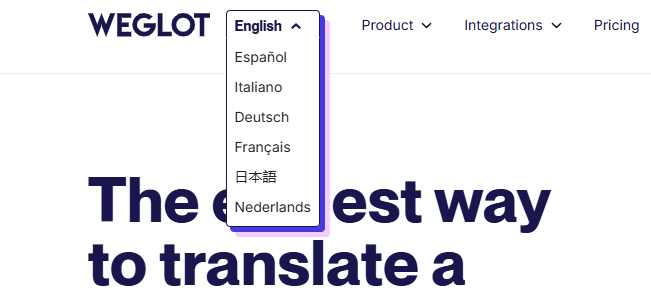
Solution: Let the user choose and provide a clearly visible language selector.
Recommended tool:
Weglot → Allows you to add a language selector and the languages of your choice.
4. Poor-quality machine translation
Content should be written by native speakers or translated using high-quality translation software. Google values relevant content and penalizes poor translations. Speaking of Google, avoid using Google Translate...
Example:
English sentence: "He runs a business."
Possible translations:
"He runs a company." (incorrect literal translation)
"He runs a business." (correct meaning)
A poor translation can harm comprehension and give an amateurish impression, which affects credibility as well as the site's SEO.
Recommended tool:
Weglot → Uses both machine translation (from major providers such as DeepL, Google Translate and Microsoft) and editing tools to guarantee the desired quality for your website.
5. Forgetting to adapt content to cultural specificities
Good international SEO is not limited to translating text; it involves a localization content. This includes, for example, units of measurement, idiomatic expressions and cultural references.
Example:
- A US site displaying "Free Shipping" should specify for France: "Free delivery to metropolitan France."
- In Germany, privacy is a priority. An e-commerce site should emphasize the protection of personal data.
Our expert's take
“It is essential to have market knowledge to understand users' needs and therefore their search intents, which are specific to each culture. For a finance-related site, France will focus on the CAC40 while Switzerland will be more interested in the SMI in terms of stock indices.“
Léa Picosson
SEO consultant & Abondance ambassador
Recommended tool:
Semrush Market Explorer → Analyzes local trends and the cultural specificities of keywords.
6. Content duplication between language versions
Google may consider identical pages in multiple languages to be duplicate content if they are not properly differentiated.
Solution:
- Use hreflang to specify the language versions.
- Avoid partial translations, such as translating only the menu and leaving the rest of the content in English.
Recommended tool:
Siteliner → Detects duplicate content within a site.
Weglot → Allows you to exclude pages from translation if they are not necessary (and automatically adds hreflang tags).
Our expert's take
“Thanks to hreflang tags, it is entirely possible to have identical content across several local versions. For example, for French-speaking versions, you can have the same content across /fr/, /be/, /ch/, /ca/, … You will still need to refine the correct currencies and cultural specifics before going live.“
Léa Picosson
SEO consultant & Abondance ambassador
7. Not optimizing SEO tags for each language
Tags <title>, <meta description>, and the URLs must be translated and optimized.
Our expert's take
“Beyond translation, you must not neglect all the SEO elements of the pages to be translated such as <title> tags, meta descriptions, alt attributes, etc. Ideally, the SEO strategy should be adapted for each language and country to match the language versions of pages with the correct foreign search intents.
Léa Picosson
SEO consultant & Abondance ambassador
Example: https://example.com/en/product-123/ https://example.com/en/running-shoes/
Search queries vary by language and culture.
Recommended tool:
Google Keyword Planner → Helps find the most used keywords in each country.
Weglot → Detects and lets you manage metadata for each language.
8. Poor handling of crawling and indexing
Googlebot has a limited crawling capacity. Poorly managing its indexing can lead to problems:
- Duplicate pages indexed (example.com/fr/ and example.com/en/index.html)
- Non-canonical URLs (www.example.com/en/ and example.com/fr/)
- Poor handling of robots.txt preventing Google from accessing the localized versions.
Solution:
- Check with the site:example.com in Google.
- Configure the tags rel="canonical" correctly.
Recommended tool:
Screaming Frog SEO Spider → Checks indexing and Google crawl behavior.
9. Neglecting local backlinks
Inbound links influence local SEO. Having relevant backlinks from sites in the target country improves ranking.
Example:
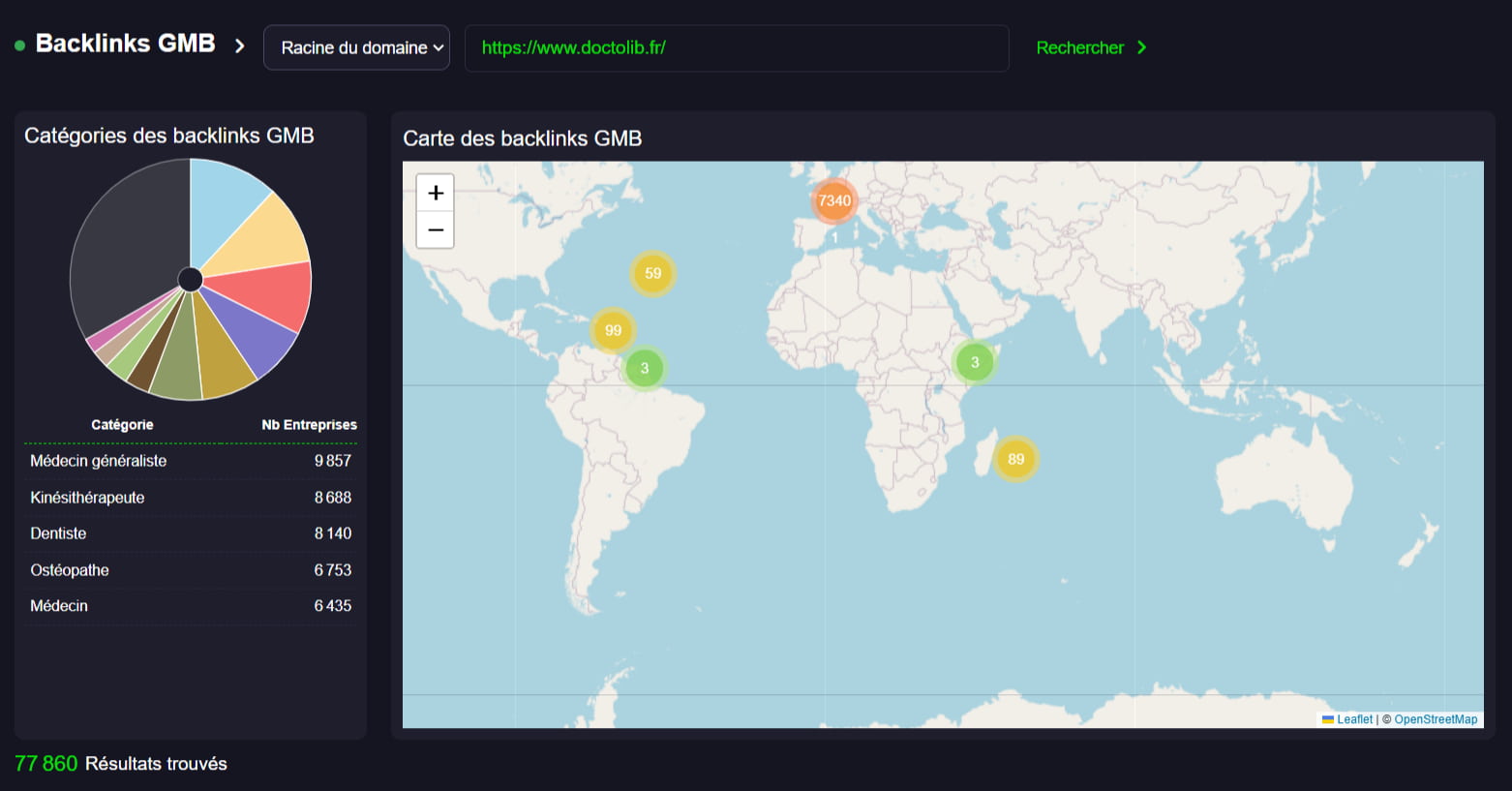
A French site seeking to rank in Spain must obtain links from Spanish sites or Google My Business listings rather than French.
Recommended tool:
Ahrefs → Allows analyzing backlinks and their geographic origin.
Haloscan → Allows counting backlinks from Google My Business listings.
10. Not adapting the voice search strategy to local specificities
With the rise of voice search, queries differ depending on language and cultural habits. Translating a keyword literally without taking into account how users search by voice can cause missed traffic opportunities.
Example:
- An English-speaking user will search best pizza near me
- A French user would instead say Where can I find the best pizza near me?
- In Spain, the wording will be different again: Where is the best pizzeria near me?
Solution :
Optimize content for conversational queries specific to each country.
Recommended tool:
AnswerThePublic → Enables identifying the questions users frequently ask by country.
11. Not taking into account the differences between Google and other search engines
If Google is dominant in the majority of countries worldwide, that is not always the case everywhere.
- China → Baidu (requires local hosting and specific meta tags).
- Russia → Yandex (emphasizes semantic SEO and access speed).
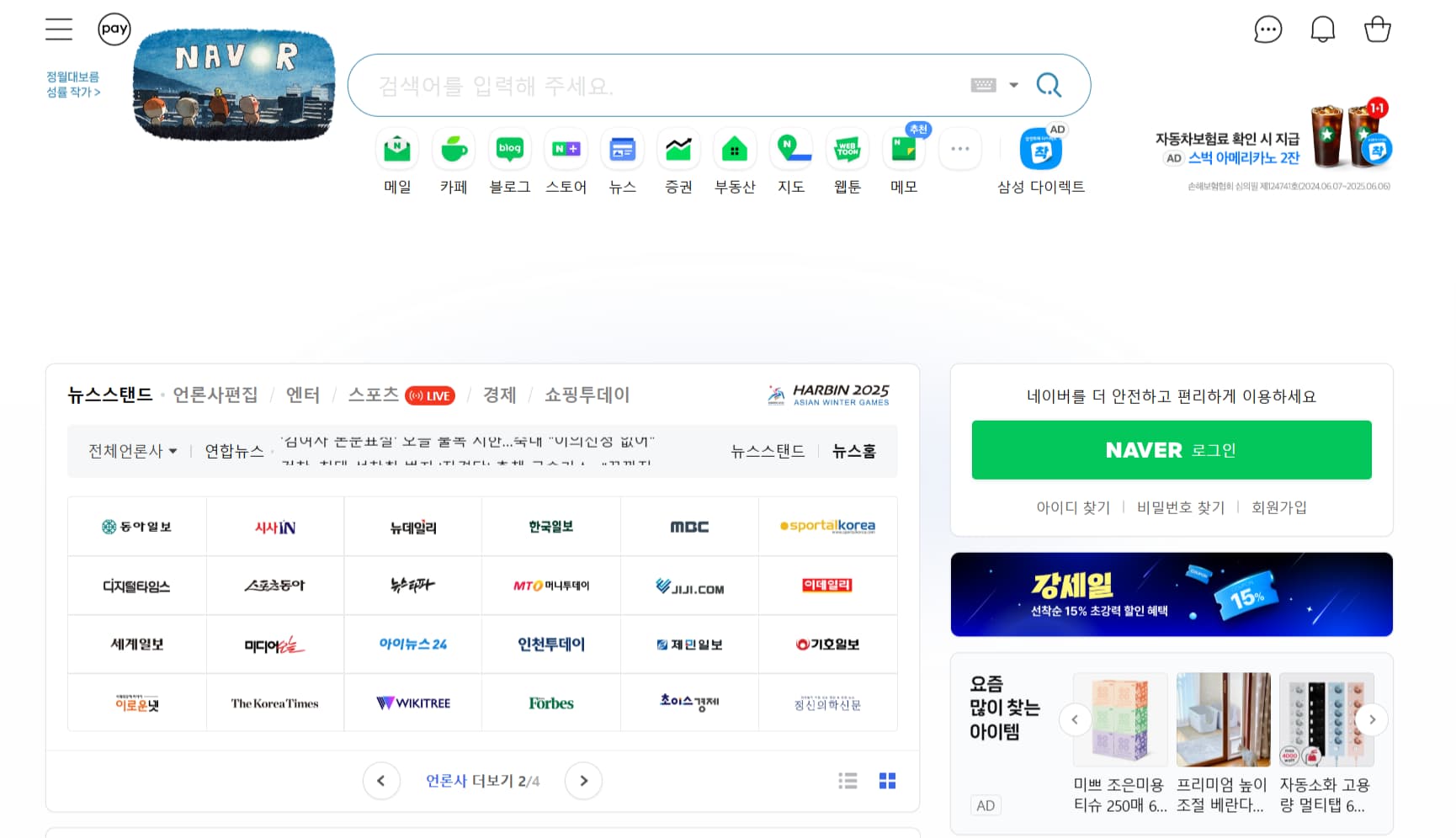
- South Korea → Naver (SEO based on social signals and sponsored content).
Common mistake : Not adapting the SEO strategy according to the dominant search engine in the targeted country.
Solution :
Study the specific algorithms and adapt content accordingly.
Recommended tool:
Monitorank → Allows tracking your keywords across all search engines.
12. Forgetting to optimize loading time for international audiences
A slow site is a major drawback for international SEO, because users in different countries may have faster or slower connections.
Common mistakes:
- Hosting on a single server that is too far from the target audience.
- Lack of a CDN (Content Delivery Network) to distribute files faster.
- Uncompressed images or poorly optimized JavaScript/CSS.
Example:
A site hosted in France and poorly optimized will take several seconds to load in Australia or Brazil.
Solution:
- Use a CDN to reduce latency.
- Minify and compress CSS, JS, and image files.
Recommended tool:
Google PageSpeed Insights / GTmetrix → Allows testing a site's loading time from multiple locations.
13. Not adapting the currency based on the targeted country
Displaying the the right currency is essential in international e-commerce. A site that leaves a inappropriate currency (e.g. euros for Switzerland instead of Swiss francs) can cause a loss of conversions and an increase in bounce rate.
Common mistakes:
- Display a single currency for all countries (€ for Switzerland instead of CHF).
- Dynamically convert but without clarity, not specifying the conversion rate applied.
- Offer a currency but force payment in another, which leads to hidden bank fees.
Example: A site displaying "Price: 100€" for a Swiss user. A site displaying "Price: 100 CHF" with a note "Rate based on the Euro".
Solutions:
- Enable automatic display the currency according to the detected country.
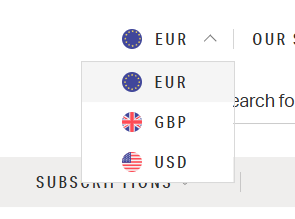
- Allow users to choose the currency in a dropdown menu.
- Check the price consistency between currencies to avoid large discrepancies.
Recommended tool:
Google Merchant Center → Allows displaying localized prices in Google Shopping.
International SEO requires rigor and a good understanding of each market's specificities. By avoiding these common mistakes, you not only improve your visibility but also the user experience, which supports your success internationally. A well-thought-out approach makes all the difference!
The article “13 mistakes to avoid in international SEO ” was published on the site Abondance.