L’arrivée de l’API Brave Search sur le marketplace AWS, dotée de la fonctionnalité d’« AI Grounding », marque une étape importante dans l’évolution des moteurs de recherche à l’ère de l’intelligence artificielle. Brave, déjà reconnu pour ses engagements en faveur de la confidentialité et de la qualité des résultats, propose désormais aux développeurs et aux entreprises un accès direct à ses données web en temps réel afin d’alimenter et de fiabiliser les agents conversationnels et autres outils IA.
Qu’est-ce que l’« AI Grounding » selon Brave ?
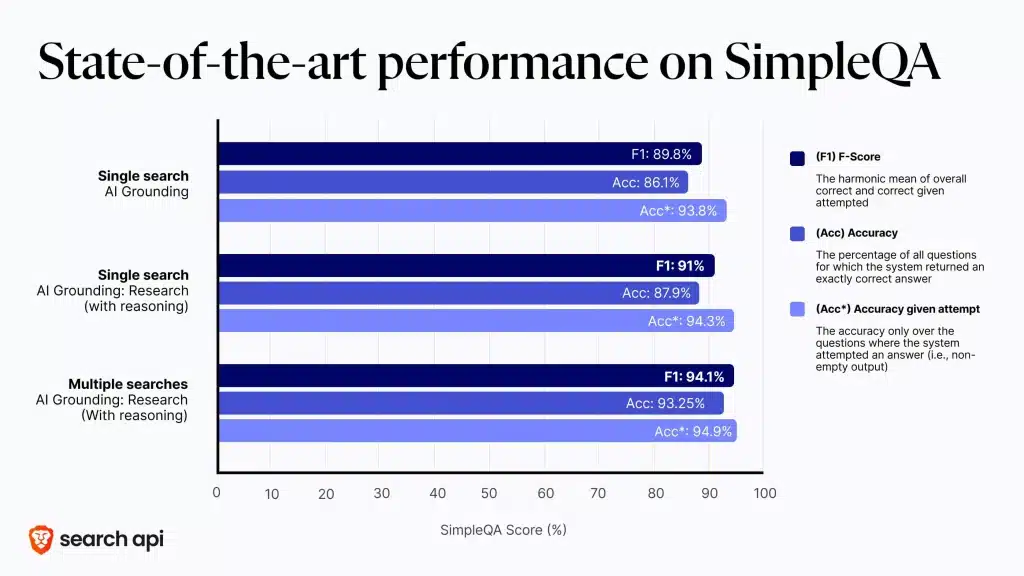
L’« AI Grounding » consiste à ancrer les réponses générées par l’IA sur des sources web réelles, vérifiables et actualisées, grâce à l’API Brave Search. L’objectif ? Permettre aux applications d’intelligence artificielle (notamment les LLMs) de fournir des réponses basées sur des sources authentiques et sourcées, limitant ainsi les hallucinations et augmentant la fiabilité des informations apportées.
En pratique, cette API permet :
- D’accéder à des données web fraîches et indépendantes, issues de l’index Brave Search.
- De construire des applications IA plus transparentes : Brave cite systématiquement les sources et fournit les extraits utilisés.
- De renforcer la vérifiabilité, en donnant la possibilité à l’utilisateur final de consulter les sources citées dans les réponses de l’IA.
Pourquoi ça compte pour les professionnels du SEO ?
La fonctionnalité d’AI Grounding, en associant IA et référencement, introduit plusieurs enjeux clés pour les experts SEO :
1. Changement de paradigme : visibilité par la citation, pas seulement par le classement
L’époque où la position sur la page de résultats était le graal du SEO évolue. Avec Brave (et d’autres moteurs IA), le fait d’être cité comme source fiable dans les réponses IA et les extraits générés devient un indicateur de visibilité central.
2. Focus sur la qualité, la structure et l’autorité du contenu
Brave Search, via son index indépendant, cherche à privilégier la pertinence, la qualité rédactionnelle, la fraîcheur et l’autorité du contenu (les fameux critères E-E-A-T de Google). Les sites sur-optimisés ou créés à des fins de manipulation (SEO spam, content farms…) voient leur impact réduit : les algorithmes de Brave favorisent la structure, la clarté, la présence de données sourcées et la fiabilité des informations.
3. Nouvelles pratiques SEO à anticiper
- Optimiser pour la citation IA : Idéalement, il faut désormais formater les contenus pour maximiser les chances d’être sélectionné comme source lors des réponses générées par les IA (titres explicites, paragraphes courts et informatifs, références, données à jour).
- Travailler l’autorité et l’expertise : Faire figurer des auteurs crédibles, des citations, des liens externes de confiance devient particulièrement stratégique.
- Surveiller la provenance du trafic : Les outils d’IA qui intègrent Brave Search pourraient devenir des canaux de visibilité et de trafic importants ; les analyses SEO devront s’adapter pour suivre ces nouveaux flux de visiteurs issus des citations IA.
4. Réduction du bruit SEO et montée de la confiance
La promesse de Brave est également de limiter l’influence du SEO « manipulatif » : la confidentialité, l’absence de tracking utilisateur et la neutralité algorithmique visent à récompenser ceux qui produisent un contenu authentique, utile et documenté, au détriment de l’optimisation purement technique ou artificielle.
Différents plans tarifaires pour expérimenter
La mise à disposition de l’API Brave Search pour l’AI Grounding représente à la fois une opportunité et un défi stratégique pour les professionnels du SEO. L’enjeu ne se résume plus à figurer dans le top 3 des SERP, mais à devenir LA source citée par les systèmes d’IA qui s’appuient sur Brave. Cette visibilité se gagne par un contenu d’une qualité, d’une structure et d’une autorité irréprochables, capable de franchir les filtres exigeants de l’index Brave.
Par ailleurs, le modèle économique de l’API, allant d’une version gratuite (5 000 requêtes/mois) jusqu’aux offres Base AI et Pro AI, plus puissantes en débit et en volume, ouvre la porte à différents niveaux d’intégration pour les agences, éditeurs de contenus et entreprises. Cela signifie que même les plus petites structures peuvent expérimenter l’optimisation pour la citation IA, tandis que les organisations disposant de ressources conséquentes pourront déployer des stratégies à grande échelle, en travaillant directement à l’entraînement ou au renforcement d’IA internes avec leurs contenus optimisés.
En clair, l’AI Grounding devient non seulement un levier technique pour fiabiliser les réponses des IA, mais aussi un nouveau terrain de compétition SEO, où la maîtrise du contenu et l’usage intelligent des différentes formules tarifaires peuvent faire la différence.
L’article “Brave annonce son API avec fonctionnalité AI Grounding” a été publié sur le site Abondance.