Les mots-clés, atouts phares pour le SEO, peuvent aussi devenir pénalisants lorsqu’ils sont mal utilisés. Surtout s’ils se retrouvent sur de nombreuses pages d’un même site internet. On parle alors de cannibalisation de mots-clés.
Résultat : les moteurs de recherche se perdent dans vos contenus et ne savent plus lesquels positionner sur les mots-clés dupliqués. Vous risquez de voir une page moins prioritaire en pole position, au détriment d’un article plus qualitatif. Pire encore : vous pouvez perdre des positions sur toutes les pages cannibalisées.
Alors, comment éviter à vos mots-clés de s’entrechoquer ?
1. Identifier les cannibalisations de mots-clés
La première étape pour éviter la cannibalisation des mots-clés, c’est d’identifier les contenus incriminés.
Technique A : via la commande « site » de Google
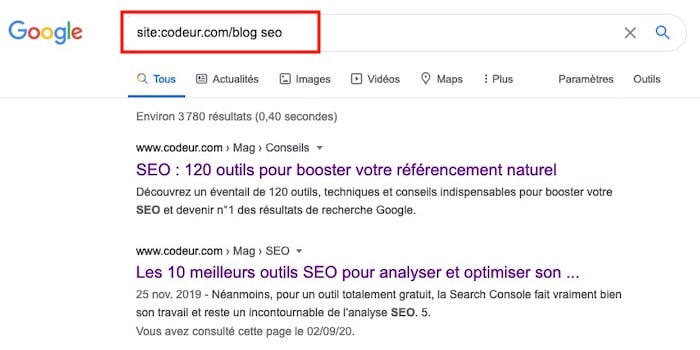
Rendez-vous dans la commande site de Google pour faire une recherche.
Tapez : site:votresite.com + « mot-clé »
Vous obtiendrez alors les pages référencées sur ces requêtes. Vérifiez que vous n’avez pas un contenu prioritaire qui se retrouve face à une page moins importante. Si c’est le cas, il y a une cannibalisation de mots-clés.
Technique B : via la section « Performances » Google Search Console
Rendez-vous dans la rubrique “Performances” de Google Search Console, puis cliquez sur “Requêtes” pour choisir les mots-clés à vérifier.
Sélectionnez le mot-clé, puis cliquez sur la section « Pages ». Vous verrez les liens optimisés sur cette expression.
Dans l’exemple ci-dessous, nous allons vérifier si la requête « tendance instagram 2020 » génère une cannibalisation :
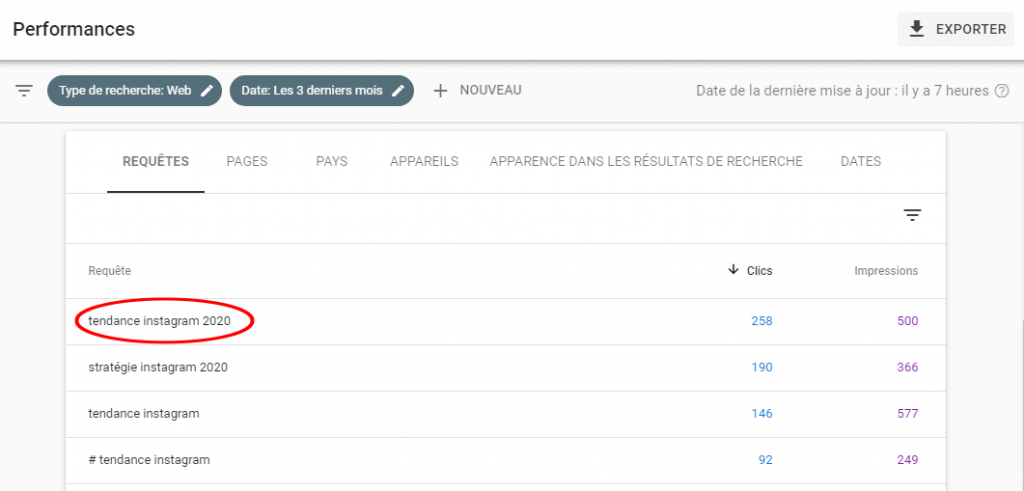
En cliquant dessus, puis sur « Page », nous voyons que deux articles se positionnent sur ce mot-clé. Les deux contenus étant assez récents et de qualité équivalente, cela ne pose pas de réel problème.
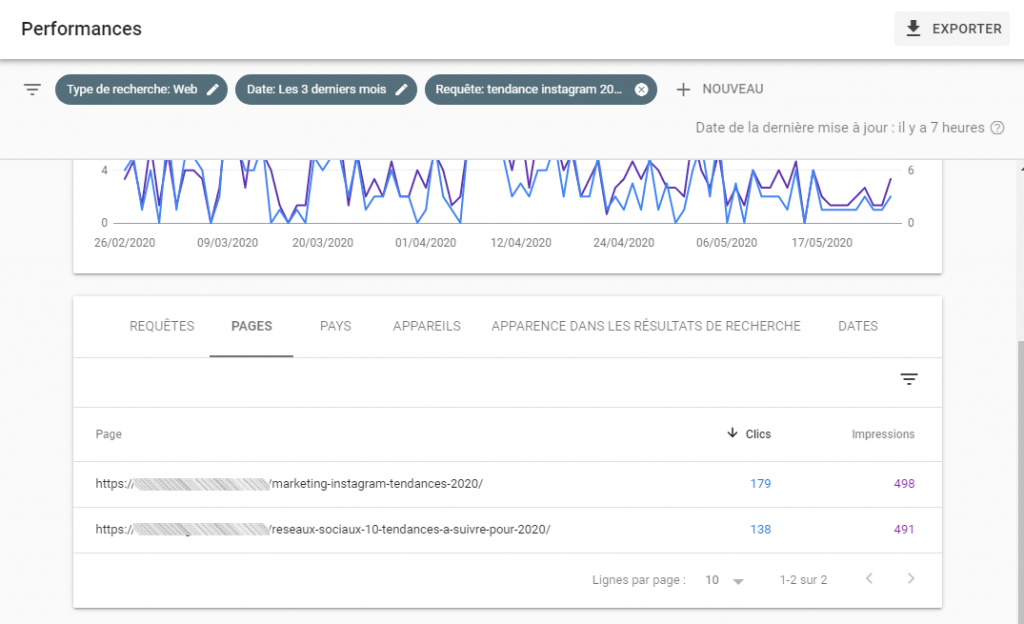
Analyser les mots-clés qui génèrent des cannibalisations vous permet de refondre les contenus concernés, tout en vous informant sur les expressions que vous devez arrêter d’optimiser.
À lire aussi : Audit SEO : 20 points à analyser sans attendre
2. Décliner les contenus par intention
Lorsqu’il s’agit de requêtes dans les moteurs de recherche, les utilisateurs sont guidés par quatre objectifs principaux :
- Information : ces internautes ont une question spécifique ou veulent en apprendre plus sur un certain sujet ;
- Navigation : l’intention est de visiter un site web en particulier ;
- Transaction : l’internaute est ici pour acheter un produit ou un service ;
- Commercial : ici, l’intention est de se convertir, dans un avenir proche, mais l’internaute utilise d’abord le web pour faire des recherches approfondies.
Pour éviter la cannibalisation, adaptez le même sujet pour ces quatre intentions. Par exemple, autour du mot-clé « logiciel comptabilité », déclinez les requêtes :
- Choisir un logiciel de comptabilité
- Logiciel de comptabilité [marque]
- Acheter un logiciel de comptabilité
- Quel est le meilleur logiciel de comptabilité ?
3. Travailler l’univers sémantique des mots-clés
Pour ne pas utiliser les mêmes mots-clés sur différentes pages, optez pour des synonymes, des variantes et des expressions connexes. Exploitez le champ lexical des requêtes ciblées pour éviter la cannibalisation, ce qui multiplie d’autant plus les portes d’entrée vers votre site internet.
Attention : Google dispose d’une grande compréhension des synonymes ! Évitez les mots ou phrases trop similaires. Pour déterminer l’univers sémantique d’un mot-clé, laissez Google compléter vos expressions.
Il suffit de choisir un mot-clé principal et de le placer dans la barre de recherche. Le moteur de recherche fournit automatiquement une liste de sujets connexes :
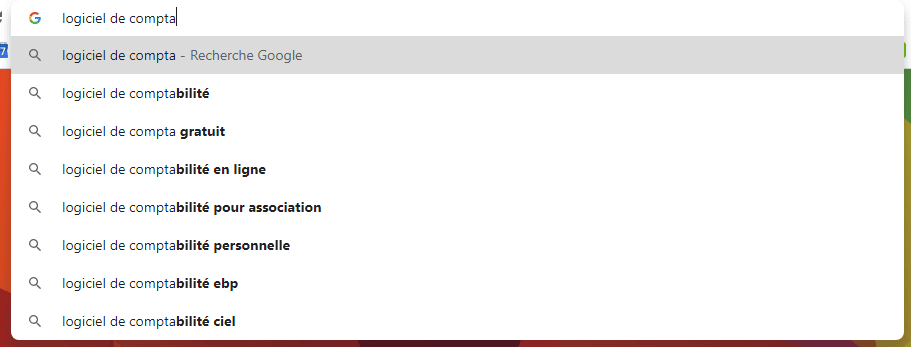
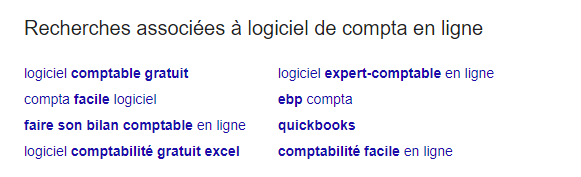
Vous pouvez également sélectionner une requête et vérifier les « Recherches associées » en bas de page :
4. Utiliser les redirections 301
La redirection 301 permet de rediriger une page, de façon permanente, vers un nouvel emplacement.
Par exemple, vous avez créé une nouvelle version très similaire d’un article publié il y a des années. Analysez en profondeur laquelle des URL a la plus grande autorité, le volume de liens entrants, les mots-clés positionnés, etc. En général, il s’agira de l’ancien contenu.
Redirigez-le vers la nouvelle page. Cela permet aux utilisateurs de trouver ce qu’ils recherchent et d’envoyer des signaux positifs aux moteurs de recherche. En effet, l’URL redirigée transférera son autorité à la page de destination.
5. Fusionner les contenus similaires
Si vous souhaitez produire du contenu sur un même sujet et avec les mêmes mots-clés, l’idéal est de concentrer tous vos efforts en une seule URL. Cela évite d’avoir des pages en concurrence les unes avec les autres. Une seule d’entre elles gagne toute l’autorité. Par ailleurs, vous offrez un contenu de très grande valeur à vos lecteurs, ce qui est excellent pour votre image. Quant aux « anciennes » pages, utilisez les redirections 301 pour les amener sur l’URL principale.
La cannibalisation des mots-clés porte un coup à l’autorité d’un site web. Alors, prenez le temps de l’identifier et de réorganiser vos contenus. A l’avenir, pensez à travailler le champ lexical des mots-clés, fusionnez les contenus similaires et déclinez vos articles ou pages par intention.
Et si vous avez besoin d’un coup de pouce pour améliorer votre référencement naturel, postez une annonce sur Codeur.com !