Écrire un livre peut être une expérience incroyablement enrichissante. C’est une chance pour vous de vous exprimer, de partager vos idées avec le monde et de créer quelque chose qui durera toujours.
Mais écrire un livre peut aussi être intimidant et accablant. Par où commencer ? Comment s’assurer qu’il est suffisamment bon ? Et si vous n’avez pas le temps de l’écrire ? C’est là qu’un professionnel entre en jeu ! Demandez conseils et astuces auprès de nos rédacteurs qualifiés sur Redacteur.com.
Dans cet article de blog, nous allons passer en revue les 10 étapes clés de l’écriture d’un livre, ainsi que quelques conseils d’auteurs sur les raisons pour lesquelles il est essentiel pour tout auteur de faire appel à un professionnel pour l’aider.
10 étapes pour écrire votre livre
Écrire un livre n’est pas une mince affaire. Elle exige de la créativité, de la recherche, de la planification et du dévouement. Mais c’est possible, et ce n’est pas aussi difficile que vous le pensez ! Voici 10 étapes clés qui vous aideront à écrire un livre qui aura du succès et sera bien accueilli par les lecteurs.

1. Lisez des livres pour vous inspirer et trouver des idées
Avant même de commencer à écrire votre propre livre, il est important de lire autant de livres que possible dans le genre ou les catégories qui vous intéressent. La lecture d’autres livres vous donnera un aperçu unique de l’art de l’écriture et vous aidera à trouver vos propres idées.
Prenez note de ce qui fonctionne et de ce qui ne fonctionne pas dans chaque livre. Ainsi, lorsque vous commencerez à écrire votre propre livre, vous saurez ce qu’il faut éviter et ce qu’il faut reproduire.
2. Écrivez la fin de votre livre pour savoir où vous allez
Savoir où va votre histoire avant de commencer peut s’avérer inestimable lorsqu’il s’agit de planifier chaque chapitre et chaque scène. Le fait d’écrire la fin en premier permet de s’assurer que chaque page de votre livre mène à quelque chose de significatif plutôt que de s’égarer dans des impasses ou des tangentes sans intérêt.
Cela vous aidera également à rester motivé. Même s’il y a des jours où l’écriture est frustrante, le fait de savoir qu’il y a de la lumière au bout du tunnel vous aide à rester concentré sur l’achèvement de votre livre !
3. Développez vos personnages dans des petites histoires annexes
Créez des profils de personnages détaillés. Lorsque vous créez des personnages pour votre histoire, prenez le temps de développer des profils de personnages détaillés afin que chaque personnage ait sa propre histoire et ses propres motivations pour ses actions tout au long du roman.
Cela contribuera non seulement à les rendre plus crédibles, mais aussi à donner plus de profondeur et de complexité à votre histoire. Ces profils détaillés assureront la cohérence du roman en veillant à ce que tous les personnages se comportent conformément à leurs traits de caractère du début à la fin.
4. Rédigez sans vous soucier de la forme
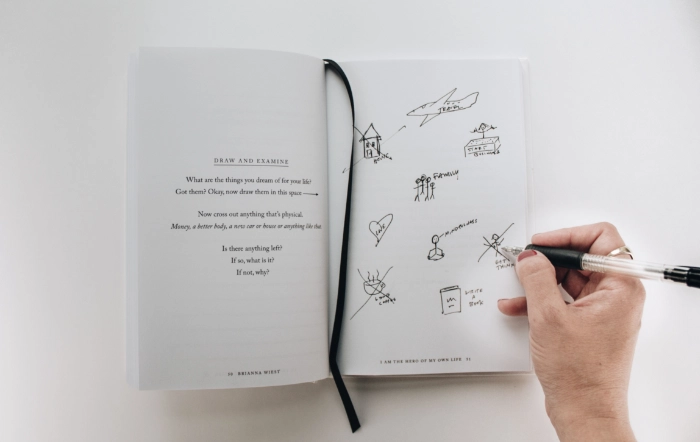
Écrivez votre histoire sans vous soucier de la mise en forme ou d’autres détails techniques – cela peut venir plus tard. Concentrez-vous sur l’ordre de vos idées et exprimez-vous clairement sans vous soucier des règles de grammaire ou de l’édition.
Vous pourrez toujours peaufiner votre travail plus tard. Le principal est d’aller au bout de votre écriture. Restez donc focus sur le fond de votre texte et non sur la forme de ce dernier. À mesure que vous écrivez chaque chapitre, réfléchissez à la longueur de certaines sections, à la suite de l’histoire et, bien sûr, imaginez comment les lecteurs interpréteront et réagiront à chaque scène.
Rédigez toute votre histoire avant de commencer à vous relire. C’est le meilleur moyen pour arriver au bout de votre écrit.
5. Relisez et corrigez-vous par la suite
Une fois que vous avez couché toutes vos idées sur papier et rédigé le premier jet de votre livre, laissez-le reposer quelque temps, le temps de vous détacher suffisamment de votre texte pour que votre relecture/correction soit efficace.
Ensuite, il est temps de relire et de corriger les erreurs d’orthographe, de grammaire, de ponctuation, etc. Cette étape est importante et nécessite plusieurs passages de relecture et correction. Pas d’inquiétude : si cela peut paraître une tâche immense, elle est nécessaire.
Sur la première passe de relecture, vous vous concentrerez sur la cohérence de l’histoire et des personnages, de la chronologie des faits, etc. Vous réécrirez certainement différentes parties pour que la lecture suivante soit plus fluide. Ensuite, vous laissez à nouveau reposer quelque temps avant de relire une deuxième fois.
Là, vous vous concentrez sur l’orthographe et la conjugaison tout en vérifiant que vos modifications de textes sont justes. Vous ferez cela plusieurs fois avant de passer à l’étape de la relecture et de la correction par un professionnel puis de la publication.
6. Soyez régulier pour écrire votre livre
Pour les auteurs en herbe, comprendre le processus de réalisation de leur livre est essentiel pour faire les premiers pas dans l’édition. En créant une routine d’écriture régulière et en vous fixant un rendez-vous quotidien avec votre roman, vous aurez plus de facilité à mener à bien votre projet.
Peu importe que votre roman soit long ou court ; tout ce qui compte, c’est d’y consacrer du temps chaque jour et que vous donniez vie aux personnages, à l’histoire et au monde que vous avez construit.
7. N’hésitez pas à écrire un petit livre
Écrire un livre est une expérience valorisante et enrichissante. Cela vaut la peine de vous lancer le défi d’écrire votre première œuvre publiée, quelle que soit sa longueur. Au lieu de vous plonger dans l’écriture d’un livre énorme, commencez petit en écrivant une novella ou un court roman.
Vous aurez ainsi de nombreuses occasions de pratiquer votre métier, de développer vos compétences et de prendre confiance en vos capacités à raconter des histoires – autant d’ingrédients clés pour un voyage littéraire réussi !
8. Formez-vous à l’écriture
Écrire un livre est une expérience immensément satisfaisante, car elle vous permet de mettre en mots vos pensées et vos idées tout en exprimant plus que ce que vous pouvez dire dans la communication quotidienne. Il est bénéfique de disposer de conseils ou de directives en matière d’écriture lorsqu’on essaie d’écrire un livre, même s’il ne s’agit que d’un simple cours ou de la lecture de quelques livres sur les techniques d’écriture.
En suivant un cours en ligne, les auteurs peuvent acquérir des connaissances sur la manière de faire en sorte que le texte s’écoule de manière ordonnée. Ces petites formations créent également une confiance à leur propre style d’écriture et peuvent susciter des réactions de la part des lecteurs, plutôt que des autres auteurs.
Quelle que soit la source d’information, il est important d’apprendre les bases de l’écriture de fiction et de trouver des idées qui suscitent l’intérêt pour l’histoire que vous seul pouvez écrire. Les personnages doivent prendre vie sur la page grâce à votre propre style de dialogue, de décor et de descriptions.
Les experts suggèrent de faire confiance à votre instinct en ce qui concerne les procédés littéraires, mais n’oubliez pas de faire des recherches sur les méthodologies courantes utilisées par les auteurs, comme le présage et le symbolisme. Ces recherches permettront aux lecteurs d’explorer plus en profondeur chaque texte de votre roman. L’écriture de romans vous permet de créer des mondes entiers et d’y inviter les gens grâce au pouvoir de l’histoire.
9. Faites relire et corriger votre livre
La révision de votre travail par un éditeur peut être extrêmement bénéfique pour tout auteur en herbe qui souhaite que son travail soit pris au sérieux par les lecteurs et les éditeurs. Un éditeur peut fournir des informations précieuses sur ce qui fonctionne, sur ce qui doit être amélioré et sur la meilleure façon de structurer un arc narratif afin qu’il se lise de manière fluide du début à la fin, sans accrocs ni incohérences.
Ensuite, faites appel à un correcteur professionnel pour supprimer toutes les fautes d’orthographe, de grammaire, de syntaxe, de typographie, etc. Le mieux est de contacter ce professionnel avant même de contacter les maisons d’édition, car nombre d’entre elles refusent les manuscrits comportant trop de fautes.
10. Publiez votre livre ou autoéditez-le
Maintenant que vous avez rédigé votre ouvrage, il vous faut le partager avec vos futurs lecteurs. Mais décider si vous devez publier votre livre ou l’autopublier peut être décourageant, et il est important de comprendre les avantages et les inconvénients de chaque approche.
Si vous cherchez des conseils, envisagez de suivre un cours sur l’écriture de votre propre livre ou de demander l’avis d’auteurs publiés, qui pourront vous faire profiter de leur expérience acquise au fil des ans dans le monde littéraire. En général, l’un des principaux avantages de l’édition traditionnelle est que vous avez accès à l’équipe de rédacteurs et au personnel littéraire de l’éditeur.
En revanche, avec l’autoédition, vous avez davantage de contrôle sur votre projet et sur le contenu lors de la création de votre manuscrit, même si cela signifie également qu’il faut travailler davantage sur le marketing et la communication autour de votre roman pour obtenir suffisamment de réponses du lectorat pour commercialiser efficacement votre livre.
Quelle que soit la voie que vous choisissez, écrivez un livre peut être une expérience qui change la vie. C’est l’occasion d’explorer votre talent et votre créativité, et d’avoir un impact dans le monde de l’édition.
Nos conseils pour vous lancer dans l’écriture d’un livre
Écrire un livre est un grand défi, mais cela peut aussi être l’une des expériences les plus enrichissantes que vous ayez jamais vécues. Que votre objectif soit de devenir un auteur ou simplement de raconter votre histoire, il existe des conseils et des astuces qui faciliteront le processus depuis les bases de l’écriture d’un livre, du choix d’un style littéraire à la recherche de votre prête-plume.

Faire appel à un prête-plume pour écrire votre livre
Si vous essayez d’écrire votre premier livre, mais que vous n’avez ni le temps ni les compétences nécessaires, envisagez d’engager un auteur fantôme. Un bon prête-plume peut vous aider à donner vie à vos idées et à leur donner une structure et un flux. Lorsque vous cherchez un écrivain fantôme, assurez-vous de faire vos recherches et de trouver quelqu’un qui se spécialise dans le type de livre que vous voulez écrire.
Un bon rédacteur fantôme doit être en mesure de vous fournir des exemples de son travail afin que vous puissiez vous faire une idée de son niveau d’expertise. N’hésitez pas à faire appel à un rédacteur sur Redacteur.com pour rédiger avec un meilleur style les idées établies dans un plan qui sera transmis que nous nous chargerons de transmettre au rédacteur que vous aurez choisi pour la rédaction de votre ouvrage.
Comment choisir son style littéraire pour écrire son livre ?
Écrire un livre est une tâche passionnante, et l’un des éléments les plus importants de l’écriture d’un livre est de décider du style littéraire à utiliser. Il existe de nombreux styles littéraires différents, du fantastique à la science-fiction en passant par la littérature classique et la fiction contemporaine.
Réfléchissez au type d’histoire que vous voulez raconter, puis recherchez différents styles jusqu’à ce que vous en trouviez un qui vous convienne. Il se peut même que vous trouviez que le mélange de différents styles fonctionne mieux pour votre projet particulier.
Tout projet d’écriture peut être amélioré en mélangeant les genres, en employant différents types de styles d’écriture ou en s’inspirant de techniques d’écriture classiques ou contemporaines. L’étude de l’éventail des styles d’écriture peut vous donner un aperçu de ce qui fonctionne le mieux pour votre projet particulier, qu’il s’agisse de fantasy, de science-fiction, de littérature moderne ou autre. Avec un peu d’effort et de créativité, vous trouverez certainement un style d’écriture qui permettra à votre histoire de briller.
Choisir un titre accrocheur pour son livre
Un titre accrocheur est essentiel pour donner envie aux gens de lire votre livre. Votre titre doit être descriptif, mémorable et engageant afin que les lecteurs potentiels soient attirés par son intrigue.
Lorsqu’il s’agit de choisir un titre accrocheur pour votre livre, il existe quelques conseils qui peuvent vous aider à démarrer. Tout d’abord, essayez de réfléchir au thème du livre et de vous souvenir des mots ou des phrases qui vous viennent à l’esprit. Vous pouvez les utiliser comme titres potentiels. En outre, envisagez d’incorporer un titre allitératif tel que “La promesse du paradis” ou “Semer les graines du succès” – ce type de titre est certainement accrocheur ! Enfin, regardez les livres existants dans le même genre et la façon dont leurs titres ont été rédigés – en vous en inspirant, vous pourrez trouver des idées intéressantes pour votre propre titre.
Quelle que soit la voie que vous décidez d’emprunter, n’oubliez pas de soumettre les titres suggérés à vos amis et à votre famille avant de prendre votre décision finale – il est toujours recommandé de recueillir des avis différents !
Rédiger la quatrième de couverture
Rédiger la quatrième de couverture parfaite pour votre livre est une tâche incontournable. Elle doit être concise et convaincante, permettant aux lecteurs potentiels de connaître l’essentiel de qui, où et pourquoi se déroule votre histoire.
Donnez au lecteur une idée de ce qui a piqué l’intérêt de votre protagoniste, du voyage qu’il a entrepris, de la tension qui s’installe au point culminant et de la façon dont tout cela se termine. Par-dessus tout, veillez à leur donner un avant-goût des raisons pour lesquelles ils devraient choisir votre livre ; créez une invitation qui soit à la fois informative et incitative pour qu’ils se lancent dans cette fantastique aventure !
En plus des informations sur ce que les lecteurs peuvent attendre de la lecture de votre livre, la quatrième de couverture peut également indiquer ainsi que les prix ou récompenses que le livre a reçus (le cas échéant). Elle peut aussi inclure des citations tirées de critiques ou de commentaires écrits par d’autres auteurs ou critiques qui l’ont déjà lu.
Cela permet d’établir des attentes quant au type d’expérience que les lecteurs peuvent attendre en investissant leur temps dans sa lecture !
Faire illustrer la couverture du livre
Une fois que vous avez rédigé le texte de la quatrième de couverture de votre livre, il est temps de réfléchir à la manière dont vous souhaitez l’illustrer sur la couverture !
Veillez à ne pas trop compliquer cette étape, mais plutôt à faire en sorte que les choses restent simples, mais visuellement attrayantes. Les gens doivent être attirés par son caractère unique, tout en comprenant le type de contenu qu’elle contient au premier coup d’œil !
Pensez également à ajouter des éléments tels que des polices ou des mises en page texturées qui ajouteront de la profondeur et de la personnalité, afin que chaque lecteur se sente personnellement lié à cette pièce particulière dès qu’il la voit !
Là encore, faire appel à un professionnel est un plus. Vous trouverez d’ailleurs de nombreux graphistes freelances sur Graphiste.com qui pourront créer la couverture idéale pour votre ouvrage.
Notre astuce pour écrire un livre
L’écriture d’un livre peut sembler être une tâche écrasante, mais avec quelques conseils et une bonne préparation, tout le monde peut produire quelque chose dont il est fier, même s’il ne se considère pas comme un « écrivain » de métier !
Et si vous souhaitez être accompagné dans cette aventure, faites appel à un rédacteur sur la plateforme de rédaction Redacteur.com. La plateforme vous met en relation avec des milliers de rédacteurs professionnels freelances qui seront ravis de vous aider à concrétiser votre rêve de création. Bonne chance et bonne écriture !
L’article Comment écrire un livre en 10 étapes ? est apparu en premier sur Redacteur.com.