Un cocon sémantique, en structurant thématiquement le contenu d’un site, booste significativement son SEO. Cette organisation permet de relier des articles par des liens logiques et pertinents, améliorant la visibilité et la pertinence aux yeux des moteurs de recherche.
ChatGPT, avec ses capacités avancées en traitement de langage naturel, devient un assistant précieux dans cette démarche. Comment ? Avec quelle méthode précise utiliser ChatGPT pour générer un cocon sémantique performant ? Suivez le guide !
Pourquoi utiliser ChatGPT pour créer un cocon sémantique ?
ChatGPT comprend le contexte d’un texte et en génère de nouveaux, enrichissant ainsi la structure d’un cocon sémantique. Par sa capacité à identifier les concepts clés, l’IA relie stratégiquement les articles entre eux, afin d’optimiser la pertinence et la visibilité des contenus connexes.
Grâce à son entraînement sur des données diverses, il ne se contente pas de reconnaître les mots : il saisit leur interdépendance. Cette qualité lui permet de suggérer des liens naturels entre les contenus, vous permettant de tisser des cocons sémantiques pertinents. En résulte un réseau de contenus interconnectés qui booste votre référencement naturel !
Méthodologie pour utiliser ChatGPT dans la création d’un cocon sémantique
Comment exploiter au mieux les capacités avancées de ChatGPT dans l’analyse et la génération de texte, afin de créer un cocon sémantique utile au référencement naturel ? Suivez notre méthodologie !
Préparation du texte
Commencez par rédiger votre article, si ce n’est pas encore fait ! Le texte à analyser doit être est bien structuré et clair. Pensez à le mettre en forme en indiquant les titres et sous-titres à ChatGPT, ainsi qu’en aérant les paragraphes. Une mise en page compréhensible permet à l’intelligence artificielle d’évaluer précisément votre article pour répondre aux prochaines questions sur l’optimisation du cocon sémantique.
Pour illustrer notre méthodologie, nous allons prendre l’exemple d’un article intitulé « Pourquoi intégrer le Yoga dans votre routine ? 10 bénéfices clés ! », dont voici un extrait :
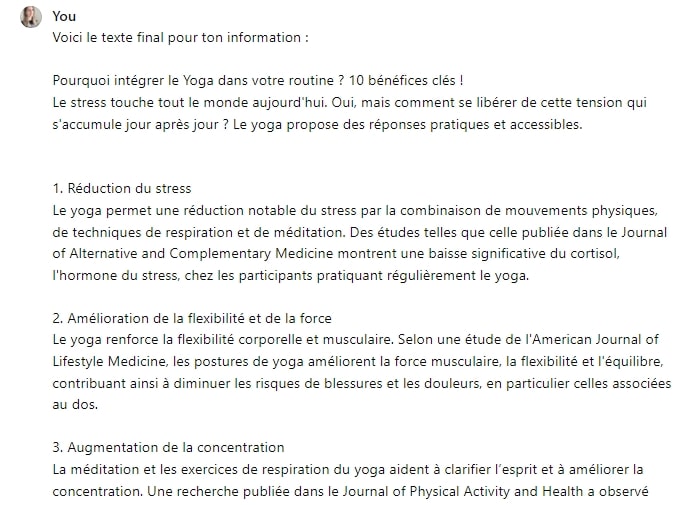
Identification des mots-clés principaux et secondaires
En premier lieu, nous allons demander à ChatGPT de suggérer des phrases ou mots-clés pertinents pour la thématique de notre article.
“Quels mots-clés et expressions clés pourraient être importants pour le SEO dans cet article ?”
Le chatbot s’exécute :
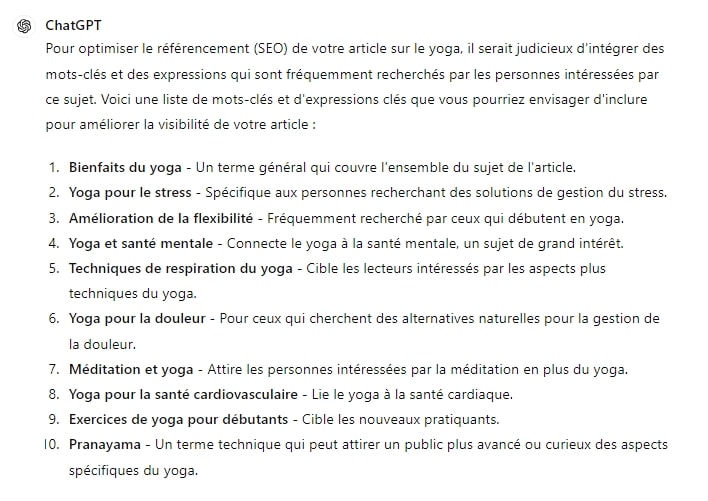
Certaines se retrouvent dans notre article, d’autres manquent à l’appel. Cette première question permet d’optimiser le texte pour le référencement naturel.
Maintenant, nous pouvons utiliser ChatGPT pour identifier les thèmes et sous-thèmes principaux.
Peux-tu identifier les thèmes principaux de cet article sur les bienfaits du yoga ?
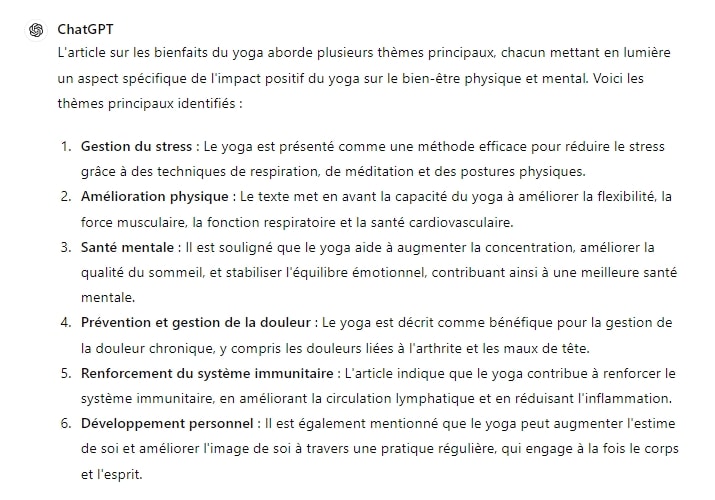
Entre les termes clés identifiés précédemment et les sous-thèmes que l’IA vient de lister, vous générez une liste de sujets complémentaires. En les traitant sur votre blog, vous enrichissez le cocon sémantique autour du yoga. Vous avez la possibilité de relier divers contenus autour de ce thème principal et d’améliorer votre positionnement sur les requêtes liées aux bienfaits du yoga sur le corps et l’esprit.
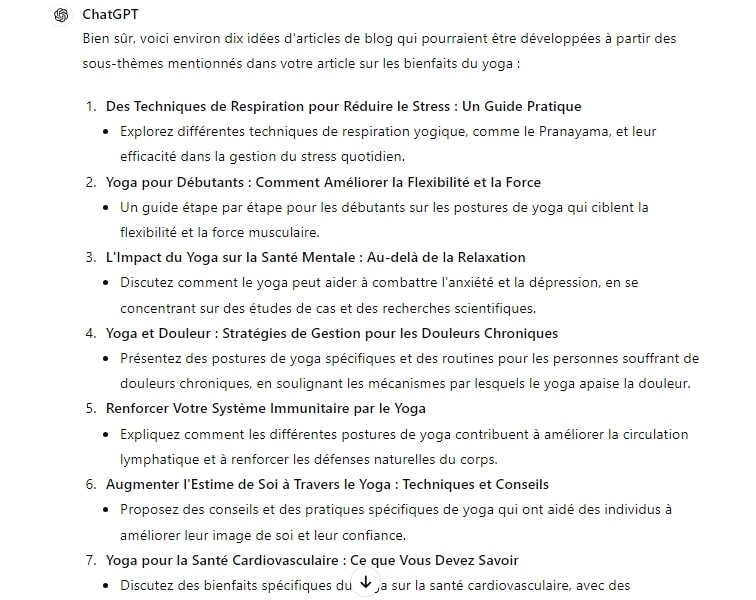
Pour gagner du temps, demandez à ChatGPT de vous assister :
À partir de ces sous-thèmes, peux-tu me proposer environ 10 idées d’articles de blog ?
Vous obtenez une liste d’articles à confier à votre rédacteur web, pour enrichir votre cocon sémantique autour des effets positifs du yoga :
Aide au maillage interne
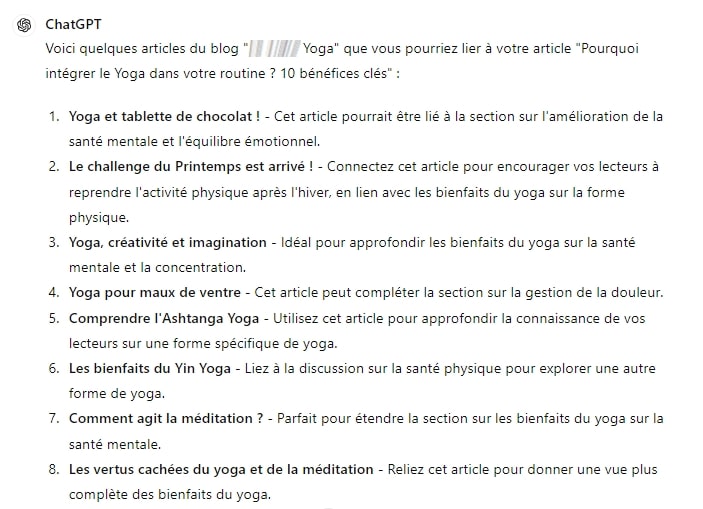
Mais peut-être que des articles sur le yoga sont déjà publiés sur votre blog ? Dans ce cas, ChatGPT peut proposer des liens internes potentiels en identifiant des expressions qui pourraient être reliées à d’autres contenus de votre site, sur des thèmes similaires ou complémentaires.
Peux-tu suggérer des liens internes potentiels pour cet article ? Voici mon site web : [LIEN]
Accède au site et donne-moi des liens de pages que je peux relier à cet article.
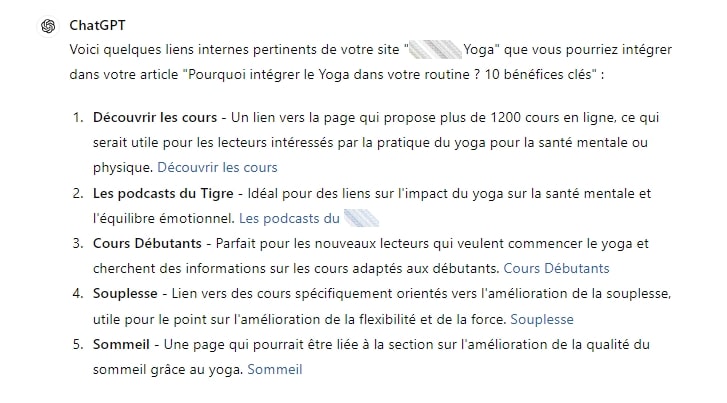
Dans un second temps, nous lui demandons de compléter avec une liste d’articles de blog, déjà publiés, avec lesquels effectuer du maillage interne.
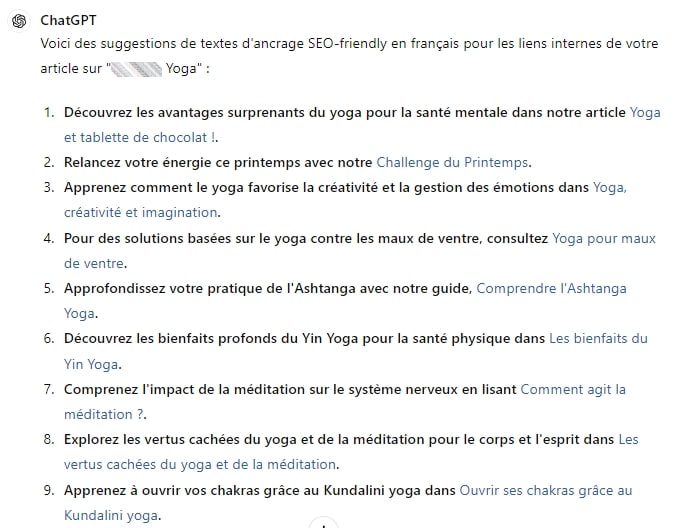
En bonus : ChatGPT peut également aider à générer des descriptions de lien (anchor text) SEO-friendly. Gagnez du temps en lui demande directement de rédiger ces courtes phrases.
Peux-tu générer des textes d’ancrage SEO-friendly pour ces liens internes ?
Les limitations de la création d’un cocon sémantique avec ChatGPT
ChatGPT offre une aide précieuse dans l’identification des mots-clés et la suggestion de contenus pertinents annexes. L’intelligence artificielle facilite ainsi la structuration d’un cocon sémantique dense et interconnecté.
Cependant, ChatGPT n’est pas infaillible. Sa compréhension du contexte peut être limitée, il pourrait interpréter de manière incorrecte des nuances spécifiques à certaines industries ou sujets. De plus, ses suggestions nécessitent souvent une vérification et un perfectionnement manuels pour garantir leur exactitude et leur pertinence.
Il est nécessaire de rester vigilants et de peaufiner les contenus générés pour les adapter à votre audience, votre activité et vos objectifs. Le but final reste de construire un cocon sémantique optimisé pour les moteurs de recherche, mais aussi véritablement utile et informatif pour votre cible.
Notre dernier conseil pour créer un cocon sémantique avec ChatGPT
ChatGPT transforme la création de cocons sémantiques en permettant une identification rapide des mots-clés et en générant des contenus interconnectés. Toutefois, il est recommandé d’utiliser ChatGPT pour simuler différentes structures de cocon avant de décider laquelle adopter.
N’oubliez pas d’ajuster manuellement les propositions afin que les articles entrent naturellement dans votre stratégie content marketing.
Dès que vous avez obtenu l’ensemble des articles composant votre cocon sémantique, pensez à faire appel à des rédacteurs professionnels sur Redacteur.com !
L’article Comment créer un cocon sémantique avec ChatGPT ? est apparu en premier sur Redacteur.com.