Comment monétiser son blog ? En commençant par mettre de la publicité sur votre blog. Si votre blog dispose d’un fort trafic, c’est une très bonne méthode pour générer des revenus récurrents.
Si vous ne vous sentez pas à l’aise pour écrire assez d’articles afin de générer du trafic sur votre site, ne vous inquiétez pas : faites appel à un rédacteur web pour augmenter le trafic sur votre blog !
Dans cet article, nous allons voir les raisons pour lesquelles vous devriez faire de la publicité sur votre blog, les différents types de publicité disponibles et leur mode de rémunération. Enfin, nous explorerons les meilleures plateformes pour faire de la publicité afin que vous puissiez prendre une décision éclairée lorsqu’il s’agit de monétiser votre site.
Pourquoi mettre de la publicité sur son blog ?
La réponse courte est l’argent. La publicité permet aux blogueurs de générer des revenus à partir de leur blog en tirant parti des importants volumes de trafic qu’il reçoit des lecteurs. Si elle est faite correctement, la publicité peut être un excellent moyen pour les blogueurs d’augmenter leurs revenus et de développer leur activité.
Passons à la réponse longue !
La publicité sur votre blog présente de nombreux avantages. Tout d’abord, elle constitue une source de revenus supplémentaire pour vous en tant que blogueur. Vous pouvez placer des annonces d’entreprises en rapport avec votre niche, ou même promouvoir des produits ou services que vous proposez vous-même. Cela vous permet de gagner de l’argent grâce au trafic de clics provenant des annonces placées sur votre blog.
En outre, le placement d’annonces sur votre site web peut contribuer à augmenter le trafic et le lectorat de votre site grâce à l’attention générée par les annonces elles-mêmes. Plus les gens verront les annonces et interagiront avec elles, plus ils seront attirés par elles et commenceront à explorer ce qui est disponible sur votre site web.
Enfin, la publicité peut être un moyen efficace d’établir des relations avec d’autres entreprises ou influenceurs de votre secteur qui pourraient être intéressés par une collaboration future avec vous. En établissant ces relations dès le début par le biais de la publicité, il est plus facile pour eux d’entrer en contact avec vous en aval lorsqu’ils ont besoin d’aide ou de conseils liés à leur entreprise ou au lancement de produits.
Les différents types de publicité à mettre sur son blog
En ce qui concerne la publicité sur votre blog, il existe plusieurs types de publicité que vous pouvez utiliser en fonction du type de contenu ou de produits que vous promouvez. Par exemple, si vous avez rédigé des articles sur des sujets spécifiques, les bannières publicitaires (type adsense) qui renvoient directement à ces articles constituent une excellente option pour les monétiser davantage.
Alternativement, si vous avez des affiliés ou des produits qui sont liés à ces sujets, alors l’insertion de liens sponsorisés dans ces articles pourrait être une autre option lucrative. C’est également le cas de l’inclusion de liens d’affiliation dans toutes les critiques que vous écrivez sur certains produits ou services, tels que les plug-ins WordPress / thèmes, etc. De plus, l’insertion de liens vidéo dans toutes les vidéos que vous publiez est un autre bon moyen de les monétiser davantage avec des publicités (pre-rolls).
Enfin, si vous avez des produits physiques qui sont liés à certains sujets, la création d’articles sponsorisés à ce propos peut être un excellent moyen d’attirer des clients potentiels qui n’auraient peut-être pas eu connaissance de ces articles avant d’en voir la publicité sur des plateformes de médias sociaux comme Twitter/Facebook, etc. Mais voyons cela plus en détail.

Mettre des bannières publicitaires sur son blog (type adsense)
Placer des bannières publicitaires sur votre blog est un excellent moyen de générer potentiellement des revenus supplémentaires. En vous associant à un programme comme Adsense, par exemple, vous pouvez avoir accès à des centaines de partenaires publicitaires potentiels qui afficheront des annonces dans des espaces spécifiques de votre site.
Ces bannières publicitaires se présentent sous différentes formes, tailles et formats, ce qui vous permet de choisir celles qui correspondent le mieux à l’aspect et à la convivialité de votre blog. De plus, elles sont faciles à installer et à gérer, quel que soit votre niveau de compétence technique.
Mettre des publicités négociées en direct (fond du site, article sponsorisé)
En fonction de la taille et de la popularité de votre blog, vous pouvez être en mesure d’attirer des annonceurs qui sont prêts à payer pour des bannières ou d’autres types de publicités sur votre site. Vous pouvez également négocier avec eux pour créer des articles sponsorisés sur des sujets qu’ils souhaitent que vous couvriez, ce qui peut conduire à plus de revenus.
Faire de la publicité sur les réseaux sociaux grâce à son blog (partenariats sur Instagram, Twitter…)
L’une des meilleures façons de générer des revenus supplémentaires par le biais de votre blog est de s’associer à des marques ou des entreprises qui ont une présence établie sur les réseaux sociaux comme Instagram et Twitter.
Cela vous permettra d’atteindre un public plus large et d’avoir plus d’yeux sur votre contenu, ce qui entraînera une augmentation du trafic et des revenus potentiels.
Mettre en place l’affiliation sur son blog (liens sponsorisés)
L’affiliation à des produits ou services populaires est un autre excellent moyen de monétiser votre blog. Lorsque les internautes cliquent sur les liens d’affiliation dans vos articles, ils sont dirigés directement vers la page du produit où ils peuvent l’acheter.
Vous recevrez une commission chaque fois qu’une personne effectuera un achat par le biais de l’un de ces liens.
Mettre en place l’affiliation de produits (Amazon, Fnac…)
Si vous ne voulez pas compter uniquement sur les revenus publicitaires, la mise en place d’une affiliation de produits est un autre excellent moyen de monétiser votre blog. Amazon Associates est l’un des programmes les plus populaires auprès des blogueurs et des propriétaires de sites web qui souhaitent tirer profit de leur contenu en promouvant et en recommandant des produits disponibles sur la plateforme d’Amazon.
En outre, de nombreux autres sites web, comme la Fnac, proposent des programmes d’affiliation qui permettent aux blogueurs de gagner de l’argent lorsque leurs lecteurs effectuent des achats via leurs liens de parrainage.
Monétiser un blog peut être une tâche ardue, mais il existe de nombreuses stratégies qui peuvent vous aider à générer des revenus supplémentaires.
Qu’il s’agisse de placer des publicités à des endroits stratégiques de votre site web, de négocier avec des annonceurs pour des articles sponsorisés, de nouer des partenariats avec des marques sur les plateformes de médias sociaux ou de s’affilier à des produits populaires, il existe de nombreuses options si vous cherchez des moyens d’augmenter les revenus de votre blog.
Avec un peu de planifications stratégiques et des recherches sur les différentes méthodes disponibles, vous serez bientôt en mesure de vous rassurer en sachant que tous ces efforts pour créer du contenu pour vos lecteurs en valaient la peine !
Les différents moyens de rémunération publicitaires sur un blog

En tant que blogueur, vous avez la possibilité de toucher des millions de personnes. Grâce à la publicité en ligne, vous pouvez monétiser votre site web, développer votre activité et augmenter vos revenus. Cette partie de notre article explique deux des types de publicité les plus populaires : CPC (coût par clic) et CPM (coût par millier d’impressions).
Le CP : coût par clic
Le CPC (coût par clic) est un modèle publicitaire qui facture les annonceurs lorsqu’un utilisateur clique sur leur publicité. Ce type de publicité vous permet de gagner de l’argent pour chaque clic effectué par un visiteur sur votre blog ou site web.
Le CPC est l’une des formes de publicité les plus couramment utilisées, car elle est rentable, facile à mettre en œuvre et permet de cibler des publics spécifiques. Elle est également idéale pour générer un trafic de qualité sur votre site.
Le CPM : coût pour mille impressions
L’autre type de publicité est le CPM (coût par millier d’impressions). Ce modèle facture les annonceurs chaque fois que leur publicité est vue par 1 000 visiteurs. Contrairement au CPC, qui mesure le succès en fonction de l’action de l’utilisateur, le CPM mesure le succès selon l’exposition et la sensibilisation. Si vous souhaitez accroître la notoriété de votre marque ou si vous voulez simplement que davantage de personnes voient vos publicités, le CPM pourrait être la bonne option pour vous.
Vous pouvez utiliser une combinaison des deux modèles – CPC et CPM – en fonction de ce qui vous convient le mieux. Les deux options sont des moyens efficaces de monétiser le contenu de votre blog afin de générer davantage de revenus à partir des visiteurs qui viennent lire vos articles ou regarder les vidéos publiées sur le site.
Les meilleures plateformes pour mettre de la publicité sur son blog
Vous cherchez des moyens de monétiser votre blog ? Avec les bonnes stratégies et plateformes, vous pouvez commencer à gagner de l’argent avec votre blog. Nous allons maintenant discuter des meilleures plateformes pour la publicité sur votre blog et comment vous pouvez les utiliser pour augmenter vos revenus. C’est parti !
Mettre de la publicité avec Google AdSense

Google AdSense est l’une des options les plus populaires pour faire de la publicité sur votre blog. Il vous permet de placer des annonces sur votre site web ou votre blog en échange d’une rémunération. Vous pouvez choisir les types d’annonces à afficher et l’endroit où elles sont placées, ce qui vous permet de contrôler l’apparence de votre site.
La somme d’argent que vous gagnez grâce à Google Adsense dépend du nombre de personnes qui cliquent sur les annonces, il est donc important d’avoir un bon nombre de visiteurs sur votre site. En outre, il existe différents types d’annonces que vous pouvez afficher, notamment les annonces textuelles, les images, les vidéos, etc.
Mettre de la publicité avec Ezoic
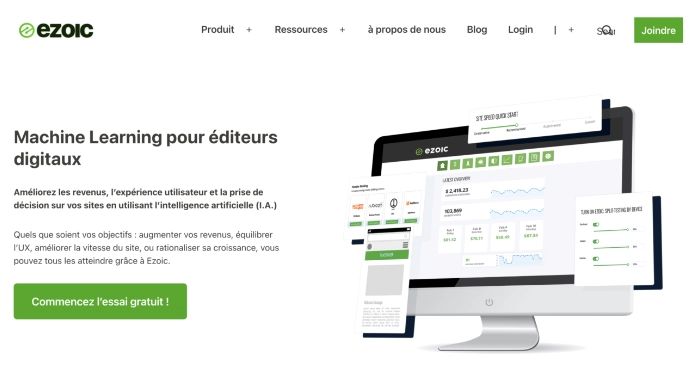
Une autre excellente plateforme pour la publicité est Ezoic, qui offre un moyen facile de monétiser votre contenu sans sacrifier l’expérience utilisateur ou la conception. Avec Ezoic, vous pouvez placer des annonces n’importe où sur votre site web ou votre blog, dans une variété de tailles et de formats tels que des bannières, des liens textuels, des annonces natives, des pop-ups, etc.
Et contrairement à d’autres réseaux publicitaires, Ezoic ne lance pas toutes les campagnes de ses annonceurs en même temps. En effet, le service les classe par ordre de priorité en fonction de l’expérience utilisateur et de la pertinence, afin que les utilisateurs ne soient pas bombardés de publicités non pertinentes.
En outre, Ezoic vous permet également de mettre en place des programmes d’affiliation. Ainsi, lorsque les utilisateurs cliquent sur certains produits ou services figurant dans un espace publicitaire fourni par Ezoic, vous touchez une commission sur ces ventes.
Il existe de nombreuses plateformes de publicité sur les blogs, telles que Google Adsense et Ezoic. Mais, il est important de faire des recherches avant d’en choisir une, car chaque plateforme a ses propres avantages et inconvénients qu’il faut prendre en compte avant de prendre une décision.
En outre, il est important de se rappeler que le succès de toute campagne publicitaire repose non seulement sur le choix de la bonne plateforme, mais aussi sur la création d’un contenu attrayant qui attirera les lecteurs et les incitera à cliquer sur les annonces.
Notre astuce pour mettre de la pub sur son blog
Avec un placement stratégique de la publicité sur votre blog, vous pouvez monétiser et augmenter l’engagement des lecteurs. Afin d’assurer un rendement maximal, il est important que les publicités que vous affichez correspondent à votre lectorat et s’alignent sur vos objectifs.
Pour vous permettre de développer la notoriété de votre blog plus rapidement, déléguez la rédaction de vos articles à un rédacteur professionnel sur la plateforme de rédaction Redacteur.com.
Grâce à leur expertise en matière de curation de contenu et de stratégie marketing, nos rédacteurs peuvent vous aider à créer un blog non seulement fructueux, mais aussi attrayant pour votre public.
L’article Comment mettre de la pub sur son blog ? est apparu en premier sur Redacteur.com.