Les grilles produits organiques (aussi appelées « popular products » ou « free listings ») occupent une place stratégique dans les résultats de recherche Google. Pour les sites e-commerce, s’y positionner peut générer une visibilité exceptionnelle sans investir en publicité. Mais comment fonctionne réellement le classement de ces grilles et comment en tirer pleinement parti ? Voici un décryptage, basé sur des analyses de terrain et les dernières évolutions de Google.
Ce qu’il faut retenir :
- Les grilles produits organiques sont en pleine expansion et occupent jusqu’à 50 % de l’espace visible sur mobile dans certains pays.
- L’éligibilité dans Merchant Center est cruciale pour apparaître dans ces résultats gratuits.
- Le type de grille et la correspondance exacte avec le produit recherché influencent directement le classement.
- Des critères comme les titres produits, les avis, le prix ou la politique de retour peuvent faire la différence entre la 1re et la 4e position.
 Cet article au format audio
 Cet article au format audio
Les grilles produits organiques : un nouveau terrain de jeu SEO
Depuis 2023, Google a intensifié le déploiement des grilles produits organiques dans ses SERP, particulièrement sur mobile. Aux États-Unis, elles apparaissent dans 15 % des résultats de recherche ; au Royaume-Uni et en Australie, la progression est particulièrement rapide. Pour rappel, ces éléments permettent d’afficher plusieurs produits directement dans les résultats, souvent sous forme de carrousels ou de grilles visuelles. Le but : inciter les internautes à cliquer !
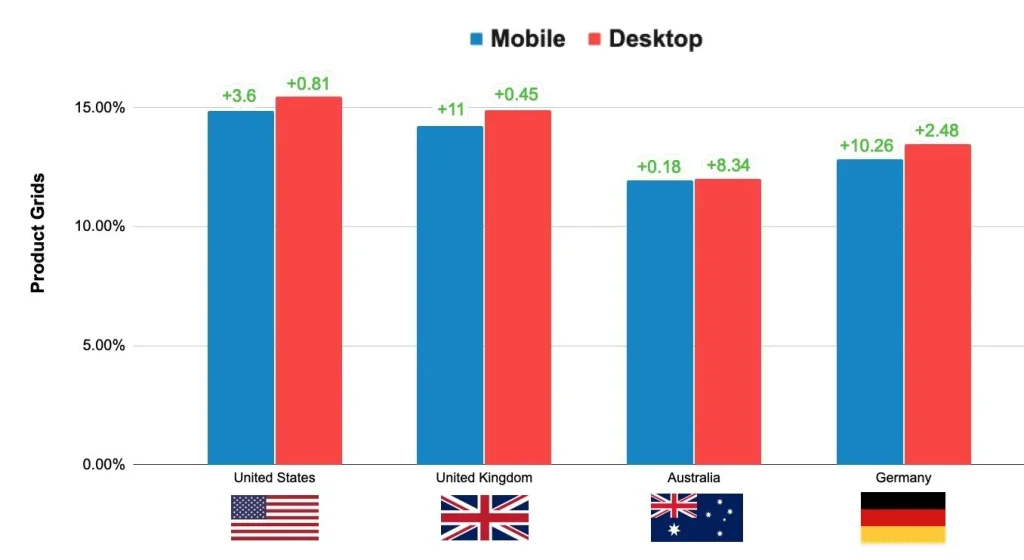
1. Assurez l’éligibilité de vos produits
C’est la première étape indispensable. Pour apparaître dans une grille, vos produits doivent être reconnus comme « valides » dans Google Merchant Center et respecter les critères de structure de données. Un problème courant est l’utilisation de la propriété AggregateOffer au lieu de inProductGroupWithID, qui peut bloquer l’éligibilité. Vérifiez vos rapports dans Google Search Console pour corriger les erreurs.
2. Comprendre les types de grilles
Google propose plusieurs variantes de grilles selon l’intention de recherche :
- Produits populaires : les plus fréquemment recherchés.
- Offres spéciales : produits disposant de réductions importantes.
- Livraison rapide / retrait en magasin : produits disponibles immédiatement.
- Produits disponibles en magasin à proximité : pour les enseignes physiques.
Identifier le type de grille sur lequel vous pouvez vous positionner, selon votre offre, est une étape clé de votre stratégie SEO.
3. Proposez une correspondance produit exacte
Pour espérer figurer dans une grille de produits, il faut que Google puisse associer précisément votre fiche produit à la recherche de l’utilisateur. Cela passe par la présence d’identifiants produits clairs (GTIN, MPN, etc.), de modèles exacts et d’informations précises dans votre flux.
4. Enrichissez vos fiches produits
Au-delà des données obligatoires, fournissez un maximum d’éléments :
- Images de haute qualité
- Attributs détaillés
- Informations de livraison
- Données issues du Manufacturer Center
Le principe est simple : plus vos fiches sont riches, plus elles ont de chances d’être mises en avant.
5. Soignez vos titres produits
Le titre du produit indiqué dans le flux, sur la page et dans la balise title joue un rôle très important. Ce titre doit contenir les bons mots-clés tout en restant clair et lisible. Une analyse concurrentielle vous permettra de trouver le bon équilibre.
6. Multipliez les sources d’avis
Les produits affichés dans les grilles ont souvent des dizaines, voire des centaines d’avis. Ces avis peuvent être issus de différentes plateformes si le produit est vendu ailleurs que sur votre site. Si vous êtes le seul vendeur, récolter des avis clients devient d’autant plus stratégique.
7. Gagnez un avantage concurrentiel
Une fois tous les éléments précédents maîtrisés, les derniers leviers se jouent à la marge :
- Prix plus bas que la concurrence
- Livraison gratuite ou express
- Retours facilités
- Présence de codes promo
- Acceptation de Google Pay / PayPal
- Programmes de fidélité
Google tend à privilégier les offres les plus attractives dans l’interface des grilles.

8. Optimisez votre visibilité dans les grilles
Être dans la grille, c’est bien. Être en première position, c’est encore mieux. Le CTR peut dépasser les 50 % en top position, grâce au comportement de clic unique imposé par l’interface de Google. Pour maximiser votre impact :
- Obtenez le badge Top Quality Store
- Affichez une note vendeur
- Mettez en place des promotions visibles depuis la grille
- Testez l’option Buy Now pour un accès direct au panier
L’article “E-commerce : comment apparaître dans les grilles produits organiques sur Google” a été publié sur le site Abondance.