Vous voulez booster la visibilité de votre entreprise sur internet mais ne savez pas vraiment comment faire ni par où commencer ? Voici une série de conseils pour vous aider à bien démarrer votre projet d’amélioration du référencement sur votre site internet !
Avant de commencer…
Sachez que le référencement n’est pas une science exacte. Quand sera venu pour vous le temps de rechercher un prestataire, écartez les formules commerciales trop belles pour être vraies. Non, vous ne serez pas 1er sur un mot-clé important en 6,12 ou 48h.
Assurez-vous simplement de faire les choses correctement et dans l’ordre. Si tout se passe bien, le shérif Google devrait libérer régulièrement des visiteurs sur votre site. Vous devez garder à l’esprit qu’un bon référencement naturel est une question de temps, de qualité et de stratégie. Placez correctement vos pions sur des mots-clés pertinents et le plus proprement possible. C’est uniquement sur le moyen et long terme que le référencement naturel sera rentable.
Pour commencer et en simplifiant énormément, vous devez savoir que le référencement est influencé par trois critères :
- Le code ;
- Le contenu ;
- Les liens.
Pour schématiser un peu, si vous souhaitez améliorer le référencement naturel de votre site, vous devez essayer de posséder un site bien codé, avec un contenu pertinent et des liens sur des sites de référence dans votre thématique.
Si vous recherchez un prestataire, définissez correctement le cahier des charges pour le référencement d’un site.

À lire aussi : Top 30 des erreurs SEO qui pénalisent le référencement de votre site
Le code
Étape 1 : Réalisez un audit technique de votre site
Pour savoir si votre site est bien codé et ne produit pas de blocage auprès des critères de Google, il est recommandé de réaliser un audit SEO de votre site internet. L’audit technique est la première étape nécessaire pour l’amélioration de votre référencement. Vous devez connaître et corriger les points bloquants de votre site internet.
Si vous essayez d’investir dans la création de contenu alors que votre CMS créé un contenu dupliqué (qui pénalise la visibilité de votre site dans les moteurs de recherche), vous gaspillez tous vos efforts et votre budget. Commencer par un audit vous permet donc de démarrer sur une base solide.
Découvrez 10 plugins Chrome pour auditer votre site internet :

Le contenu
Le contenu est au référencement ce que les hameçons sont à la pêche. Il va vous permettre de placer un maximum d’appâts (requêtes) pour pêcher des visiteurs. Les requêtes correspondent aux recherches que font les internautes sur Google.
Il s’agit d’être le mieux positionné dans les moteurs de recherche sur des requêtes populaires et pertinentes pour votre activité.
Vous comprenez bien qu’être premier sur “John John l’homme nougat aux dents bleues” ne sert à rien puisque personne ne fait cette recherche. Donc pour définir votre contenu, vous devrez trouver des idées de mots-clés que vos prospects tapent le plus souvent et sur lesquels vos concurrents ne sont pas trop virulents.
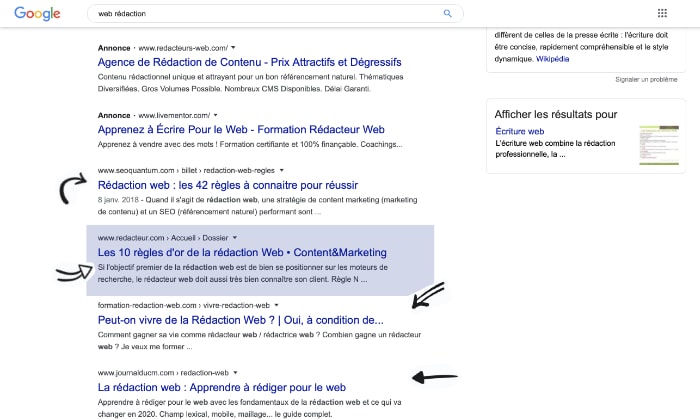
Étape 2 : Analysez la concurrence
Avant de créer votre contenu, je vous recommande de bien travailler cette étape car une partie de votre budget est en corrélation avec la virulence et le nombre de vos concurrents sur internet.
Demandez à un prestataire d’analyser vos concurrents directs sur les sujets suivants :
- Leur popularité ;
- Le nombre de liens ;
- La qualité des liens ;
- Le nombre de mots-clés placés ;
- Les mots-clés qui rapportent ;
- Les points faibles et les points forts de leur site, etc.
Bref, capter un maximum d’information sur eux vous permettra deux choses.
La première est de savoir qu’il va falloir sortir un budget correct car vous n’êtes pas tout seul à vouloir bien faire !
La seconde est de trouver des pistes pour vos mots-clés et les requêtes sur lesquelles vous voudrez ressortir. Ce qui est bon pour vos concurrents peut également l’être pour vous.
Des outils existent pour vous aider dans votre analyse concurrentielle. Parmi eux :
- SEOBook : Grâce à son outil de comparaison de similarité de pages web, comparez les titres, les méta-informations et les phrases récurrentes qui apparaissent sur les différentes pages d’un site web donné ;
- Internet Archive : Son outil Wayback Machine recense un historique de 446 milliards de pages web sur Internet. Servez-vous en pour analyser l’historique web de vos concurrents.

Demandez une analyse de vos concurrents à nos spécialistes en référencement
Étape 3 : Sélectionnez vos mots-clés
Travaillez vos mots-clés avec un prestataire pour mettre toutes les chances de votre côté !
Attention : évitez de choisir des mots-clés trop génériques, vous n’aurez pas le budget pour lutter contre les mastodontes sur ces requêtes, tant en référencement naturel qu’en référencement sponsorisé. De plus, une présence sur des mots-clés trop génériques n’est peut-être pas pertinente pour vous.
Essayez de jouer sur des requêtes de niches, précises ou locales.
Attention : N’essayez pas de capter du trafic des régions que vous ne pouvez pas livrer, par exemple. Si vous souhaitez trouver des mots-clés vous-même, vous pouvez utiliser des outils pour analyser les mots de vos concurrents. Utilisez Google Suggest pour voir les requêtes les plus tapées et Google Adword Keyword pour avoir une idée du volume des recherches pour vos requêtes.
Pour vous aider : 85 ressources pour performer en référencement naturel. Parmi elles :

Étape 4 : Rédigez (ou faites rédiger) votre contenu
Une fois les mots-clés obtenus, vous pouvez définir les pages statiques qui devront être créés.
Là encore, le petit coup d’œil chez vos concurrents peut être nécessaire ! Trouvez les pages qui ressortent sur les requêtes importantes, essayez de voir si vous pouvez en créer des plus complètes, pour pouvoir faire mieux qu’eux.
Une fois que vous avez listé les pages que vous voulez créer, concevez un gabarit pour réaliser la sous-traitance du contenu et lancez-vous dans la rédaction de vos textes !
Pour cela rien de plus simple ! Utilisez un service comme Redacteur.com pour créer rapidement des textes de qualité. Sélectionnez l’option texte SEO et rédacteurs qualifiés. Ainsi, vous pourrez choisir les requêtes que vous souhaitez mettre en avant dans votre ou vos textes. Vous recevez une dizaine de contacts en quelques heures et les premiers textes très rapidement.

Les liens
Étape 5 : Attirez des liens vers vos contenus
Maintenant que votre site est correctement codé et que votre contenu est créé, il va falloir commencer à tirer des liens vers votre contenu et entre vos pages.
Attention : Les formules du type “référencez votre site dans 23 400 annuaires en un clic”, c’est la kryptonite pour votre super site internet !
Pour lutter efficacement contre ces appels nuisibles, gardez bien en tête cette formule :
Rien de vraiment gratuit, rien de vraiment facile, jamais de miracle !
Elle vous aidera à ne pas trop gaspiller votre temps et votre argent au cours de votre aventure sur internet.
Pour la création de liens, rapprochez-vous d’un prestataire pour définir un plan d’action et organiser le suivi d’acquisition des liens qualifiés vers votre site internet. Il vous aidera à mettre en place une campagne d’acquisition de liens (netlinking) et vous guidera également vers la création de contenu (blog, infographies etc.) pour obtenir des liens vers votre site (linkbaiting). Demandez-lui également de travailler le maillage interne de votre site.
Plusieurs facteurs déterminent la qualité d’un lien. Parmi eux :
- L’ancre du lien ;
- Sa pertinence ;
- L’autorité de la page ;
- Le nombre de liens présents sur cette page ;
- La bonne structure des liens.
Pour en savoir plus, découvrez comment optimiser vos liens !

À lire aussi : Javascript SEO : les bonnes pratiques pour améliorer votre référencement
Conclusion
Pour résumer, si vous souhaitez vous occuper efficacement du référencement de votre site internet, nous vous recommandons de bien respecter l’ordre et les étapes suivantes :
- Auditer votre site pour être certain d’enlever les freins techniques à Google ;
- Analyser vos concurrents et définir votre stratégie de contenu ;
- Faire réaliser du contenu de qualité (aidez-vous de Redacteur.com) ;
- Créer une campagne de netlinking pour poser les bases ;
- Essayer ensuite de faire du linkbaiting (blog, infographie, etc).
Cet article vous aidera dans l’amélioration du référencement pour votre site internet. N’hésitez pas à poser vos questions ou vos remarques dans les commentaires !
N’oubliez pas : tous les prestataires dont vous avez besoin pour une stratégie SEO réussie sont sur Codeur.com. Postez votre projet et recevez de nombreux devis de professionnels freelances en quelques minutes !