Avec son nouveau modèle Gemini 2.0, Google propose bien plus qu’une simple mise à jour de son IA phare. L’ambition est claire : rendre l’intelligence artificielle accessible, performante et surtout pratique dans la vie de tous les jours, pour des utilisations professionnelles comme personnelles.
Ce qu’il faut retenir :
- Gemini 2.0 Flash est une IA multimodale et rapide qui génère des images, fait de la synthèse vocale multilingue et des recherches avancées avec une latence réduite.
- Deep Research planifie et crée des rapports complets sur des sujets complexes en quelques minutes.
- Les Project Mariner et Astra explorent les interactions homme-agent et des applications pratiques dans des domaines variés.
- Google intègre des mécanismes pour assurer la fiabilité et limiter les risques liés à l’IA.
Un nouveau modèle pensé pour simplifier votre quotidien
Gemini 2.0, développé par Google DeepMind, est une belle évoluton dans l’univers de l’intelligence artificielle. Ce modèle repose sur des années de recherche et une infrastructure matérielle beaucoup plus puissante. Mais ce qui frappe surtout, c’est à quel point il a été conçu pour répondre à des besoins concrets : des réponses rapides, de meilleures capacités pour traiter des contenus variés (texte, images, vidéos, sons) et même la possibilité d’utiliser des outils comme la recherche Google ou des fonctions personnalisées.
L’idée ? Offrir une IA qui ne soit pas qu’un gadget technique, mais un vrai partenaire pour vous accompagner dans vos projets, pour planifier, rechercher ou exécuter des tâches.
Gemini 2.0 Flash est disponible en tant que modèle expérimental via l’API Gemini dans Google AI Studio et Vertex AI. Il sera disponible pour tous en janvier 2025, avec d’autres tailles de modèles.
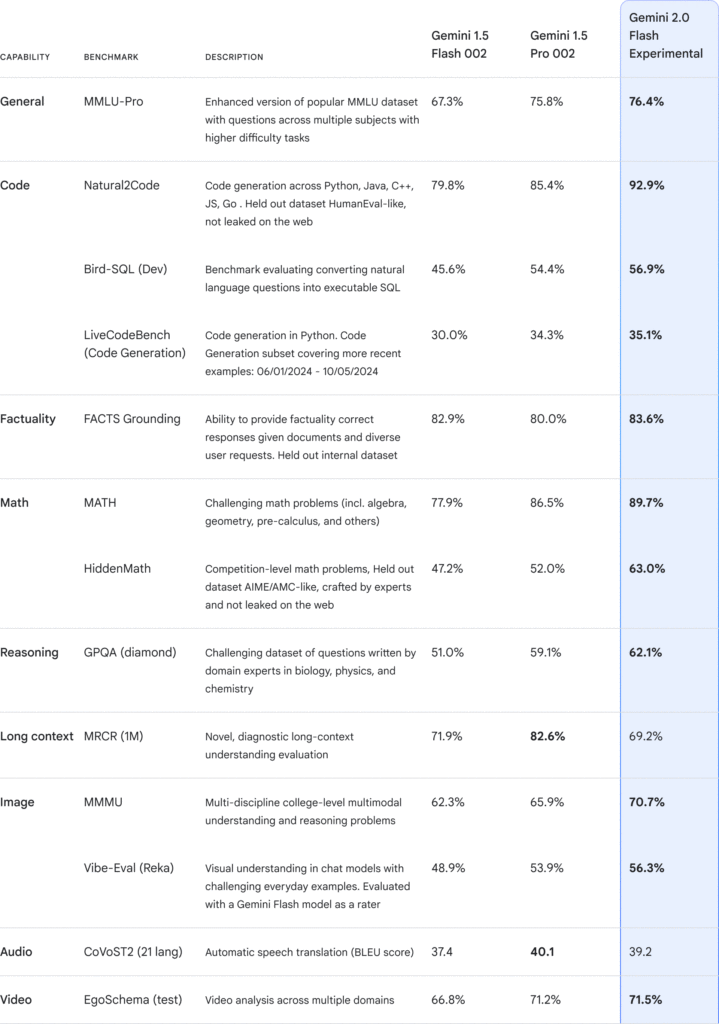
Voici une comparaison des performances entre les différents modèles Gemini disponibles à ce jour :
Deep Research : l’assistant parfait pour des recherches compliquées
Vous devez préparer une présentation sur les capteurs pour véhicules autonomes, ou vous voulez comparer plusieurs campagnes marketing récentes ? Habituellement, ce type de projet implique des heures de recherches, des dizaines d’onglets ouverts, et des efforts pour organiser tout ça. Avec Deep Research, la nouvelle fonctionnalité intégrée à Gemini Advanced, tout ce processus est automatisé et simplifié.
Après avoir entré une question ou un sujet, Deep Research propose un plan que vous pouvez ajuster. Une fois validé, il se charge de collecter et d’analyser les informations pertinentes sur le web. En quelques minutes, vous recevez un rapport clair, avec des liens vers les sources originales pour approfondir si besoin. Ce n’est pas juste un gain de temps, c’est un game changer pour les projets complexes.
Deep Research a été déployé hier dans Gemini Advanced (en anglais) sur desktop et sur mobile en version web, et sera disponible dans l’application mobile début 2025.
Mise à jour des AI Overviews début 2025
Gemini 2.0 ne transforme pas seulement les assistants numériques, il révolutionne aussi le moteur de recherche. Les AI Overviews, ces encarts qui vous donnent des réponses rapides, vont devenir encore plus intelligents et polyvalents avec ce nouveau modèle. Ils touchent d’ailleurs à présent 1 milliard d’utilisateurs, grâce à leur lancement dans 100 nouveaux pays fin octobre 2024. Vous pourrez poser des questions beaucoup plus complexes qu’avant, résoudre des équations avancées, coder ou encore combiner texte, images et sons dans une seule et même requête.
Les mises à jour de la recherche alimentées par Gemini 2.0 devraient être mises en place début 2025, sans date précise. Elles sont encore en cours de test. Google a bien l’intention d’étendre les AI Overviews à plus de pays et de langues durant l’année prochaine. Peut-être que la France sera concernée, cette fois ?
Quand les assistants numériques franchissent un cap
Google ne s’arrête pas là. Avec Gemini 2.0, la firme teste des prototypes comme Project Astra et Project Mariner.
Le premier vise à rendre les assistants numériques plus personnalisés et utiles : il peut se souvenir de vos conversations, comprendre différents accents et mots rares et s’intégrer à des outils comme la recherche, Google Maps ou Lens.
Le second, quant à lui, explore ce que pourrait être un assistant capable d’interagir directement dans votre navigateur pour accomplir des tâches comme remplir des formulaires ou naviguer automatiquement. Des testeurs sont actuellement en train de tester Project Mariner avec une extension Chrome expérimentale.
Des garanties pour une utilisation responsable
Google sait qu’un tel outil soulève des questions sur l’éthique et la sécurité. C’est pourquoi Gemini 2.0 a été conçu avec des mécanismes pour garantir la transparence et éviter tout abus. Par exemple, l’IA demande votre confirmation avant de prendre des décisions importantes et propose des contrôles pour que vous puissiez gérer vos données facilement.
L’article “Google Gemini 2.0, l’assistant IA qui comprend (vraiment) tout” a été publié sur le site Abondance.